02

සි   |   த   |  

2025-03-04

News Categories : Committee News 

The ministry's aim is to empower the majority of low-income earners instead of providing long-term welfare benefits – Hon. Minister of Rural Development, Social Security and Community Empowerment (Dr.) Upali Pannilage

  • Officials state they expect to empower 1.5 million Aswesuma benefit recipients within the next five years


Hon. Minister of Rural Development, Social Security and Community Empowerment (Dr.) Upali Pannilage, stated that instead of providing long-term welfare benefits to low-income earners, the Ministry is primarily focused on empowering the majority of them.

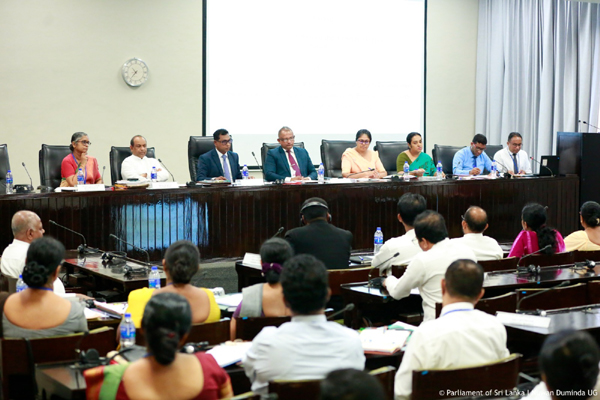
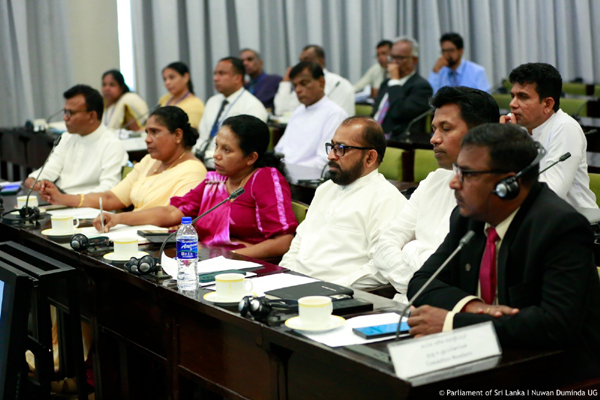
The Minister made this statement during the inaugural meeting of the Ministerial Consultative Committee on Rural Development, Social Security and Community empowerment of the Tenth Parliament, held on 03rd March 2025 under his Chairmanship at the Parliament. The Hon. Deputy Minister, Wasantha Piyatissa, was also present at the occasion.

During the meeting, officials introducing the Ministry's functions and objectives to the Ministerial Consultative Committee, highlighted that approximately 1.7 million individuals currently receive Aswesuma benefits and the Ministry aims to empower 1.5 million of them within the next five years. Additionally, it was stated that in 2025, the Ministry expects to empower 300,000 Aswesuma recipients. Furthermore, the officials emphasized that 10 institutions operate under the Ministry, focusing on three key areas: livelihood development, infrastructure development, and social welfare.

The Minister also emphasized that the selection and distribution of Aswesuma benefits for low-income earners is carried out by the Ministry of Finance. However, his Ministry is committed to uplifting these individuals from low-income conditions through community empowerment programs. Moreover, he pointed out deficiencies in the Aswesuma benefit data system and pointed out that a Committee has already been appointed to update this system accordingly.

The discussion also highlighted the necessity of conducting more effective awareness programs at the school level to prevent being exposed to the use of drugs. Parliamentarians pointed out that even some recipients of the Aswesuma benefits are addicted to drugs, emphasizing the urgent need for intervention.

Additionally, the Ministerial Consultative Committee focused on introducing a social security mechanism similar to pension schemes for low-income earners, implementing the ‘Smart Villages’ program through model community empowerment villages, addressing the challenges of rural microfinance loans, resolving issues faced by persons with disabilities, and tackling concerns related to kidney disease patients.

A number of Ministers, Deputy Ministers, Members of Parliament, and officials from the Ministry of Rural Development, Social Security and Community Empowerment, along with its affiliated institutions, were present at this Committee meeting held.



Related News

2026-11-03

Special Meeting Held in Parliament, Chaired by the Prime Minister, to Brief Members of Parliament on New Education Reforms and the National Curriculum Framework

A special meeting of the Ministerial Consultative Committee on Education, Higher Education and Vocational Education was held recently at the Parliament Complex, chaired by the Hon. Prime Minister and Minister of Education, Higher Education and Vocational Education, Dr. Harini Amarasuriya, to brief Members of Parliament on the revised National Curriculum Framework and the new education reform process.The meeting was attended by Ministers, Deputy Ministers, Members of Parliament, officials including the Secretary to the Ministry of Education, as well as a number of experts in the education sector, including representatives of the National Institute of Education (NIE).Secretary to the Ministry of Education, Higher Education and Vocational Education, Mr. Nalaka Kaluwewa, stated that, in accordance with a Cabinet decision, a National Committee comprising subject experts had been appointed by April 2026 to oversee the education reforms. He further explained that five main subcommittees established under this committee would provide the necessary guidance and direction for the process.He also stated that, in accordance with the Cabinet decision, the new reforms are scheduled to be introduced for Grade 1 in 2026, and for Grades 6 and 2 in 2027. Preparations are currently underway, including teacher training programmes, the development of modules and printing of teacher guides, as well as plans to upgrade digital infrastructure in schools.During the meeting, Director General of the National Institute of Education, Professor O.G. Dayaratne, together with officials from the education sector, delivered a comprehensive presentation on the foundation of the new education reforms, the National Curriculum Framework, assessment methodologies and the proposed implementation plan.He explained that the process had commenced in 2019 and that the National Institute of Education had prepared the National Curriculum Framework in accordance with the new policy approved by the National Education Commission in 2023. He emphasized that the framework was the result of a collective effort involving several institutions. The Director General further stated that the country was introducing education reforms modelled on systems implemented in some of the world's most advanced countries.The Director General of the National Institute of Education emphasized that the fundamental objective of general education should not be limited to producing future workers to meet the demands of the labour market. Rather, it should focus on nurturing holistic and well-rounded citizens enriched with ethics, virtues and values, while developing a future generation capable of building the nation.A shift from the existing content-based education system to an outcome-based and student-centred approach is proposed under the reforms. He further explained that a new assessment framework had been developed to reduce the pressure of rote learning and examination-oriented education. Under this framework, students' progress will be evaluated through a credit-based modular system and continuous assessments conducted throughout the year.Flexible vocational pathways have also been developed to provide students with an understanding of different vocational fields from Grade 6 onwards. These pathways will enable students in Grades 12 and 13 to obtain vocational qualifications up to NVQ Level 4 or pursue higher education.A website named "RIES" has been launched to raise public awareness of the education reforms among the general public, teachers and parents. In addition, an island-wide awareness programme is being implemented in several phases.Addressing the meeting, the Hon. Prime Minister emphasized that the fundamental objective of education should not merely be to prepare children to become future members of the workforce, but also to nurture them into well-rounded individuals and responsible citizens who will contribute to nation-building.She also pointed out that decisions regarding challenges arising during the implementation of the reforms should not be based solely on personal perceptions or opinions. Instead, such decisions should be guided by scientific research and evidence.Members of Parliament who participated in the discussion raised questions and shared their views and proposals regarding the education reforms.It was further emphasized that the support and cooperation of all stakeholders, without any divisions or differences, were essential to the successful implementation of this important national undertaking.The meeting was also attended by Hon. Deputy Minister of Education and Higher Education Dr. Madhura Senevirathna, Hon. Deputy Minister of Vocational Education Nalin Hewage, Secretary General of Parliament Mrs. Kushani Rohanadeera, Director of Legislative Services Mr. Jayalath Perera, and several other officials.


2026-11-03

Sectoral Oversight Committee Focuses on Legal Reforms and Alternative Measures to Reduce Prison Overcrowding

Measures to reduce prison overcrowding, including amendments to the Prisons Ordinance, referring drug addicts for rehabilitation, and expediting the issuance of Government Analyst reports, were discussed at the Sectoral Oversight Committee on Governance, Justice and Civil Protection.These matters were discussed when the Committee met at Parliament recently (Oct. 23) under the chairmanship of, Hon. Member of Parliament Dr. Najith Indika.The Committee has been conducting a series of discussions with the relevant sectors to address prison overcrowding, and this meeting was held as another step in that ongoing process.During the meeting, proposals to address challenges within the prison system were reviewed. These included proposed legislative amendments, the establishment of open prisons and work camps, release under certain conditions, and directing inmates with good conduct towards employment programmes.The Committee also discussed strengthening the process of referring individuals with drug addiction to rehabilitation centres instead of sending them to prison.Measures taken to reduce the backlog of reports at the Government Analyst's Department were also reviewed. These included increasing staff capacity, improving transport facilities and expanding overtime services.Further discussions focused on the steps required to advance relevant legal and administrative reforms to ease prison overcrowding, as well as reviewing the proposed measures through coordination between the Ministry of Justice and National Integration and the Department of Prisons.


2026-10-30

Special Discussion between the Parliamentary Caucus for Persons with Disabilities and the Australian High Commissioner

A special meeting of the Parliamentary Caucus for Persons with Disabilities was held recently at the Parliament premises under the chairmanship of the Hon. Sugath Wasantha de Silva, Member of Parliament. Australian High Commissioner H. E. Matthew John Duckworth and a group of officials, along with representatives of the International Foundation for Electoral Systems (IFES), also participated in the meeting.During the meeting, the Deputy Co-Chair of the Caucus, Hon. Member of Parliament Dr. Pathmanathan Sathiyalingam, made a detailed presentation on the work carried out by the Caucus and the progress achieved over the past one and a half years.He stated that the Caucus had organized a series of district-level consultations involving persons with disabilities and relevant government officials. The consultations in the Northern Province and Kalutara District have been successfully completed, and plans are underway to conduct similar programmes in six more districts.Proposals for next year's Budget have also been collected with the participation of more than 50 organizations representing the disability community. The Caucus has proposed introducing a separate budget line for persons with disabilities in the budget estimates of every ministry to ensure that their needs are adequately addressed.The Caucus is also taking steps to introduce a new Disability Bill in line with international standards to replace the Protection of the Rights of Persons with Disabilities Act, No. 28 of 1996. In addition, work is underway to introduce a Sign Language Act and make necessary amendments to the special education sector.With the intervention of the Chair of the Caucus, a WhatsApp video call service has also been launched to enable persons with hearing impairments to contact the Police Emergency Service on 119 using sign language during emergencies. The service is supported by police officers trained in sign language.Dr. Padmanathan Sathyalingam further highlighted the achievements of the Chair of the Caucus, Hon. Sugath Wasantha de Silva, who received the 2026 Commonwealth New Parliamentarian Award presented by the Commonwealth Parliamentary Association (CPA) in recognition of his outstanding service. He also noted that the election of Hon. Sugath Wasantha de Silva to the Tenth Parliament as a representative of the disability community was a historic achievement for Sri Lanka.Addressing the meeting, the Australian High Commissioner stated that ensuring the advancement of persons with disabilities alongside other members of society is a key objective of democratic governance and Australia's foreign policy. He also expressed Australia's interest in providing long-term support for policy and legislative reforms, including the development of data systems and the preparation of sign language dictionaries.The Chair of the Caucus emphasized that a comprehensive Action Plan covering the needs and priorities of the disability community had been presented to guide the Caucus's future work. He reaffirmed the Caucus's commitment to working with all relevant stakeholders to improve the lives of persons with disabilities in Sri Lanka.Several Members of Parliament who are members of the Parliamentary Caucus for Persons with Disabilities also attended the meeting.


2026-10-29

Loss of Over Rs. 8 Million Due to Theft of 2,199 Metres of Copper Strips at KDU Hospital Revealed at COPE

Committee raises concerns over security and internal control weaknesses, financial management issues and the need to amend the University ActA loss of Rs. 8,442,091 has been incurred due to the theft of 2,199 metres of copper strips belonging to the lightning protection system of the General Sir John Kotelawala Defence University (KDU) Hospital, it was revealed at the Committee on Public Enterprises (COPE).The Committee, chaired by the Hon. Dr. Nishantha Samaraweera, Member of Parliament, met at Parliament recently (Oct. 21) and summoned the management of the General Sir John Kotelawala Defence University to examine the Auditor General’s Reports for 2023 and 2024, as well as the university’s current performance and operations.It was revealed that a civilian contract worker and a member of the Navy had been arrested and produced before the court in connection with the theft of copper strips in 2022 and 2023. However, the Committee questioned the discrepancies between the total quantity of copper strips reported as stolen and the quantity recovered by the Police. It also sought explanations regarding inconsistencies in the measurements recorded in documents relating to the items produced as court evidence.The Committee also discussed weaknesses in the hospital’s asset management and internal control systems. Its attention was drawn to the failure to maintain proper records of assets and their quantities since the hospital began operations, the lack of proper assignment of responsibilities to officers for electrical and lightning protection systems, and the failure to conduct scheduled maintenance inspections.The Committee also questioned the use of aluminium wires instead of copper when restoring the lightning protection system following the theft. It sought clarification on whether the technical standards and safety of the system had been properly ensured.The Committee extensively examined issues affecting hospital services, including the underutilisation of certain wards, operating theatres and intensive care units at the hospital, which has a capacity of more than 800 beds. The shortage of medical officers and other staff was also discussed.To address the continuing problems at the hospital, the Committee instructed the administrative authorities to promptly decide whether the hospital should operate under a government hospital model or a private hospital model and take the necessary action accordingly. The Committee stressed that failure to reach a clear decision and implement appropriate measures could further worsen the existing problems.The Committee also considered issues relating to the repayment of foreign loans obtained for the construction of the hospital, the prolonged delay in the construction of an auditorium, and audit observations concerning the financial and administrative controls of CUE Technologies Lanka (Pvt) Ltd, a company affiliated with KDU.The need to amend the existing University Act without delay was also emphasised to strengthen the university’s governance structure and address the identified administrative and management issues. It was noted that instructions had already been given to proceed with the amendment process, taking into account shortcomings identified previously. The importance of expediting the relevant legal and administrative procedures was also highlighted.The Chair of the Committee emphasised the importance of making more effective use of public resources by increasing the hospital’s operational capacity, addressing staff shortages, improving medicine management and strengthening the university’s financial and administrative control systems.Several Hon. Members of Parliament attended the meeting, including Attorney-at-law Dayasiri Jayasekara, Mujibur Rahuman, Attorney-at-law Nilanti Kottahachchi, Samanmali Gunasinghe, Dr. S. Sribavanandarajah, Lieutenant Commander (Retired) Prageeth Madhuranga, Jagath Manuwarna, Sunil Rajapaksha, Asitha Niroshana Egoda Vithana, Thilina Samarakoon, Chandima Hettiarachchi and Dinesh Hemantha.The Commanders of the three Armed Forces and a group of officials from the General Sir John Kotelawala Defence University also participated in the meeting.


Copyright © The Parliament of Sri Lanka.

All Rights Reserved.

Design & Developed by  TekGeeks