2025-02-28
It was disclosed during the Committee on Public Accounts (COPA) that an employee of the Colombo Municipal Council had misused a land and official residence within the Borella Cemetery, owned by the council, to establish and operate a funeral palour since 1994.
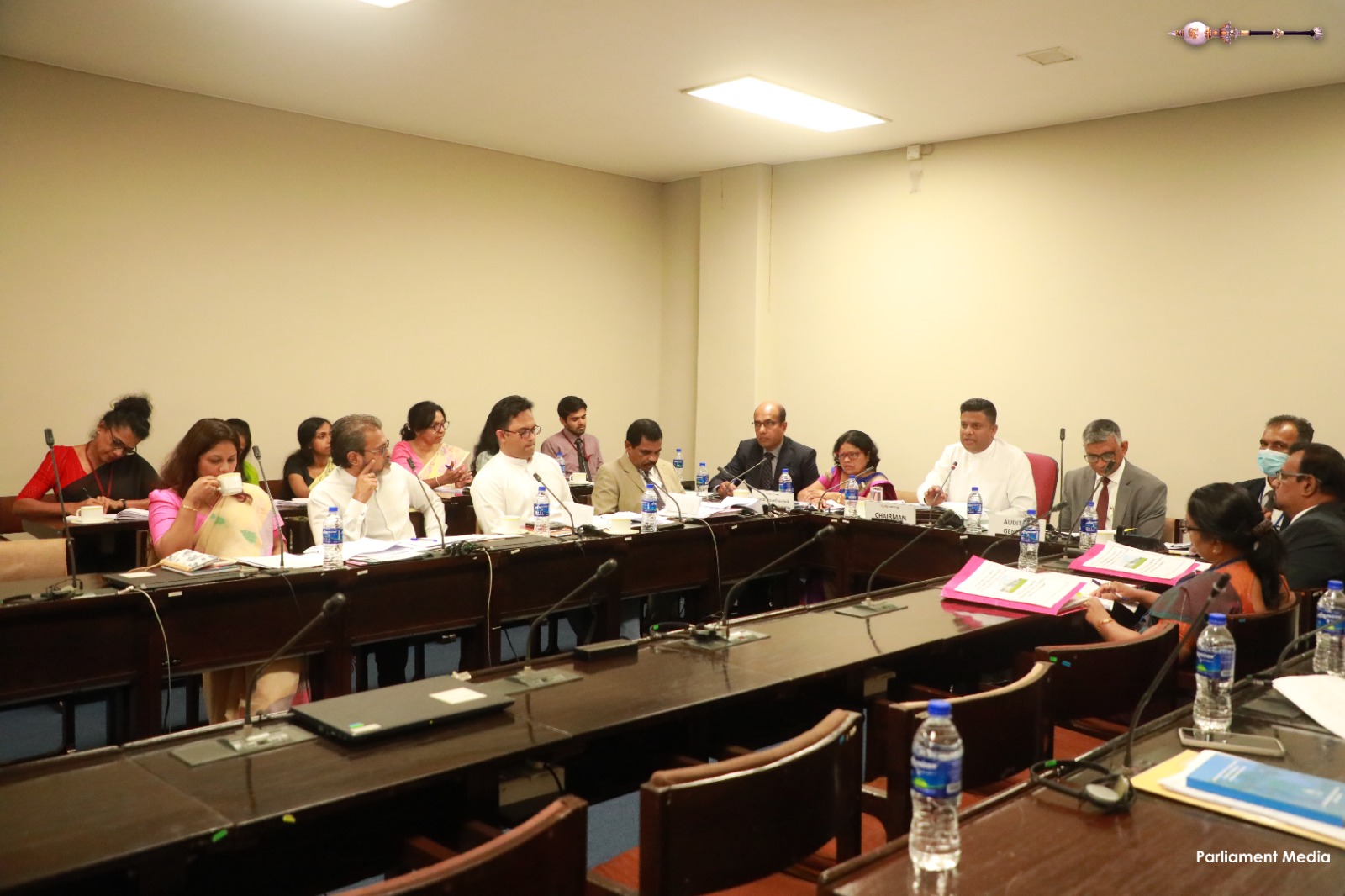
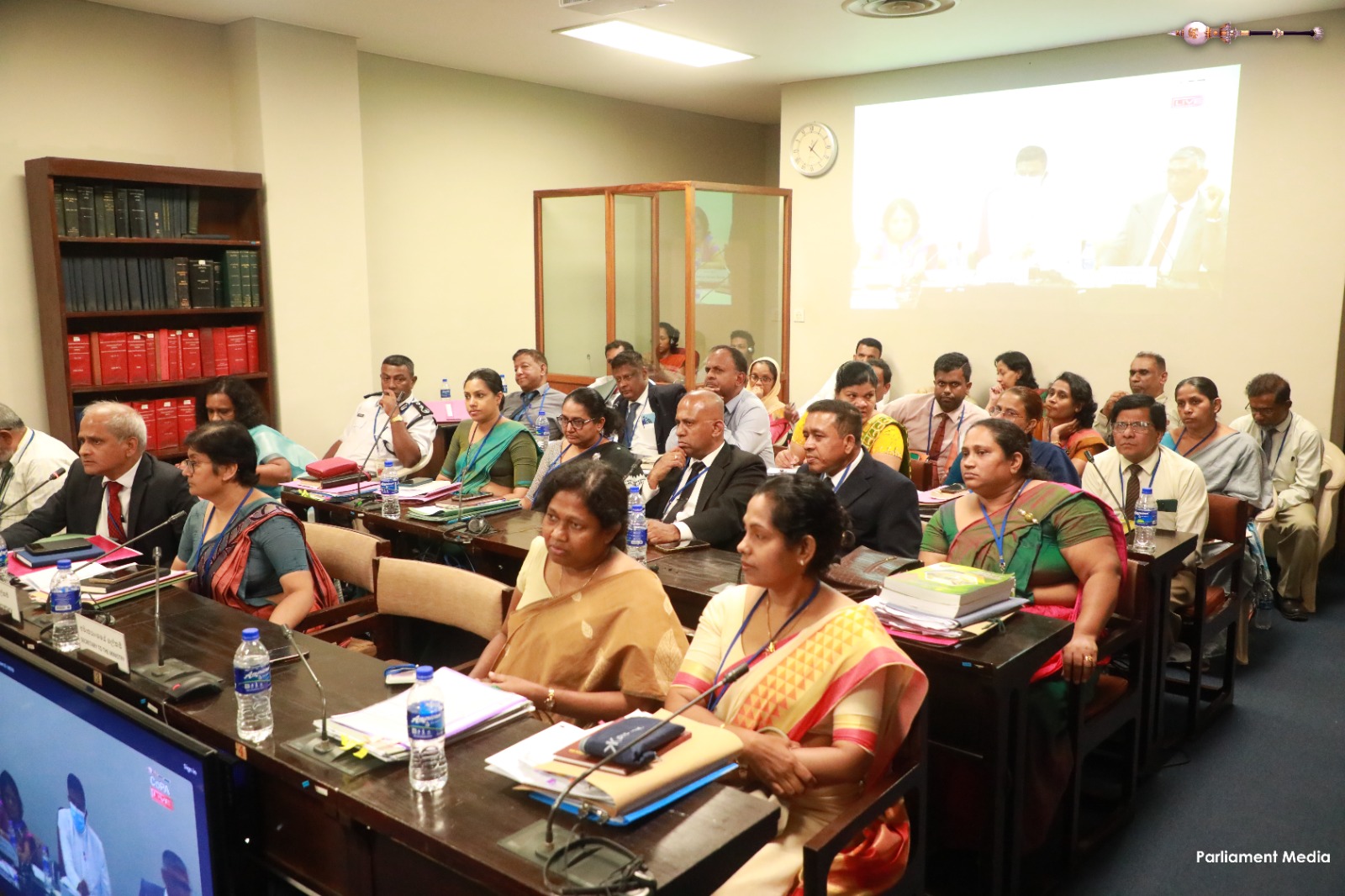
These revelations were made during the Committee on Public Accounts (COPA) Committee meeting held in Parliament, chaired by Hon. Member of Parliament Aravinda Senarath, on the February 25th and 27th recently. During the meetings, officials from the Colombo Municipal Council were summoned to review the Auditor General’s reports for the years 2022 and 2023, as well as the council’s current performance.
The Auditor General stated that the Colombo Municipal Council had not taken any action regarding the unauthorized business being operated within an illegal structure in the Borella Cemetery at the first Committee meeting held. Although COPE had previously recommended that a report be submitted detailing the measures taken before July 6, 2023, to reclaim the premises back to the Colombo Municipal Council, and a report was indeed submitted, no progress had been made in regaining possession of the building.
During the discussion, officials presented information regarding the unauthorized business, confirming that it was being run by an employee of the Colombo Municipal Council who had misused the official residence and land within the Borella Cemetery. It was also disclosed that this employee had previously been suspended from service but was reinstated. At this instance, the Committee Chair inquired whether the funeral palour had been registered as a legitimate business within the city of Colombo. The officials responded that while the funeral palour had not obtained the necessary permits, it had been registered as a company under the Registrar of Companies. The Chair further questioned how such a business could operate without an environmental report, to which the officials stated that such an operation would not be legally permissible. Consequently, COPE instructed the immediate shutdown of the illegal funeral palour.
The then-Commissioner of the Colombo Municipal Council, who appeared before the Committee, presented information regarding the unauthorized operation of the funeral palour. It was disclosed that the business had been in operation since 1994. She further disclosed that despite the employee's attempts to fraudulently obtain ownership of the land and business, these efforts were unsuccessful. Additionally, she informed the Committee that due to her continued efforts to address this issue, she had even faced death threats.
The former Municipal Commissioner revealed that this illegal operation was being carried out publicly and that the misuse of the building and land in question had caused a loss of 41 million rupees to the Colombo Municipal Council from between 1994 and 2020. Furthermore, as it is illegal for a government employee to engage in business, pointing out that the individual in question had fraudulently changed the name of the business from time to time to continue its operations. Additionally, it was revealed] that the Colombo Municipal Council employee managing this funeral palour had been accused of soliciting a bribe of 600,000 rupees for a burial during the COVID-19 pandemic, as well as engaging in fraudulent issuance of receipts at the Borella Public Cemetery.
Members of the Committee pointed out that such a fraudulent operation could not be carried out by a single individual and that many other officials were involved in the process. As a result, the Committee proposed that action be taken against the individual under the Public Property Act. Consequently, the Committee Chair instructed the Chief Secretary of the Western Province to conduct an investigation into this business operation, which involved the misuse of state property, and to submit a report to the Committee within two weeks. In recognition of her revelations regarding this illegally operated funeral palour, the Committee commended the former Municipal Commissioner, and the Chair directed officials to ensure that the commendation was placed in her personal file.
Furthermore, the Committee also focused on the revenue from parking fees collected by the Colombo Municipal Council. It was disclosed that, as of 2024, the outstanding amount due from parking contractors was 580 million rupees. Accordingly, it was disclosed to the Committee that in 2025, parking contractors with outstanding dues would not be selected for tenders. Officials further stated that efforts to recover the outstanding amounts had already commenced. Additionally, the Committee was informed that, according to an audit report, land allocated for parking spaces for Colombo Municipal Council members had been sold to third parties. Officials clarified that traditionally, council members were allocated parking spaces near their offices. Consequently, the Committee Chair instructed officials to explore the possibility of reclaiming the misallocated lands from those who had obtained them.
The Committee also engaged in an extensive discussion regarding the smart street lighting project implemented by the Colombo Municipal Council. Initially promoted as a cost-free project for the Council, it was later revealed by the former Commissioner that the project had resulted in a loss of 2.45 billion rupees. She further disclosed that she had objected to certain conditions set by the company managing the project, which led to threats from an official of the company, including statements that posed a threat to national security. She informed the Committee that, during the relevant period, the control of street lights in Colombo’s high-security zone had been under the company’s management, raising serious national security concerns. Given the severity of the matter, the Committee Chair instructed that an immediate complaint be filed with the Criminal Investigation Department (CID).
Additionally, the Auditor General highlighted that the Colombo Municipal Council had over 5 billion rupees in outstanding property tax revenue. Despite annual increases in municipal revenue, the lack of a proper mechanism for collecting overdue amounts had resulted in the accumulation of arrears over the years. Officials from the Municipal Council acknowledged that these arrears had been accumulating for a long period and emphasized the need to properly identify properties with outstanding taxes. They proposed conducting a survey to obtain clear information on the properties in arrears, the amount due, and the responsible parties.
Committee members underscored the importance of preparing a structured report with a clear timeline for recovering these outstanding amounts. Accordingly, the committee instructed that a plan be implemented to collect outstanding dues from identified properties in the Colombo Fort area within a month. Additionally, the Chairman directed officials to prepare and submit a comprehensive plan within a week for identifying and collecting arrears in other areas of Colombo.
The committee also reviewed the progress of the process to regularize municipal land holdings. Officials stated that, with the support of the Survey Department and external stakeholders, all municipal lands would be legally regularized by the end of the year.
The committee meeting was attended by Hon. Deputy Ministers Nalin Hewage, Anton Jayakody, Sugath Thilakaratne, and Hon. Members of Parliament Ruwanthilaka Jayakody, Chandana Sooriyaarachchi, Sagarika Athauda, Attorney at Law, Oshani Umanga, Susantha Kumara Nawarathna, Dr. Janaka Senarathna, Dinindu Saman, and Lal Premanath, along with a number of public officials.
2026-09-03
The Committee on Ways and Means of Parliament recently reviewed the operations of Sri Lanka Customs, including its revenue performance. The matter was considered when the Committee met recently under the chairmanship of Hon. Member of Parliament Wijesiri Basnayake.Officials, including the Director General of Customs, informed the Committee that the expected Customs revenue as of June 30, 2026, was Rs. 1,060,559 million, while actual revenue collected by that date amounted to Rs. 1,379,084 million. This represented 130% achievement against the expected revenue target. Officials further informed the Committee that Customs had generated revenue exceeding the monthly targets in every month of the year to date, and that, compared with 2025, higher revenue performance had been recorded in each month.Providing information on vehicle imports in 2026, officials stated that 316,000 vehicles had been imported as of June 30, 2026, generating Rs. 512,547 million in tax revenue. According to the information presented to the Committee, the highest amount of tax revenue, Rs. 386,726 million, had been generated through the importation of motor vehicles.Furthermore, among the categories of commodities generating the highest Customs revenue, petrol motor cars less than 1,000cc ranked first, generating Rs. 137.4 billion. This represented 9.96% of total revenue.The Committee also focused on matters including the volume of imported containers and the procedures followed for their inspection, the introduction of modern technology to improve the efficiency of Sri Lanka Customs operations, challenges in revenue administration, and future plans.Several Members of the Committee on Ways and Means, together with officials representing the Ministry of Finance, Planning and Economic Development and Sri Lanka Customs, participated in the Committee meeting.
2026-09-03
The Ministerial Consultative Committee on Public Security and Parliamentary Affairs focused its attention on a number of matters relating to ensuring public security, curbing illegal activities, and enhancing the efficiency of the police service.This was discussed when the Ministerial Consultative Committee on Public Security and Parliamentary Affairs met in Parliament on the Aug. 21st, under the chairmanship of Hon. Minister Ananda Wijepala.The Committee paid particular attention to measures taken by the Police to combat cybercrime, illegal online gambling activities and fraud. Officials stated that steps had been taken to block websites associated with illegal gambling and other unlawful activities.It was also revealed that legal action had been taken against foreign nationals residing in Sri Lanka who were engaged in illegal activities related to cybercrime. Officials further stated that arrangements had been made to deport such foreign nationals in coordination with the embassies of the respective countries.Officials appearing before the Committee stated that steps had been taken to recruit software engineers and lawyers to strengthen the human resources required for cybercrime investigations, particularly in terms of technical and legal expertise. They also noted that arrangements were being made to provide newly recruited officers with field training as well as the necessary overseas training.Discussions were also held on the need to introduce new technological systems and establish a centralized system capable of operating in real time in order to make investigations into cybercrime and financial fraud more efficient. It was particularly noted that necessary coordination measures were being undertaken to minimize existing barriers to sharing data with foreign institutions in relation to crimes involving the use of cryptocurrencies.Furthermore, extensive discussions were held on the current status of information received through Community Security Committees, measures to prevent sensitive information received through these committees from being disclosed externally, and further strengthening community policing services.In addition, the Committee emphasized the importance of expediting police investigations to curb illegal activities while upholding the rule of law, making greater use of modern technology, and obtaining further public support.A number of officials, together with Members of the Committee, participated in the Committee meeting.
2026-09-02
The Sectoral Oversight Committee on Economic Development and International Relations focused its attention on the “InSA” (Integrated Systematic Approach for the Family Development of Migrant Workers) Project, which is to be implemented to ensure the welfare of families and the protection of children of workers migrating for foreign employment.The matter was discussed at a meeting of the Committee held on the Aug. 21st, under the chairmanship of Hon. Member of Parliament Attorney-at-Law Lakmali Hemachandra.It was revealed at the meeting that the programme, which is to be implemented by the Ministry of Foreign Affairs, is scheduled to commence at the Divisional Secretariat level from October 1, 2026.It was stated that the primary objective of the programme is to develop family development plans focusing on key areas including the long-term financial management of families of migrant workers, child health and protection, employment training, and small business and export development.The Committee particularly emphasized the need to establish a formal plan for the care, protection and education of children when mothers with children between the ages of 2 and 18 migrate overseas, covering the period during which the mothers are abroad. Attention was also drawn to addressing mothers with children below the age of two in accordance with the existing legal and administrative procedures.The programme is expected to obtain the contribution of Child Rights Promotion Officers, who will provide necessary interventions concerning child protection and family welfare at three stages: prior to departure overseas, while the parent is overseas, and following the family's return to Sri Lanka.Accordingly, it was stated that Child Rights Promotion Officers will intervene to ensure that alternative care plans prepared for children can be practically implemented, identify situations involving risks, and prepare special care plans where necessary. Attention will also be given to providing psychosocial support, including strengthening family relationships, to families returning to Sri Lanka after living overseas.Furthermore, “InSA Committees” are to be established at the Divisional Secretariat level. These committees are expected to work under the chairmanship of the Assistant Divisional Secretary, together with Child Rights Promotion Officers, Early Childhood Development Officers and other relevant field officers, it was stated at the Committee meeting.It was also revealed that a Memorandum of Understanding (MOU) has been proposed between the Sri Lanka Bureau of Foreign Employment and the Ministry of Women and Child Affairs concerning child protection-related activities.The Committee also emphasized the importance of all workers leaving the country for foreign employment registering with the Sri Lanka Bureau of Foreign Employment. As there may be difficulties in implementing welfare and protection programmes for the families of individuals who travel overseas through informal channels, including on tourist visas, due to the absence of official data on such persons, the Committee stressed the need to maintain a formal data system on workers departing the country for foreign employment.During the implementation of the programme, progress is to be monitored at the district level through District Secretaries. The relevant parties were instructed to submit a report on the progress of the “InSA” Project to the Committee by February 2027.
2026-09-02
The Chief of Defence Staff (Repeal) Bill was recently considered by the Sectoral Oversight Committee on Governance, Justice and Civil Protection.The matter was discussed when the Committee met recently in Parliament under the chairmanship of Hon. Member of Parliament Dr. Najith Indika. A group of officials, including Secretary to the Ministry of Defence, Air Vice Marshal Sampath Thuyacontha, were summoned to the meeting.The Bill has been introduced to repeal the Chief of Defence Staff Act, No. 35 of 2009. The Act was enacted in 2009 to carry out functions including the coordination of activities between the Armed Forces and the Ministry of Defence, in accordance with the requirements of the time.However, considering the current situation in the country, it has been determined that there is no longer a need to maintain a dedicated office or position for the coordination of the three Armed Forces. Accordingly, under the ongoing restructuring process of the three Armed Forces, such coordination is being carried out through the Ministry of Defence.It was also observed that, given the country’s current economic situation, transferring the functions of the office to the Ministry of Defence could reduce the financial burden on the Government.Accordingly, the Sectoral Oversight Committee approved the Bill, which is scheduled to be taken up for debate in Parliament on September 9 for the Second Reading.Several Members of Parliament serving on the Sectoral Oversight Committee on Governance, Justice and Civil Protection participated in the meeting.