Related News
2026-10-19
COPA Focuses on Irregularities in Procurement and Financial Losses Incurred in the Auctioning of State Property by the Southern Provincial Council
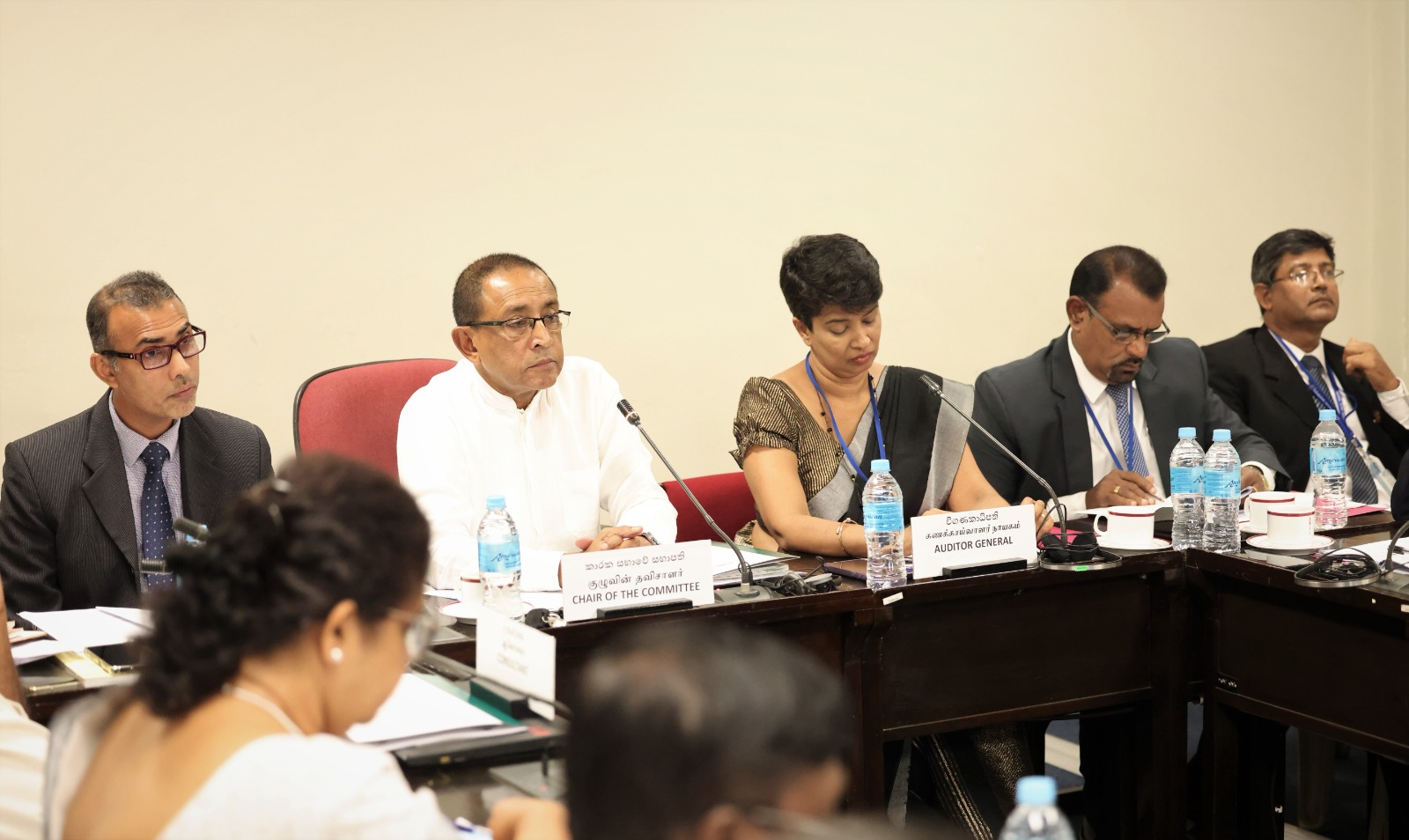
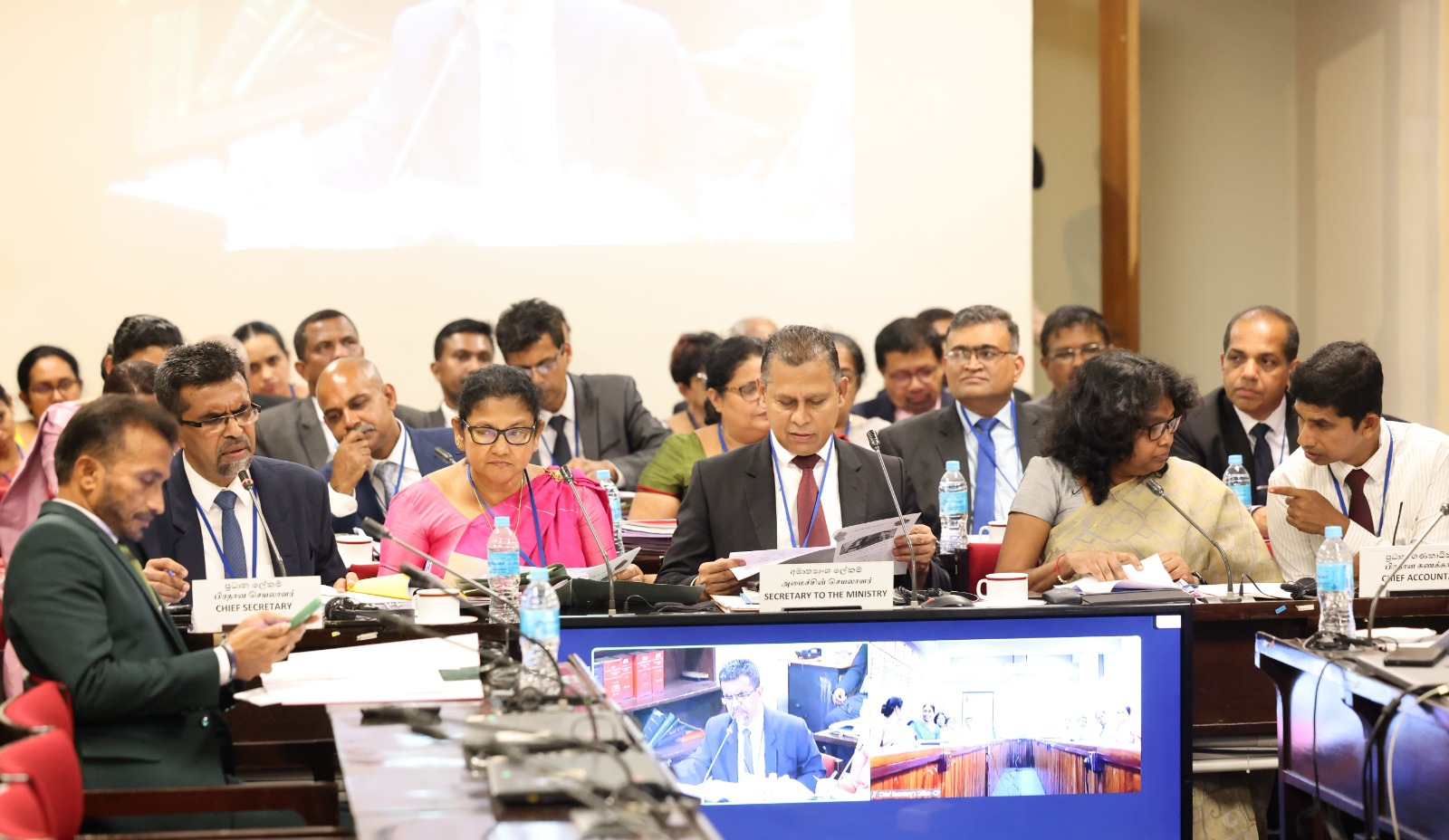
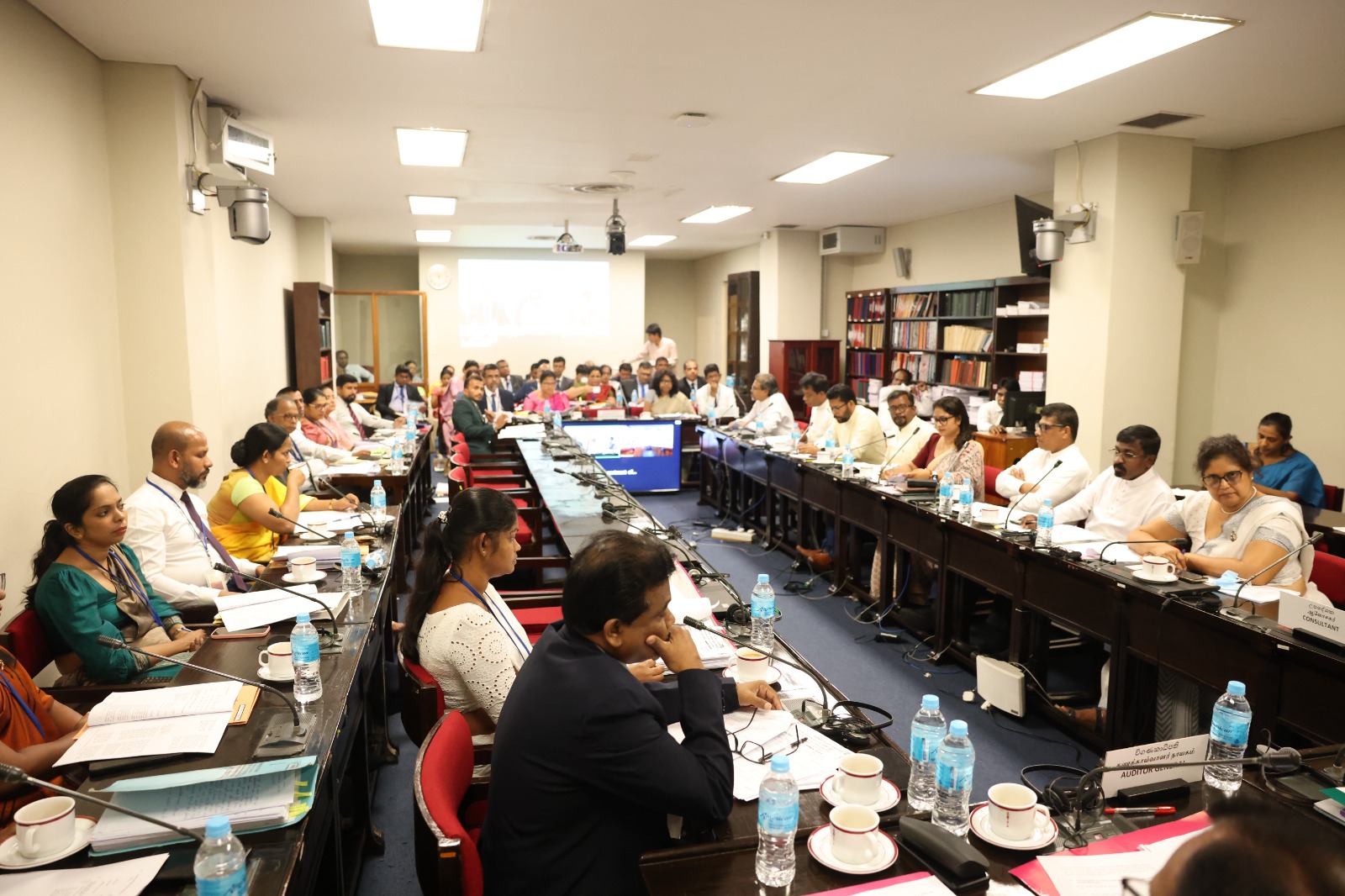
The Committee on Public Accounts (COPA) focused on the payment of allowances to officials of public institutions, the failure to properly implement circulars, irregularities in procurement procedures, and financial losses incurred in the auctioning of machinery during its review of the Auditor General’s reports and the current performance of the Southern Provincial Council.These matters received extensive attention when the Committee met at Parliament recently, under the chairmanship of Hon. Member of Parliament Kabir Hashim, to follow up on the recommendations made at the COPA meeting held on March 24, 2023, and to discuss the Auditor General’s Triennial Report for 2021–2023, the Auditor General’s Reports for 2024 and 2025, and the Council’s current performance.Special attention was drawn to alleged irregularities in the auctioning of an asphalt production machine belonging to the Southern Provincial Road Development Authority in 2021. Officials explained that the machine had been transferred to the Authority in 2013 but had been taken out of service after 2018 due to the absence of large-scale road carpeting projects. The maintenance and security costs incurred in keeping the machine idle were also cited as a reason for its auction.However, the Committee discussed the financial loss allegedly caused by the failure to properly assess and include 21,782 litres of residual bitumen and the remaining diesel stock in the auction value when the machine was sold. It was revealed that legal action had been initiated to recover the relevant amount from the buyer and that complaints had also been lodged with the police.Although preliminary investigations and formal disciplinary inquiries had been conducted and disciplinary action taken against two officials, the loss had not yet been recovered from the officers concerned. Officials informed the Committee that, taking into account the explanations submitted by the relevant officers, a new comprehensive investigation committee had been appointed to conduct further inquiries into the incident and identify those truly responsible.In addition, the Committee focused on issues that had arisen in procurement procedures carried out under the Southern Provincial Council. Discussions covered the awarding of several contracts to a single supplier for the supply of plants, the failure to complete the required supplies despite the payment of advance funds, and measures taken to acquire a parcel of land to recover outstanding amounts.The Committee also discussed the purchase of 86 scanners at a cost of approximately Rs. 27 million without a proper needs assessment or feasibility study, and the fact that the majority of these scanners were not used for their intended purposes. Attention was further drawn to the suspension of digitization activities midway through implementation due to problems encountered with the relevant software project.Furthermore, inquiries were made into whether the applicable circulars and financial regulations had been properly followed when providing fuel and housing allowances to officials of public institutions.Emphasizing the importance of ensuring transparency and accountability in the use of public funds and property, the Committee highlighted the need to conduct formal investigations into the issues identified, establish the parties responsible, and take the appropriate legal and disciplinary action.The meeting was attended by Hon. State Ministers Nalin Hewage, Retired Major General Aruna Jayasekara and Aravinda Senarath, along with Hon. Members of Parliament Attorney-at-Law Sagarika Athauda, T. K. Jayasundara, Lal Premanath, Susantha Kumara Navaratne, Ruwanthilaka Jayakody, Manjula Suraweera Arachchi, Ajantha Gammaddege and Sunil Rathnasiri.
2026-10-19
Sectoral Oversight Committee Focuses on Expediting Implementation of the Microfinance and Credit Regulatory Authority Act
The Sectoral Oversight Committee on Economic Development and International Relations has focused on the need to expedite the implementation of the Microfinance and Credit Regulatory Authority Act to ensure the proper regulation of the microfinance sector.The Committee, chaired by Hon. Member of Parliament Lakmali Hemachandra, Attorney-at-Law, met recently at Parliament, where discussions were held with officials of the Sri Lanka Microfinance Practitioners’ Association on the matter.The need to expedite the implementation of the Act enacted to regulate the microfinance and lending sectors was emphasized during the meeting. The importance of controlling lending institutions that impose excessively high interest rates through informal practices and cause hardship to the public was highlighted, alongside the need to establish a fair regulatory environment for properly functioning microfinance institutions.Discussions also covered the licensing process for institutions engaged in microfinance activities, legal and practical challenges relating to certain provisions of the Act, restrictions on accepting deposits, and the cost of funds. Proposals were also put forward to simplify the licensing process for existing microfinance institutions, allow them to accept limited public deposits under regulatory supervision, and facilitate access to lower-cost funding.Attention was also drawn to the possibility of reducing lending interest rates by establishing a mechanism to channel concessional funding from international institutions, such as the Asian Development Bank, to regulated microfinance institutions.The implementation of the consumer protection provisions of the Act, the time required to establish the Regulatory Authority, and the deadlines granted to institutions to obtain licences were also discussed.Meanwhile, the Committee also considered matters relating to the granting of mining rights for 68 grids to Lanka Mineral Sands Limited (LMSL) and the provision of operational support to the company. The Committee decided to issue the necessary recommendations on these matters.Lanka Mineral Sands Limited, a state-owned enterprise, had submitted a request to the Committee seeking exclusive mining rights over the mineral sand deposits along the northeastern coastline, requesting that these deposits not be allocated to other private institutions.Discussions focused on the need to ensure a long-term and uninterrupted supply of raw materials for value-added industries by utilizing the mineral sand deposits along the eastern coastline. In line with the Government’s policy of exporting mineral sands as value-added products rather than merely as raw materials, the Committee also considered the implementation of value-addition projects by attracting both local and foreign investors.Furthermore, the review of mineral mining licences issued in the past, the necessary action to be taken regarding irregular licences, and the transfer of the relevant mineral deposits to LMSL were discussed. It was also noted that steps had been taken to forward information concerning certain irregularities identified in the recent past to the Criminal Investigation Department (CID).Attention was also drawn to implementing a multi-agency committee mechanism to ensure transparency and coordination among relevant institutions when issuing mineral mining licences in the future.The meeting was attended by Hon. Members of Parliament Lakshman Nipuna Arachchi, Attorney-at-Law Sagarika Athawuda, Kandhasamy Prabhu, Thilina Samarakoon, Wijesiri Basnayake, Suranga Rathnayake and Sivagnanam Sritharan, along with a number of officials from the Ministry of Industries and Entrepreneurship Development.
2026-10-16
Prime Minister Instructs Officials to Expedite Solutions to Issues in the Education Sector
Prime Minister and Minister of Education, Higher Education and Vocational Education, Dr. Harini Amarasuriya, recently instructed officials to expedite solutions to a range of issues in the education sector.She issued these instructions while inquiring into issues brought to the attention of the Committee by Members of Parliament at a recent meeting of the Ministerial Consultative Committee on Education, Higher Education and Vocational Education, held in Parliament under her chairmanship.It was revealed at the meeting that 334 schools had been identified as having difficulty accessing the internet through conventional telecommunications networks. A private company has been entrusted with providing Wi-Fi facilities to these schools. Officials also stated that a project proposal was being considered to provide internet access to 10 remote schools where connectivity through conventional means is impossible due to geographical challenges. The service would be provided by a newly established Sri Lankan company specializing in satellite internet services.The Prime Minister also instructed officials to monitor progress at district and divisional levels to ensure that funds allocated for drinking water and sanitation facilities in schools are fully utilized before the end of the financial year, rather than being returned unspent.Progress on the project to develop 169 selected primary schools was reviewed, and provincial authorities were instructed to expedite the preparation of engineering estimates that had been delayed.The Prime Minister instructed that primary sections should be limited to one smart classroom per grade, rather than converting every classroom into a smart classroom, as young children need to learn through direct interaction with their environment. She further stressed that newly designed primary schools must include recreation and reading rooms where children can spend time freely and enjoy a sense of mental well-being.It was also instructed that the admission of children under probationary care to schools should be carried out based on court orders. Common guidelines and circulars should be implemented to enable these children to gain admission to urban and national schools without unnecessary obstacles.It was revealed that some annual teacher transfers had to be revised or suspended because principals had not released teachers due to the absence of replacements. Officials were instructed to take prompt action, in coordination with the relevant divisions, to recruit the required number of teachers.The meeting also discussed formalizing the monitoring of duties performed by sports coaches assigned to schools, establishing their working hours, and developing a transfer policy applicable at both provincial and national levels.Serious shortcomings in toilet facilities and accessibility at schools attended by children with special needs received particular attention. Officials were instructed to conduct a national audit of the requirements of these schools and allocate special funding to expedite the construction of buildings and sanitation facilities that children can use conveniently.The need to formulate a national policy to regulate preschool education, formalize the teacher training framework, and prevent unauthorized external institutions from issuing certificates that do not meet the required standards was also discussed.Meanwhile, the progress of the Subcommittee on Higher Education was presented to the Committee by its Chairperson, Deputy Minister Dr. Madhura Seneviratne. The progress of the Subcommittee on Physical Resource Shortages in Schools was presented by its Chairperson, Member of Parliament Samanmali Gunasinghe.Deputy Minister Nalin Hewage, several Members of Parliament, and officials representing the Ministry of Education, Higher Education and Vocational Education also attended the meeting.
2026-10-15
Ministerial Consultative Committee on Plantation and Community Infrastructure Affairs Meets
The Ministerial Consultative Committee on Plantation and Community Infrastructure Affairs met recently under the chairmanship of its Chairman, Hon. Minister of Plantation and Community Infrastructure Affairs Samantha Vidyarathna.During the meeting, Members of Parliament brought various issues affecting the plantation sector to the attention of the Minister. A range of matters were discussed, including the utilization of unused portions of plantation lands, land-related issues faced by plantation communities, and the provision of housing facilities for these communities.Hon. Deputy Minister of Plantation and Community Infrastructure Sundaralingam Pradeep and several other Members of Parliament attended the committee meeting.