Related News
2026-10-14
Expert Committee Report on Public Views and Proposals for the Review of Election Laws Submitted to Parliamentary Select Committee
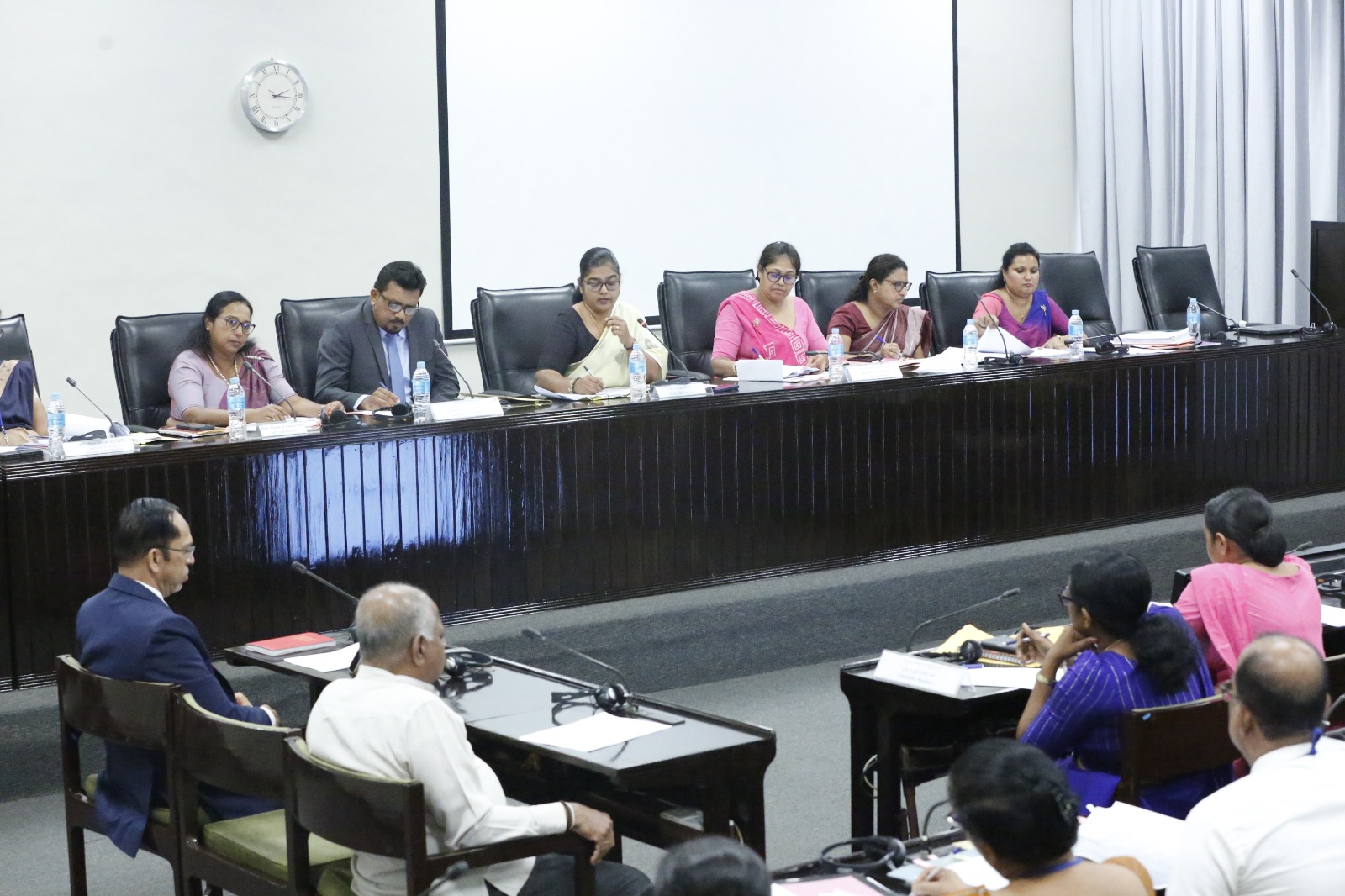
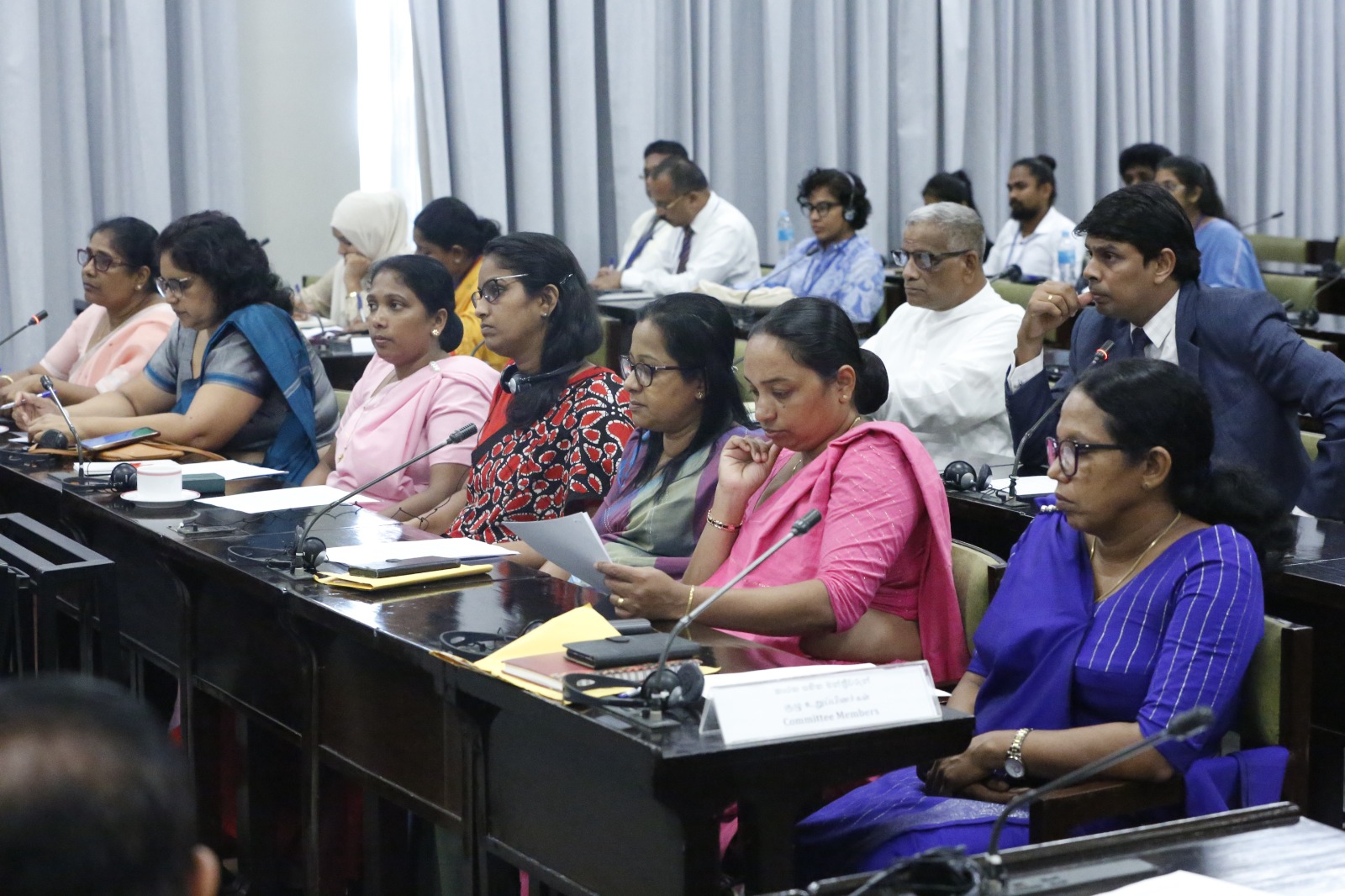
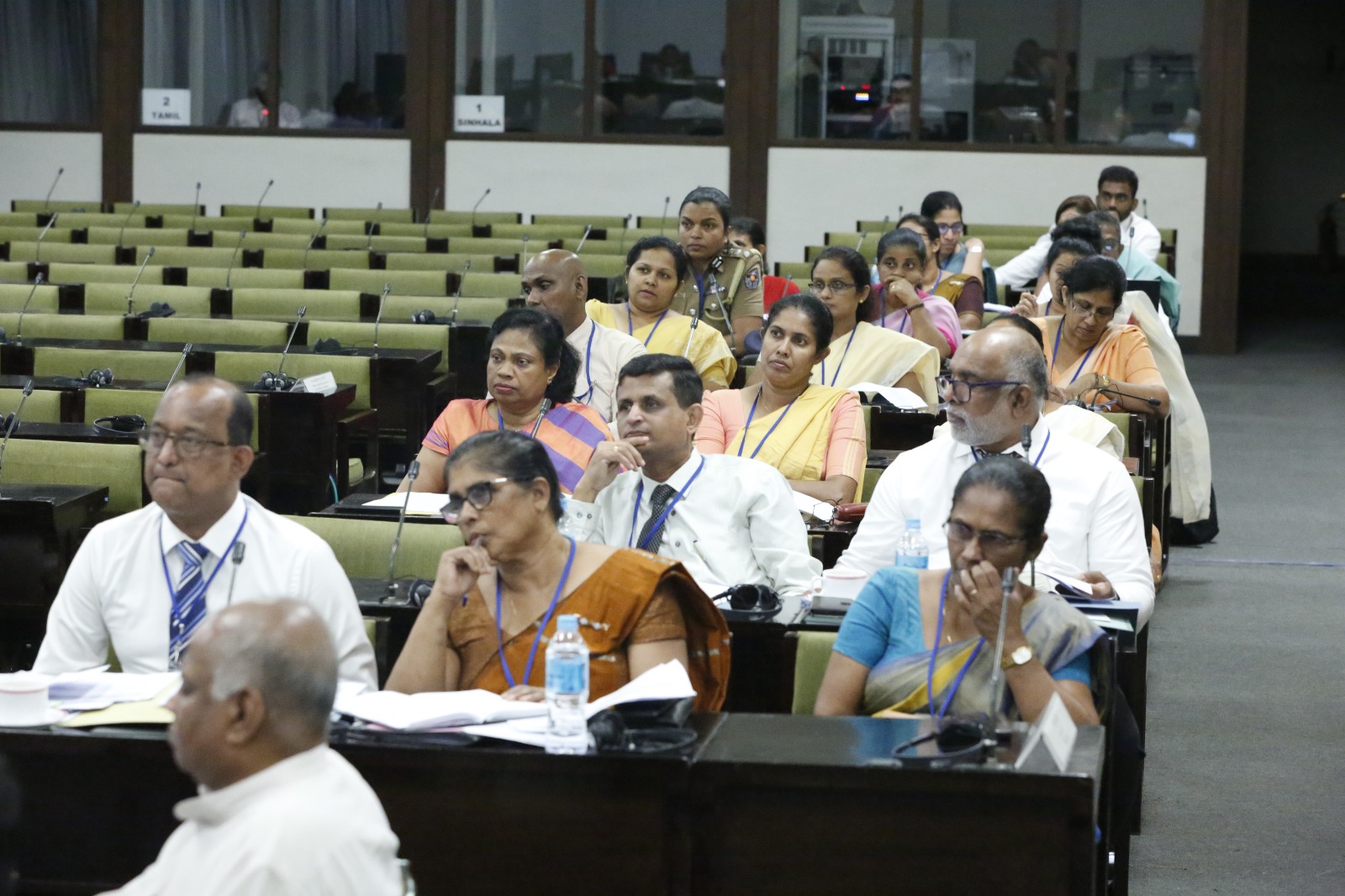
The expert committee report on public views and proposals relating to the review of election laws was recently submitted to the “Select Committee of Parliament to review the laws dealing with Elections (excluding laws dealing with Provincial Council Elections) and report to Parliament and submit its proposals and recommendations in that regard”. The report was handed over to the Chairman of the Select Committee, Hon. Minister of Public Administration, Provincial Councils and Local Government, Prof. A.H.M.H. Abeyrathna, by the expert committee appointed by the Select Committee to review the views and proposals submitted by the public.The expert committee was appointed to conduct an in-depth review of 31 proposals submitted by members of the public, various institutions and organizations on electoral reforms, together with reports of previous parliamentary select committees appointed to examine election-related matters, and to submit a comprehensive report on its findings.The members of the expert committee are Mr. Ashoka Peiris, Chairman of the Salaries and Pensions Commission; Mr. Saman Sri Rathnayake, Chairman of the Delimitation Commission; Prof. Chaminda Abeysinghe, Dean of the Faculty of Social Sciences at the University of Kelaniya; Dr. K. Thavalingam, Member of the Delimitation Commission; and Ms. P.S.M. Charles, former Governor of the Northern Province.Commenting on the matter, the Chairman of the Select Committee, Hon. Minister Prof. A.H.M.H. Abeyrathna, stated that separate reports had been prepared and submitted to the committee on the various issues and themes raised by the institutions and organizations that had presented proposals.He further stated that several registered political parties had also submitted their views and proposals. The Parliamentary Select Committee expects to review all submissions made by the public, various institutions and organizations, as well as political parties, and present an interim report to Parliament within two months.The Chairman added that, even after the interim report is submitted, citizens and members of the public will be given a further opportunity to submit amendments and new proposals.Meanwhile, the committee decided to extend by a further two weeks the deadline granted to registered political parties to submit their views and proposals on the review of election-related laws, excluding legislation governing Provincial Council elections.The committee also emphasized that members of the expert committee appointed to review public submissions would be permitted to submit proposals in their personal capacities, should they wish to do so.Following the meeting, a media briefing was held under the leadership of the Chairman and committee members to inform the public of the decisions taken by the Select Committee.Those who attended the committee meeting included committee members Hon. Minister Dr. Upali Pannilage; Hon. Deputy Ministers Attorney-at-Law Sunil Watagala and Muneer Mulaffer; and Hon. Members of Parliament Ravi Karunanayake, Harshana Rajakaruna, J.C. Alawathuwala, Kathiravelu Shanmugam Kugathasan, Ruwanthilaka Jayakody, Chandima Hettiarachchi and Attorney-at-Law Thushari Jayasinghe, among others.
2026-10-08
Committee on Public Finance Inquires into Financial Irregularities at NDB Bank and Final Audit Report
The Committee on Public Finance recently summoned officials of the Central Bank of Sri Lanka to Parliament to inquire into the financial irregularities identified at NDB Bank and the final audit report relating to the matter.The Committee meeting, chaired by Hon. Member of Parliament Dr. Harsha de Silva, discussed irregularities identified in NDB Bank’s financial statements, shortcomings in the audit process, and the relevant audit reports.The meeting was attended by Hon. Deputy Ministers Chathuranga Abeysinghe, Dr. Kaushalya Ariyaratne, and Nishantha Jayaweera, as well as Hon. Members of Parliament Attorney-at-Law Rauff Hakeem, Ravi Karunanayake, Ajith Agalakada, Nimal Palihena, Wijesiri Basnayake, M.K.M. Aslam, Champika Hettiarachchi, and Attorney-at-Law Lakmali Hemachandra.The Committee also focused on the findings of the investigation conducted by the Sri Lanka Accounting and Auditing Standards Monitoring Board (SLAAMB), as well as the findings revealed through the investigation conducted by Deloitte Touche Tohmatsu India LLP. In particular, the Committee inquired into the failure of the external auditors to identify irregularities in NDB Bank’s financial statements.The accountability of senior management with regard to corporate governance and risk management in relation to the financial irregularities was also discussed.Furthermore, as a significant proportion of NDB Bank’s shares are held by institutions representing public and state funds, the Committee also considered the potential impact of such financial irregularities on public funds and the general public.The Committee also discussed the progress made by LankaPay in establishing a centralized fraud monitoring system to prevent fraud within the financial system. The need to strengthen fraud monitoring systems at the individual bank level to monitor transactions carried out within each bank was also emphasized.Accordingly, the following observations are included in the final audit report concerning the financial irregularities at NDB Bank:1. The audit covers the period from 1 April 2016 to 31 March 2026. The audit report specifically identifies the financial impact arising from fraudulent transactions amounting to Rs. 13,639,664,684 (Rs. 13.6 billion).2. According to the disclosure made on 29 September 2026, the financial impact arising from the fraudulent transactions is as follows:• Rs. 1.5 billion for the period prior to 1 January 2025;• Rs. 9.6 billion during 2025; and• Rs. 2.5 billion for the quarter ended 31 March 2026.3. Compared with the initial disclosure made by NDB on 6 April 2026, the reported amount of the fraud has increased by Rs. 0.4 billion, from Rs. 13.2 billion to Rs. 13.6 billion. Compared with the amount disclosed by NDB on 26 June 2026, based on the interim report dated 22 June 2026, the additional amount of fraud is Rs. 60 million.4. The final audit report has also confirmed the previous disclosures that no customer accounts were affected as a result of the fraud incident.5. The report has identified several governance failures at NDB relating to the processing of CEFT transactions, user-level activities within the Core Banking System, and the management of user credentials and access information. In addition, shortcomings have been identified in several operational areas, including transaction monitoring, daily account reconciliation, financial compliance, internal audit, branch network management, and operational risk management.6. The audit report has made comprehensive recommendations to strengthen the control mechanisms, governance structures, and processes relating to the above-mentioned activities of the bank.
2026-10-05
In-Depth Discussion Held at the Parliamentary Caucus on the New Bill Regarding Rights of Persons with Disabilities
The Parliamentary Caucus for Persons with Disabilities gave extensive focus to the draft Bill intended to repeal and replace the Protection of the Rights of Persons with Disabilities Act No. 28 of 1996. Detailed deliberations took place when the Caucus met recently in Parliament under the Chairmanship of Hon. Sugath Wasantha De Silva, M.P.Addressing the meeting, the Chair of the Caucus highlighted that over the 30 years following the enactment of the 1996 legislation, the need to pass a new law concerning the rights of persons with disabilities has been continuously discussed. He pointed out that although Sri Lanka ratified the United Nations Convention on the Rights of Persons with Disabilities (UN CRPD), adopted in 2006, in the year 2016, the country has not yet been able to formulate domestic legislation aligned with the Convention. The Chair further explained that despite various Cabinet decisions taken since 2016 to draft this Bill, certain discrepancies have arisen between the original intent and the current drafts; hence, it is imperative to resolve these issues through consultations with all relevant stakeholders.Ministry officials clarified that the model draft Bill—prepared by a sub-committee comprising members of the National Council for Persons with Disabilities incorporating their observations—had been forwarded to the Legal Draftsman's Department. Subsequently, the revised draft prepared and returned by the Legal Draftsman’s Department to the Ministry is currently undergoing a process to gather observations from the National Council.All participating parties expressed their views on progressing the legislative process by taking into consideration prior observations submitted by the Attorney General’s Department, recommendations of the Human Rights Commission, and input from various stakeholders. Furthermore, extensive discussions took place on the necessity of establishing an independent monitoring mechanism in compliance with the UN Convention on the Rights of Persons with Disabilities (UN CRPD).Representatives of the National Council for Persons with Disabilities emphasized the importance of ensuring direct representation and participation of the disability community in enacting new laws and formulating policies, grounded in the principle “Nothing About Us Without Us.” Special attention was also directed toward legal provisions related to providing suitable employment opportunities for persons with disabilities, ensuring equal service conditions and remuneration, providing reasonable accommodation in workplaces, and strengthening policy proposals and regulations concerning the employment quota allocated for persons with disabilities in the public service.The meeting underscored the necessity of reaching a consensus among all relevant institutions to expeditiously formulate a sustainable legal framework that secures the rights of the disabled community in alignment with current socio-economic contexts and international standards.The meeting was attended by the Deputy Co-Chair of the Caucus, Hon. (Dr.) Pathmanathan Sathiyalingam, alongside Members of Parliament Hon. (Dr.) Nihal Abeysinghe, Hon. Attorney-at-Law Susantha Dodawatta, Hon. Padmasiri Bandara, and several other Parliamentarians.In addition, officials from the Ministry of Rural Development, Social Security and Community Empowerment, the Legal Draftsman’s Department, the Attorney General’s Department, and representatives of the Drafting Sub-Committee of the National Council for Persons with Disabilities participated in the discussion.
2026-10-02
Sectoral Oversight Committee Approves Anti-Corruption (Amendment) Bill
Following discussions, the Sectoral Oversight Committee on Governance, Justice and Civil Protection approved the Anti-Corruption (Amendment) Bill.The decision was made when the Sectoral Oversight Committee met in Parliament recently (Sep. 30) under the chairmanship, Hon. Member of Parliament Dr. Najith Indika.During the meeting, the Committee discussed practical issues that have arisen in implementing the Anti-Corruption Act, No. 9 of 2003, discrepancies between the Sinhala and English versions of the Act, the electronic system for submitting declarations of assets and liabilities, and public access to such declarations.The Committee also discussed matters including resolving the technical and administrative issues affecting the effective implementation of the Act. Following these discussions, the Committee granted its approval to the Anti-Corruption (Amendment) Bill.