2026-02-24
News Categories : Committee News
The Committee on Public Finance instructed officials to establish a legal framework for the Rs. 200 daily attendance allowance granted by the Government to estate workers.
Clarifying matters at length, the Chairman of the Committee emphasized that the Committee has no objection to increasing the wages of estate workers. However, he stated that the legal basis of the mechanism used to make this payment must be discussed. It was pointed out that the payment is currently being made under a Memorandum of Understanding (MoU) entered into with private plantation companies, without being gazetted, and that such an arrangement could be terminated at any time. Officials further noted that the Rs. 200 allowance does not qualify for contributions to the Employees’ Provident Fund (EPF).
Officials informed the Committee that the MoU has been entered into with private plantation companies for a period of three years, and that once this period ends, a policy decision would be required if the Government intends to continue the payments.
The Committee Chair pointed out that it is inappropriate to utilize public funds to pay salaries in private institutions without proper financial discipline. Officials stated that the payment is being made as it has been approved by Parliament under the 2026 Budget.
According to the approved budget estimates, the allocation for this payment is categorized as a “development subsidy.” As development subsidies are generally intended to support increased production, the Deputy Secretary to the Treasury (DST) suggested that the payment would be more appropriately termed a “production incentive.” However, it was observed that neither the payments already made for January nor the relevant MoUs specify such a requirement in practice. The Committee also questioned whether excluding the Rs. 200 daily allowance from Employees’ Provident Fund (EPF) and Employees’ Trust Fund (ETF) calculations is in compliance with the relevant laws. When asked whether the Attorney General’s advice had been sought regarding the MoUs and related matters, officials stated that such advice had not been obtained.
Accordingly, the Committee emphasized that these problematic areas must be rectified and that a proper legal basis should be established for the payment.
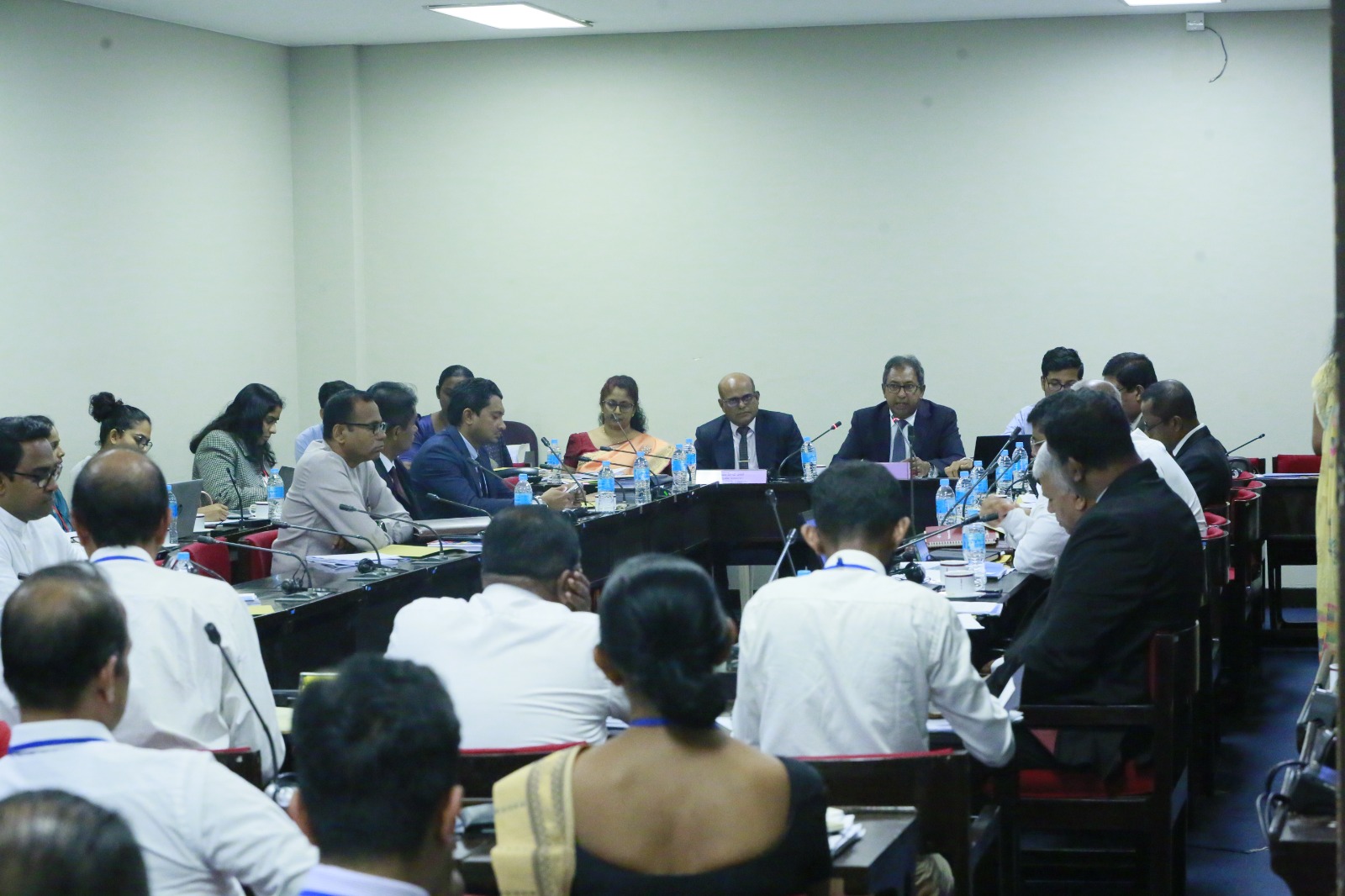
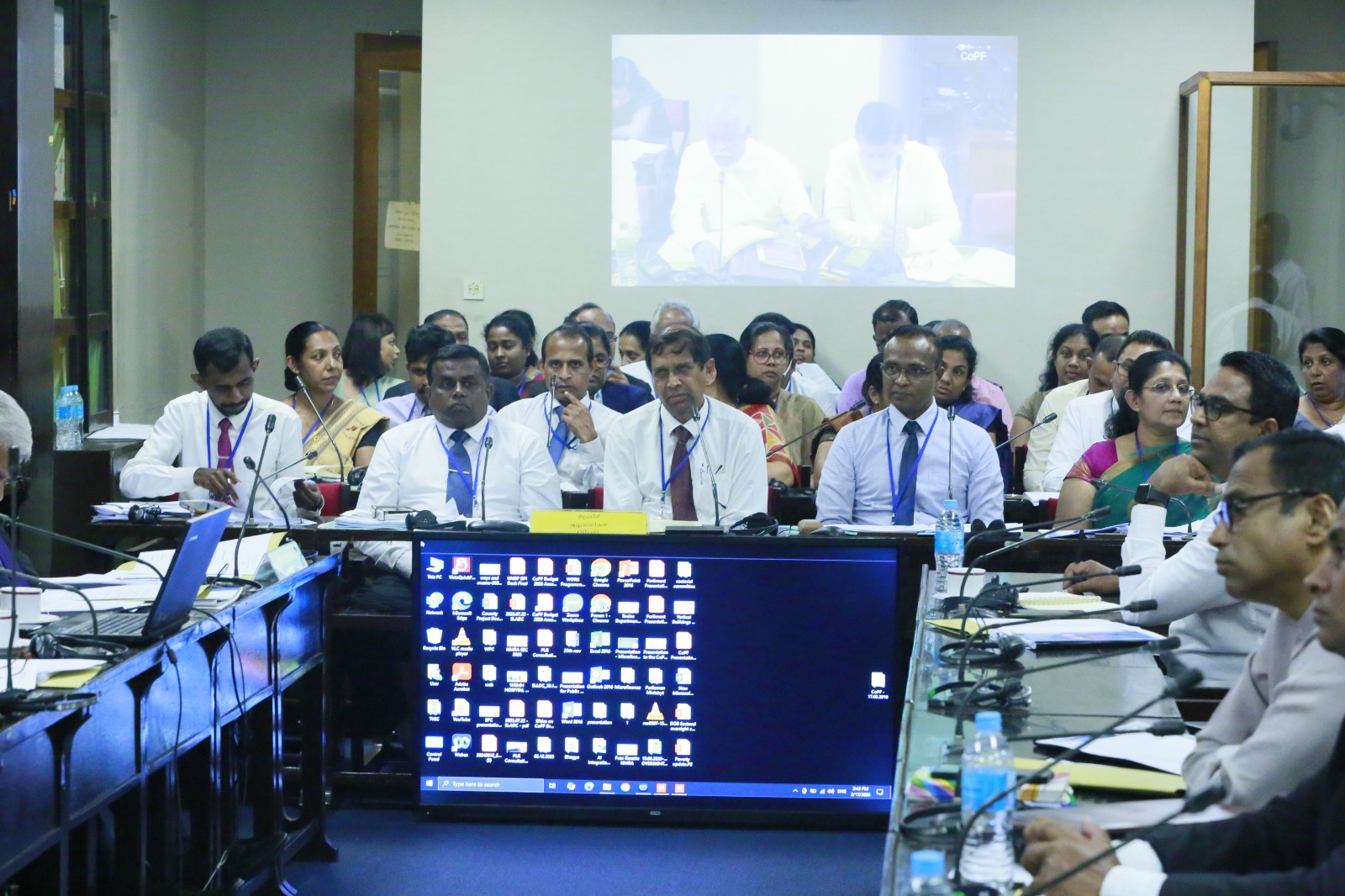
These matters were discussed when the Committee on Public Finance met in Parliament on 17.02.2026 under the chairmanship of Hon. Member of Parliament Dr. Harsha de Silva, with the participation of Hon. Deputy Ministers Chathuranga Abeysinghe and Nishantha Jayaweera and Hon. Members of Parliament Ravi Karunanayake, Ajith Alahakoon, M.K.M. Aslam, Attorney-at-Law Chitral Fernando, Wijesiri Basnayake, Sunil Rajapaksha, Nimal Palihena, Thilina Samarakoon and Champika Hettiarachchi.
The Committee also discussed the progress of disaster relief provided to the public affected by Cyclone Ditwah. Officials stated that approximately Rs. 24.4 billion has so far been released under various relief measures announced for those affected. While the majority of allowances for house cleaning, purchase of household items, and assistance for schoolchildren have already been distributed, officials explained that delays in housing reconstruction and rental assistance payments have occurred due to processes such as damage assessments and land identification. Officials further clarified the verification procedures and accountability mechanisms in place. Committee members highlighted the difficulties faced by those expecting relief payments and stressed that housing assistance in particular should be expedited.
Officials of the National Insurance Trust Fund (NITF) also explained their financial position and the reinsurance claims the Fund is required to settle following claims submitted by general insurance companies after Cyclone Ditwah. The estimated reinsurance claims payable by NITF currently amount to approximately Rs. 11 billion. Although NITF has not reinsured its risk exposure with an international reinsurer since 2023, officials stated that it has the capacity to settle the existing claims.
It was revealed that the Treasury maintains a significant cash buffer to meet the Government’s daily expenditure requirements, with approximately Rs. 750 billion available by the end of 2025. Due to payments made in December, the cash buffer had declined to this level, leading to increased issuance of Treasury bills from late December to mid-January, which in turn raised interest costs during that period. However, the situation has now stabilized. It was also noted that as the return earned from investing the cash buffer is approximately 2–3 percent lower than the Government’s annual interest cost, maintaining such reserves entails an opportunity cost.
Attention was also drawn to the progress of the Public Debt Management Office (PDMO), which has been in operation for 14 months. It was observed that 90 percent of total staff recruitment has been completed. Officials have been provided with specialized local and international training to enhance professional capacity.
Although the Central Bank’s auction system is currently used for public debt management activities, steps are being taken to establish an independent system within the PDMO to enable full operational autonomy in the future.
The Committee observed that Sri Lanka’s total domestic debt stock amounts to Rs. 31 trillion, comprising Rs. 15.6 trillion in Treasury bills and Rs. 15.4 trillion in Treasury bonds. The average cost of this total debt is reported at 8.73 percent.
It was further noted that Sri Lanka’s total external debt servicing requirement for 2026 is projected at USD 2,504 million. Expected foreign inflows for that year amount to USD 2,100 million, including USD 858 million in project loans, USD 150 million in World Bank budget support, USD 380 million from the Asian Development Bank (ADB), and USD 800 million from the International Monetary Fund (IMF).
Accordingly, a resource management gap exceeding USD 400 million remains to be addressed for debt servicing in 2026.
2026-08-25
A special meeting was held yesterday at Parliament to discuss the future work of the Expert Panel appointed to reform Sri Lanka’s electoral system, excluding Provincial Council elections, to make it more efficient, transparent, and responsive to the expectations of the people.The discussion was held under the chairmanship of Hon. Prof. A.H.M.H. Abeyaratne, Minister of Public Administration, Provincial Councils and Local Government, who is also the Chairman of the Select Committee of Parliament to review the laws dealing with Elections (excluding laws dealing with Provincial Council Elections) and report to Parliament and submit its proposals and recommendations in that regard.The meeting included extensive discussions on the role of the Expert Panel, the matters that should be reviewed, and how the next stages of the process should be carried out.The Expert Panel is expected to conduct an in-depth review of 31 proposals submitted by the public and various organizations concerning electoral reforms and to make the necessary recommendations. Relevant studies and research conducted by the university community and research institutions will also be taken into consideration during the review process.The Panel has been given a period of two months to conduct this review. During this period, attention will be focused not only on identifying shortcomings in the existing electoral system, but also, where necessary, on making recommendations for establishing a new electoral system and electoral culture with more constructive and positive features.Accordingly, the ultimate objective of the Committee is not merely to introduce several amendments to the existing system. Rather, it is to present Parliament with a report containing the necessary policy and legislative recommendations for a more credible, democratic, and efficient electoral system that is suited to current needs and the expectations of the people.Committee members Hon. Members of Parliament Ruwanthilaka Jayakody, Attorney-at-Law Thushari Jayasinghe, and Chandima Hettiarachchi also participated in the meeting.
2026-08-25
The Committee on Public Accounts (COPA) paid special attention to the progress of investigations into financial fraud and disciplinary violations that have occurred within the Department of Posts from 2004 to 2025.This was discussed when COPA met at Parliament recently (Aug. 20), under the chairmanship of Hon. Member of Parliament Kabir Hashim, to review the progress made in implementing the recommendations issued by COPA on April 7, 2026, as well as the current performance of the Department of Posts.It was revealed that a new computerized software system has been introduced to streamline the investigation process. The system is being used to update information relating to investigation files and monitor their progress. The Committee stressed the need to expedite investigations by prioritizing significant financial fraud and serious disciplinary violations, rather than spending resources on prolonged investigations into minor incidents.The meeting also discussed the fact that some investigations have remained unresolved for many years, that some individuals facing allegations have disappeared or died, that legal action in certain cases has been delayed, and that the investigation division is experiencing a shortage of human resources.The Committee further emphasized the need to complete investigations and disciplinary proceedings against officers accused of financial fraud within specified timeframes. Instructions were also given to expedite the necessary measures to recover losses from the parties responsible once investigations have been completed.The Committee also focused on the need to further strengthen financial management and internal control mechanisms within the Department of Posts.Meanwhile, the management of overtime payments within the Department of Posts was also discussed. Officials stated that steps are being taken to introduce an Optimum Cadre - the optimal number of employees - based on a work study conducted by the Department of Management Services covering all nine provinces and the Central Mail Exchange. It was noted that fingerprint machines are now being used to accurately verify employee attendance when making overtime payments. Going forward, the Department plans to use this data to further streamline the payment of overtime allowances.The modernization and digitalization of postal services also received the Committee's attention. Discussions covered plans to further expand value-added services such as Speed Post, Cash on Delivery, and International Courier, digitalize postal banking services, and increase the Department of Posts' revenue through the use of new technologies.The Committee also stressed the importance of maintaining sub-post offices in difficult-to-reach areas where they provide essential services to the public, rather than closing them as part of the restructuring of the Department of Posts' network of sub-post offices.The meeting was attended by Committee member and Hon. Deputy Minister Nalin Hewage, as well as Committee members Hon. Members of parliament Chanaka Madugoda, Oshani Umanga, Attorney-at-Law Sagarika Athauda, Manjula Suraweera Arachchi, Chandana Sooriyaarachchi, Ajanta Gammaddege, Lal Premanath, Ruwanthilaka Jayakody and Sunil Ratnasiri.
2026-08-24
The Sectoral Oversight Committee on Governance, Justice and Civil Protection focused on obtaining the views and proposals of the Police Department on measures that could be taken to reduce overcrowding in prisons.At a recent meeting of the committee held at Parliament under the chairmanship of Hon. Member of Parliament Dr. Najith Indika, discussions focused particularly on the Police Department’s procedures from the arrest of suspects in connection with drug-related offences through to the filing of cases, as well as on removing existing legal obstacles affecting these processes.The committee also discussed delays in proceedings relating to drug-related cases, delays in obtaining reports from the Government Analyst, and the resulting increase in the number of suspects being held in remand custody.It was emphasized that, in combating drug-related offences, it is necessary not only to arrest individuals but also to use modern technology to identify and control drug-trafficking networks and the illegal financial transactions associated with them. The need to introduce appropriate regulatory mechanisms to prevent the misuse of digital money-transfer systems operated by telecommunications companies by drug traffickers for illegal financial transactions was also highlighted.The meeting also discussed the need to strengthen community-based rehabilitation programmes as an alternative to imprisoning persons addicted to drugs, increase public participation in crime prevention, and amend existing laws to bring them in line with current requirements.Views were also expressed on the need to establish a modern forensic laboratory within the Police Department in order to expedite criminal investigations. It was pointed out that speeding up the analysis of scientific evidence could accelerate court proceedings and thereby help reduce prison overcrowding.In addition, attention was given to improving the welfare of police officers, enhancing their professional training and investigative skills, and strengthening mechanisms for evaluating police performance.Members of the committee who attended the meeting included Hon. Members of Parliament Ajith P. Perera, G.G. Ponnambalam, Mujibur Rahman, M.K.M. Aslam, Dr. Sellathamby Thilakanathan, Dharmapriya Wijesinghe, Chandana Suriyaarachchi, and Major General (Retired) G.D. Sooriyabandara.Secretary to the Ministry of Public Security and Parliamentary Affairs D.W.R.B. Seneviratne, Inspector General of Police Attorney-at-Law Priyantha Weerasuriya, and a number of senior officers of the Police Department were also present at the meeting.
2026-08-24
Focus on financial administration, wastewater management, and research allowancesThe Committee on Public Enterprises (COPE) of the Parliament met recently (Aug. 19) at Parliament, chaired by Hon. Member of Parliament Dr. Nishantha Samaraweera, to examine the Auditor General’s reports relating to the University of Peradeniya for 2023 and 2024, as well as its current performance. The University of Peradeniya had also been summoned before the COPE on the 5th of this month for discussions on these matters, and the committee met again for a second day as a continuation of those discussions.During the meeting, extensive discussions were held on the University’s financial administration, wastewater management, payment of research allowances, institutional governance, and future development plans.Particular attention was given to the University’s wastewater system, including the environmental impact caused by the discharge of wastewater from several student hostels. It was also revealed that, due to delays in the project to connect the University’s wastewater system to the Kandy Municipal Wastewater Project, the original estimated cost had increased from Rs. 464 million to Rs. 1.4 billion. Officials informed the committee that Rs. 2 billion in funding had been obtained through JICA to proceed with the project.The committee also focused on the 68 bank accounts maintained by the University, as well as a large number of accounts associated with various funds. The committee questioned the continued maintenance of certain accounts even after the completion of the projects to which they related, as well as the absence of centralized monitoring of information concerning the funds.Special attention was also given to the payment of research allowances. It was revealed during the discussion that research allowances had been paid to 59 officers belonging to the non-academic and executive staff without approval from the Research Management Committee and without obtaining research reports. It was further stated that, as of 30 June 2023, 28 of those officers had still not submitted the relevant research reports. The committee emphasized that research allowances must be used exclusively for research activities and that research proposals, progress reports, and final reports must be obtained in accordance with the prescribed procedures. While research activities should be encouraged, the committee pointed out that the use of research allowances as an additional salary or remuneration could not be approved under any circumstances.The committee also questioned the existence of positions and the payment of allowances without the approval of the Department of Management Services (DMS). The committee instructed the University to take steps to legally regularize all positions and payments that do not comply with government financial regulations and existing laws and regulations.Meanwhile, COPE emphasized the need for the University’s future development plans to be prepared with clear Key Performance Indicators (KPIs). The committee also instructed that development programmes, including wastewater and solid-waste management and the construction of a new clinical block, be implemented expeditiously.The committee further stressed the need to provide specific and direct responses to audit queries, properly disclose financial information relating to all funds and accounts, and promptly implement the recommendations made by the Auditor General.The meeting was attended by Members of Parliament Attorney-at-Law Dayasiri Jayasekara, Attorney-at-Law Lakmali Hemachandra, Sunil Rajapaksha, Chandima Hettiarachchi, Dinesh Hemantha, Samanmali Gunasinghe, Attorney-at-Law Nilanthi Kottahachchi, Thilina Samarakoon, Sudath Balagalla, and retired Lieutenant Commander Prageeth Maduranga.

Handbook of Parliament
The System of Elections in Sri Lanka
How Parliament Works
Business of Parliament
Copyright © The Parliament of Sri Lanka.
All Rights Reserved.
Design & Developed by TekGeeks