Handbook of Parliament
The System of Elections in Sri Lanka
How Parliament Works
Business of Parliament
Engage with your Parliament by logging in
2025-09-25
Officials of the task force for digital transformation in education presented a plan, indicating that by March 2026, it is expected to submit the policy framework related to the digital transformation in the education sector to the cabinet for approval.
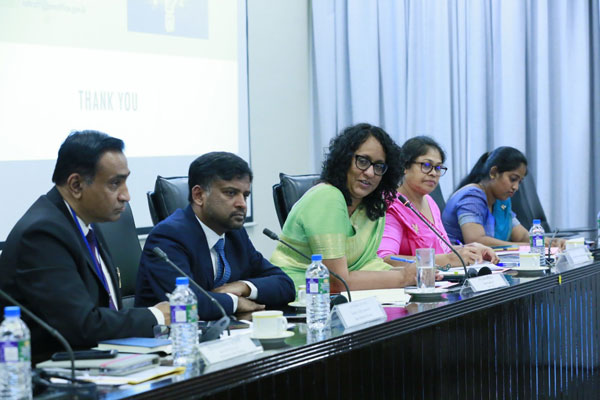
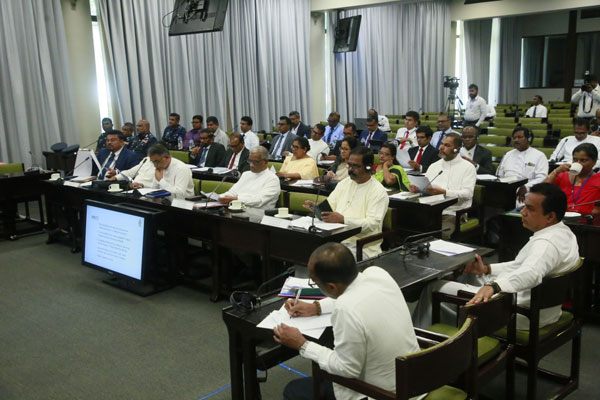
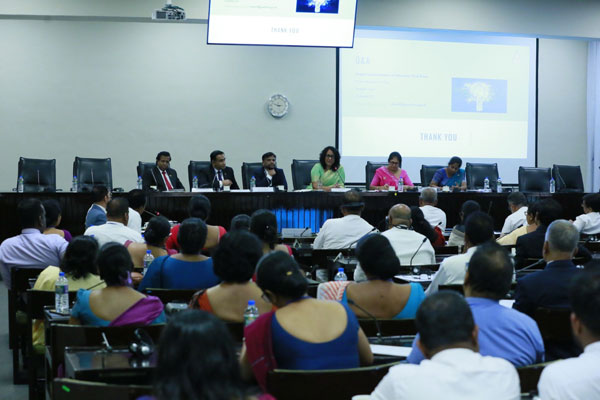
This was stated recently (Sep. 23) at a meeting of the Subcommittee under the Ministerial Consultative Committee on Education, Higher Education and Vocational Education held in Parliament chaired by the Hon. Prime Minister and Minister of Education, Higher Education and Vocational Education, Dr. Harini Amarasuriya.
During the Committee meeting held, officials of the task force for digital transformation in education presented the proposed plan and highlighted that the digitalization process within this education reform would focus on six sectors. Accordingly, they stated that digitalization is expected to provide a meaningful response to the teacher shortage. Further, they emphasized that the digitalization process aims to focus on providing relevant ICT equipment and resources for education, ensuring the uninterrupted operation of the school system under adverse conditions, and delivering children’s learning experiences through digitalization.
Officials of the task force for digital transformation in education also stated that by December 31, 2025, schools without internet facilities are expected to be provided with internet access, and schools without at least one digital smart board and either a computer or a laptop are expected to be provided with them.
According to existing data, it was shown by officials that 3 schools among the country’s dual-mode schools lack electricity, 546 schools lack at least one computer, laptop, or tablet, and 2,088 schools do not have a digital smart board.
Expressing her views, the Hon. Prime Minister stated that for this unique transformation being undertaken in the education sector, which involves investing a significant amount of funds for the future, the support of everyone is essential. Accordingly, she also requested that suitable ideas and proposals be provided to the Digital Task Force on Education Reform for this purpose.
The meeting was attended by Hon. Deputy Minister of Education and Higher Education (Dr.) Madhura Senevirathna, distinguished Members of Parliament, and a group of officials including Mr. Nalaka Kaluwawwe, Secretary of the Ministry of Education, Higher Education, and Vocational Education.

2026-10-02
Following discussions, the Sectoral Oversight Committee on Governance, Justice and Civil Protection approved the Anti-Corruption (Amendment) Bill.The decision was made when the Sectoral Oversight Committee met in Parliament recently (Sep. 30) under the chairmanship, Hon. Member of Parliament Dr. Najith Indika.During the meeting, the Committee discussed practical issues that have arisen in implementing the Anti-Corruption Act, No. 9 of 2003, discrepancies between the Sinhala and English versions of the Act, the electronic system for submitting declarations of assets and liabilities, and public access to such declarations.The Committee also discussed matters including resolving the technical and administrative issues affecting the effective implementation of the Act. Following these discussions, the Committee granted its approval to the Anti-Corruption (Amendment) Bill.
2026-09-30
It was revealed at the Ministerial Consultative Committee on Youth Affairs and Sports, which met recently in Parliament under the chairmanship of Hon. Minister of Youth Affairs and Sports Sunil Kumara Gamage, that arrangements are being made to gazette and present to Parliament a new Bill prepared to completely reform the governance structure of Sri Lanka Cricket.It was stated before the Committee that the proposed new cricket governance structure would include independent directors. Under the proposed new legislation, District Cricket Associations will no longer engage directly in decision-making with Sri Lanka Cricket, but will instead function through Provincial Cricket Associations.The Committee was also informed that Sri Lanka Cricket provides Rs. 900 million annually, together with equipment, for school cricket. It was further revealed that plans have been proposed in consultation with the Ministry of Education, Higher Education and Vocational Education to formalize the recruitment of coaches and the player selection process.Meanwhile, the Committee reviewed the progress in implementing the recommendations of the Auditor General relating to sports associations. It was stated that 33 sports associations have completed the relevant recommendations, while reports are due to be obtained in respect of a further 33 associations.The Ministry has instructed that the collection of fees for walking tracks and sports complexes used by the public for health and exercise activities be suspended immediately. The Ministry’s policy that sports facilities should be maintained not as profit-making ventures, but as a government responsibility for the promotion of national health and community welfare, was also emphasized.It was also stated that, under the plan to provide at least one synthetic running track in every province, the next synthetic track is scheduled to be constructed in Anuradhapura. The Committee was informed that there are currently only two synthetic tracks in the country.The Committee also discussed matters relating to the development of sports facilities in the Ampara District, the development of Weber Stadium in Batticaloa and the Hingurakgoda Sports Complex, improvements to sports facilities in the Hali-Ela area of Badulla, and resolving issues at the Bandaragama Public Grounds in Kalutara.Furthermore, the Committee was informed that when allocating government funds for international competitions, funding will be provided only for official national teams representing Sri Lanka and officially recognized international tournaments. It was also revealed that no discrimination based on race or region would be made when selecting national teams or sending teams to participate in overseas competitions.The meeting was attended by Hon. Deputy Minister of Youth Affairs Dinidu Saman Hennayake, other Deputy Ministers, Hon. Members of Parliament, officials of the Ministry of Youth Affairs and Sports, and members of the Transformation Committee of Sri Lanka Cricket, among others.
2026-09-30
The Subcommittee on Shortage of Physical Resources in Schools discussed the progress of the General Education Modernization Programme (GEM) implemented by the Ministry of Education.The Subcommittee, appointed by the Ministerial Consultative Committee on Education, Higher Education and Vocational Education to investigate the shortage of physical resources in schools, considered these matters at a meeting held recently in Parliament under the chairmanship of Hon. Member of Parliament Samanmali Gunasinghe.Officials of the Ministry of Education briefed the Subcommittee on the work carried out in schools under the programme, which is being implemented with the assistance of the World Bank. The Subcommittee emphasized the need to further expedite the activities being carried out under the programme and instructed officials to submit a detailed report on its progress.The Subcommittee further emphasized the need to take necessary measures to address the requirements relating to sanitary facilities and drinking water facilities in schools, particularly to ensure the quality and safety of drinking water.The Subcommittee also conducted an extensive review of the progress of the programme to provide telecommunication facilities to schools, as well as the progress of programmes to establish model primary schools.Hon. Members of Parliament R.M. Samantha Ranasinghe and Padmasiri Bandara, together with officials of the Ministry of Education, also participated in the meeting.
2026-09-30
Following discussions with officials of the Central Bank of Sri Lanka regarding Foreign Exchange Regulations Nos. 01 and 02 of 2026 and the Order issued under Section 22 of the Foreign Exchange Act, the Committee on Public Finance approved the said Regulations and Order.The matter was considered at a meeting of the Committee on Public Finance held in Parliament recently under the chairmanship of Hon. Member of Parliament Dr. Harsha de Silva. The Committee examined the relevant provisions relating to foreign investments, the transfer of funds overseas by emigrants, and measures to control foreign exchange outflows from the country.Hon. Deputy Ministers Chathuranga Abeysinghe and Nishantha Jayawera, as well as Hon. Members of Parliament Ravi Karunanayake, Ajith Agalakada, Nimal Palihena, Wijesiri Basnayake, Thilina Samarakoon, Champika Hettiarachchi and Attorney-at-Law Lakmali Hemachandra, participated in the meeting.Officials representing the Ministry of Finance, Sri Lanka Customs, the Department of Trade and Investment Policy, the Department of Import and Export Control, the Central Bank of Sri Lanka and its Department of Foreign Exchange also participated in the meeting.The Committee focused on the provisions relating to investments made overseas by persons resident in Sri Lanka under Foreign Exchange Regulations No. 01 of 2026. Discussions were held on persons eligible to make foreign investments, the sectors in which investments may be made, and the applicable restrictions on transferring capital overseas. Attention was also given to the opportunities available for Sri Lankan companies to expand their business operations overseas and the financial facilities required for such expansion. With regard to Foreign Exchange Regulations No. 02 of 2026, discussions were held on the procedures and restrictions applicable to emigrants transferring assets held in Sri Lanka overseas. In particular, the Committee was briefed on the existing provisions relating to the transfer of capital overseas under the Emigrant’s Allowance, as well as the remittance overseas of current income such as rental income, interest and dividends.Meanwhile, the Committee also discussed the Order issued under Section 22 of the Foreign Exchange Act. Officials of the Central Bank explained the temporary restrictions currently in place to manage foreign exchange outflows, taking into consideration the prevailing economic conditions and the need to safeguard foreign exchange reserves.The officials further informed the Committee that consideration is also being given to gradually relaxing these restrictions as economic conditions improve.The Committee also discussed the export earnings brought into the country by exporters during the previous year and the opportunities available to use a portion of those earnings for the expansion of businesses overseas. The importance of providing facilities required by local businesses to expand their operations in international markets was also highlighted.The Committee further focused on investigations into the unauthorised outflow of foreign exchange from the country and the monitoring mechanisms in place in this regard. Measures taken to minimise discrepancies between banking and Customs data relating to imports and exports were discussed, along with the need to strengthen coordination among relevant institutions to prevent the misuse of foreign exchange.In addition, the Committee considered the restrictions on bank guarantees and other financial facilities required by local companies, including construction companies, when seeking business opportunities overseas.During the discussion, Committee members also pointed out that imposing unnecessary regulations could discourage businesses and create a risk of hindering economic growth. Expressing his views, the Chairman pointed out that restricting foreign exchange outflows could also result in a reduction in the amount of foreign exchange flowing into the country.The Chairman also questioned why the amount specified in the Regulations as USD 2 million had been stated as USD 0.75 million in the Order in relation to the expansion of listed companies.In response, officials of the Department of Foreign Exchange stated that the USD 0.75 million limit would apply only for a period of approximately six months, and that consideration would be given to relaxing the limit in 2027. They further stated that the corresponding limit for non-listed companies is USD 0.2 million.The Department of Foreign Exchange stated that foreign exchange exceeding these limits may be converted with the approval of the Monetary Board of the Central Bank of Sri Lanka. It was also explained that such approval would be granted based on the balance sheet of the business. However, views were also expressed that businesses with higher asset levels may have greater opportunities to obtain such approval.
Handbook of Parliament
The System of Elections in Sri Lanka
How Parliament Works
Business of Parliament
Copyright © The Parliament of Sri Lanka.
All Rights Reserved.
Design & Developed by TekGeeks