2025-08-04
The Committee on Public Finance took into consideration an Order inclusive of updated guidelines on outward investments, introducing increased thresholds for local companies to invest overseas and streamlining processes to facilitate cross-border expansion.
The said Order under Section 22 of the Foreign Exchange Act, No. 12 of 2017 Published in the Gazette Extraordinary No. 2441/14 of 18.06.2025 was thus approved after having considered.
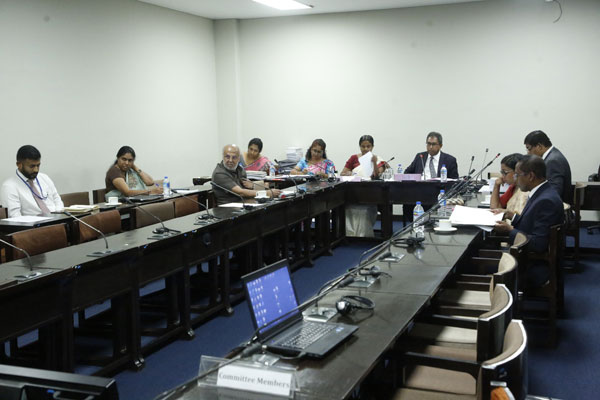
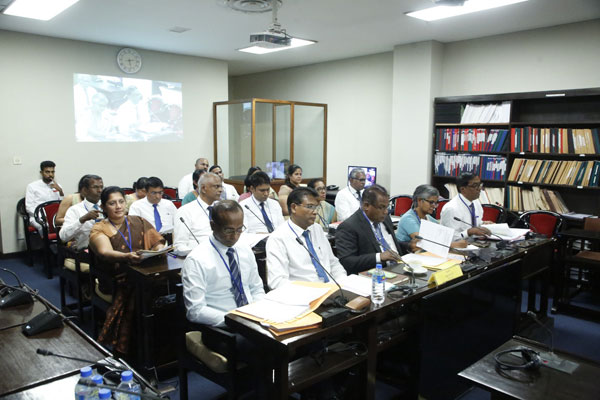
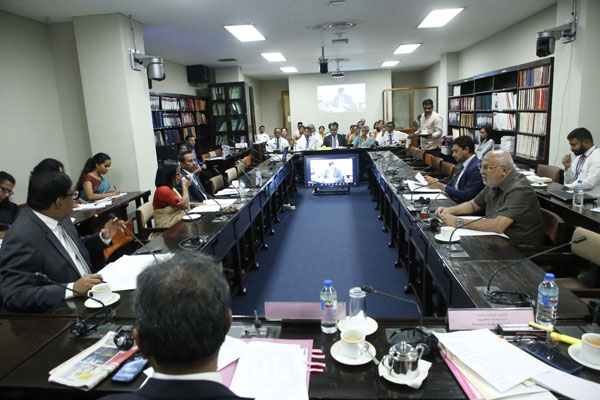
These matters were discussed at the meeting of Committee on Public Finance Chaired by Hon. Member of Parliament (Dr.) Harsha de Silva on 29.07.2025.
Under the new framework, the investment limit for listed companies has been raised from USD 500,000 to USD 750,000 and the limit for unlisted companies has been increased from USD 150,000 to USD 200,000. Companies seeking to invest beyond these limits can now borrow from foreign sources up to USD 2 million, with Central Bank oversight and any investment exceeding USD 2 million will require special approval.
All outward investments must be routed through a designated Outward Investment Account (OIA) in Sri Lanka before funds can be transferred abroad. The Central Bank of Sri Lanka has granted general permission to licensed banks to facilitate these transactions swiftly, ensuring companies can access opportunities without undue delays.
Officials who attended the meeting emphasized that these reforms aim to encourage Sri Lankan businesses, particularly in the technology and software sectors to pursue global expansion while maintaining oversight of capital flows. The changes come amid concerns that previous restrictions were prompting some firms to relocate overseas.
Speaking on the updated guidelines, Central Bank of Sri Lanka representatives assured that short-term supplier credit (DA terms) remains classified as a current account transaction, with no additional restrictions.
The Committee also took into consideration the Regulation made under Section 35 of the Public Debt Management Act, No. 33 of 2024 published in the Gazette Extraordinary No. 2443/14 of 30.06.2025. Approval for the Regulation was granted following a discussion at length.
The Committee reviewed cross-border letter of credit (LC) and de-registration requirements pertaining to the importation of vehicles. Moreover, the Committee also inquired on the suggested improvements to the Gambling Regulatory Authority Bill and e-commerce platform taxation and related matters.
Reviewing the Regulation under Section 35 of the Public Debt Management Act, No. 33 of 2024, State-Owned Enterprises (SOEs) will no longer have unrestricted access to international borrowing under the new frame work. They must now undergo stress tests using an IMF-introduced tool to qualify for sovereign guarantees from the Treasury. This mechanism determines risk premiums in addition to lender interest rates, making borrowing more expensive while promoting fiscal discipline among SOEs.
Officials further noted that, based on the Public Debt Management Act, Sri Lanka currently operates under a 7.5% of GDP borrowing ceiling, with approximately 5% of GDP already utilized. This leaves only 2.5% borrowing capacity for future growth and development financing.
The Committee also received an update on the cross-border letter of credit (LC) requirements for vehicle imports. Treasury officials informed the Committee that the Cabinet of Ministers has decided to re-export all vehicles imported under cross-border LCs, though this decision is currently under legal challenge, preventing further discussion.
Moreover, the Committee also inquired on the BYD vehicle issue, where over 1,000 cars remain detained at the Port, the Chair questioned custom officials about allegations against one of the country's major companies. Customs officials indicated investigations into suspected engine capacity understatement to avoid taxes, as duties are calculated based on engine capacity. While investigations continue, the Chair expressed concern about potential diplomatic implications, urging authorities to apply international standards rather than local investigations that may not meet international benchmarks.
The Committee also discussed proposed improvements to the Gambling Regulatory Authority Bill, with the Committee advocating for the inclusion of the National Lotteries Board and Development Lotteries Board within the regulatory framework, emphasizing that lotteries constitute gambling and should not be excluded.
The officials present also stated that concerns pertaining to e-commerce platform taxation has been resolved. They stated that operations are now flowing smoothly following earlier delays caused by the switch back to HS code-based taxation.
The meeting was attended by Hon. Deputy Minister Chathuranga Abeysinghe, Hon. Members of Parliament Ravi Karunanayake, Rauff Hakeem, Attorney at Law, and (Dr.) Kaushalya Ariyarathne.
2026-09-02
The Sectoral Oversight Committee on Economic Development and International Relations focused its attention on the “InSA” (Integrated Systematic Approach for the Family Development of Migrant Workers) Project, which is to be implemented to ensure the welfare of families and the protection of children of workers migrating for foreign employment.The matter was discussed at a meeting of the Committee held on the Aug. 21st, under the chairmanship of Hon. Member of Parliament Attorney-at-Law Lakmali Hemachandra.It was revealed at the meeting that the programme, which is to be implemented by the Ministry of Foreign Affairs, is scheduled to commence at the Divisional Secretariat level from October 1, 2026.It was stated that the primary objective of the programme is to develop family development plans focusing on key areas including the long-term financial management of families of migrant workers, child health and protection, employment training, and small business and export development.The Committee particularly emphasized the need to establish a formal plan for the care, protection and education of children when mothers with children between the ages of 2 and 18 migrate overseas, covering the period during which the mothers are abroad. Attention was also drawn to addressing mothers with children below the age of two in accordance with the existing legal and administrative procedures.The programme is expected to obtain the contribution of Child Rights Promotion Officers, who will provide necessary interventions concerning child protection and family welfare at three stages: prior to departure overseas, while the parent is overseas, and following the family's return to Sri Lanka.Accordingly, it was stated that Child Rights Promotion Officers will intervene to ensure that alternative care plans prepared for children can be practically implemented, identify situations involving risks, and prepare special care plans where necessary. Attention will also be given to providing psychosocial support, including strengthening family relationships, to families returning to Sri Lanka after living overseas.Furthermore, “InSA Committees” are to be established at the Divisional Secretariat level. These committees are expected to work under the chairmanship of the Assistant Divisional Secretary, together with Child Rights Promotion Officers, Early Childhood Development Officers and other relevant field officers, it was stated at the Committee meeting.It was also revealed that a Memorandum of Understanding (MOU) has been proposed between the Sri Lanka Bureau of Foreign Employment and the Ministry of Women and Child Affairs concerning child protection-related activities.The Committee also emphasized the importance of all workers leaving the country for foreign employment registering with the Sri Lanka Bureau of Foreign Employment. As there may be difficulties in implementing welfare and protection programmes for the families of individuals who travel overseas through informal channels, including on tourist visas, due to the absence of official data on such persons, the Committee stressed the need to maintain a formal data system on workers departing the country for foreign employment.During the implementation of the programme, progress is to be monitored at the district level through District Secretaries. The relevant parties were instructed to submit a report on the progress of the “InSA” Project to the Committee by February 2027.
2026-09-02
The Chief of Defence Staff (Repeal) Bill was recently considered by the Sectoral Oversight Committee on Governance, Justice and Civil Protection.The matter was discussed when the Committee met recently in Parliament under the chairmanship of Hon. Member of Parliament Dr. Najith Indika. A group of officials, including Secretary to the Ministry of Defence, Air Vice Marshal Sampath Thuyacontha, were summoned to the meeting.The Bill has been introduced to repeal the Chief of Defence Staff Act, No. 35 of 2009. The Act was enacted in 2009 to carry out functions including the coordination of activities between the Armed Forces and the Ministry of Defence, in accordance with the requirements of the time.However, considering the current situation in the country, it has been determined that there is no longer a need to maintain a dedicated office or position for the coordination of the three Armed Forces. Accordingly, under the ongoing restructuring process of the three Armed Forces, such coordination is being carried out through the Ministry of Defence.It was also observed that, given the country’s current economic situation, transferring the functions of the office to the Ministry of Defence could reduce the financial burden on the Government.Accordingly, the Sectoral Oversight Committee approved the Bill, which is scheduled to be taken up for debate in Parliament on September 9 for the Second Reading.Several Members of Parliament serving on the Sectoral Oversight Committee on Governance, Justice and Civil Protection participated in the meeting.
2026-09-02
The Sectoral Oversight Committee on Environment, Agriculture and Resource Sustainability emphasized the need to urgently formulate a national policy to address the human-elephant conflict, bringing together all relevant stakeholders and institutions.The Committee met recently in Parliament under the chairmanship of Hon. Member of Parliament Hector Appuhamy. During the meeting, discussions were held on the research findings and policy recommendations of a project jointly implemented by the Coalition for Inclusive Impact (CII), the United Nations Educational, Scientific and Cultural Organization (UNESCO), and the Centre for Poverty Analysis (CEPA).Attention was focused on managing the human-elephant conflict, meeting the food and water requirements of wild elephants, protecting the Muthurajawela wetland ecosystem, improving the livelihoods of small-scale fishing communities, and enhancing community participation in environmental conservation.The Committee also pointed out the need for an appropriate management programme to minimize the risk of elephants entering human settlements in response to challenges relating to water sources and food resources within wild elephant habitats.Attention was also drawn to the need to expedite the declaration of six elephant corridors on a priority basis among the identified elephant corridors, improve habitats within wildlife reserves, and strengthen awareness programmes for local communities.Meanwhile, discussions were held on the need to properly survey and demarcate State-owned lands within the Muthurajawela wetland ecosystem, as well as strengthen coordination among relevant institutions to prevent unauthorized activities.The Committee also focused on the challenges faced by small-scale fishing communities and possible measures that could be taken to strengthen their livelihoods.The Committee further emphasized the need to take measures based on scientific research and data to address environmental issues, including the human-elephant conflict; strengthen coordination among relevant government institutions; and study successful approaches that are suitable for Sri Lanka.Several officials and Committee members, including Hon. Members of Parliament Kings Nelson, Susanta Kumara Nawarathna, Kitnan Selvaraj, Attorney-at-Law Chithral Fernando, Attorney-at-Law Bhagya Sri Herath, Sudath Balagalla, and M.A.C.S. Chathuri Gangani, participated in the meeting.
2026-09-02
The Sectoral Oversight Committee on Infrastructure and Strategic Development instructed relevant officials to take immediate steps to implement the national-level programme formulated to control water pollution in the Diyawanna Oya and the water bodies surrounding the Parliament premises, following approval by the Cabinet of Ministers.The Sectoral Oversight Committee on Infrastructure and Strategic Development met in Parliament under the chairmanship of its member, Hon. Member of Parliament Ajith P. Perera. The Committee considered the final report of the task force appointed to investigate the discoloration of the water in Diyawanna Oya.The report identified the discharge of domestic wastewater, commercial and industrial waste into the water system surrounding Diyawanna Oya and Parliament as the main sources of pollution. It has proposed a three-phase management plan comprising short-, medium- and long-term measures.Accordingly, the plan focuses on identifying and controlling locations where waste is directly discharged into waterways, preventing solid waste from entering waterways, establishing wastewater treatment systems, and continuously monitoring water quality.The Committee also stressed the need to improve sanitation facilities in low-income settlements, enforce the law against individuals and institutions that illegally dispose of waste, and strengthen coordination among the relevant government institutions.The Committee further emphasized the need to treat this programme as a national priority and implement it expeditiously after obtaining Cabinet approval.Committee members, Hon. Members of Parliament Manjula Suraveera Arachchi, Ravindra Bandara, Chathura Galappaththi, Shantha Padma Kumara Subasinghe, Asitha Niroshana Egoda Vithana, Dhanushka Ranganath and Jagath Vithana, also participated in the meeting.