The Committee on Public Accounts (COPA) recently directed the officials of Ministry of Defence to expedite the amendment of the Firearms (Amendment) Act No. 22 of 1996 and the Explosives (Amendment) Act, which have been delayed for many years.
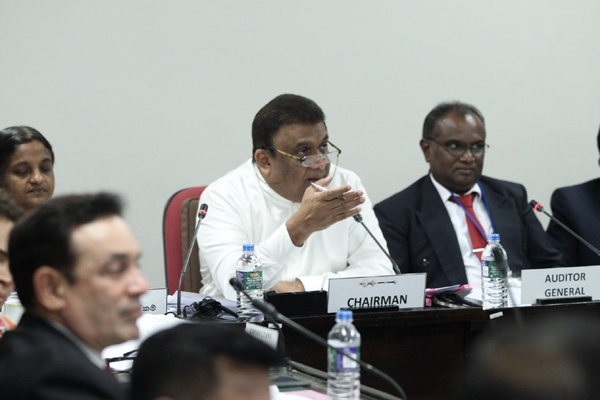
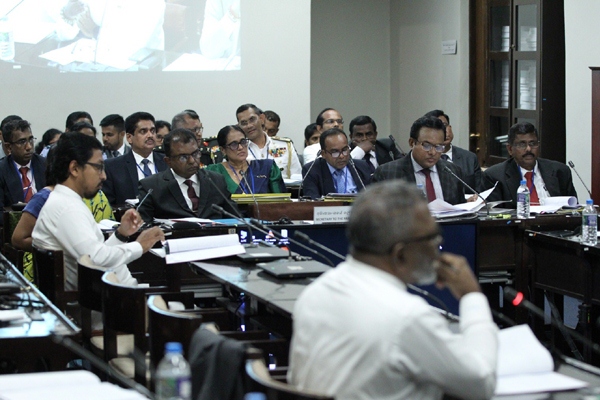
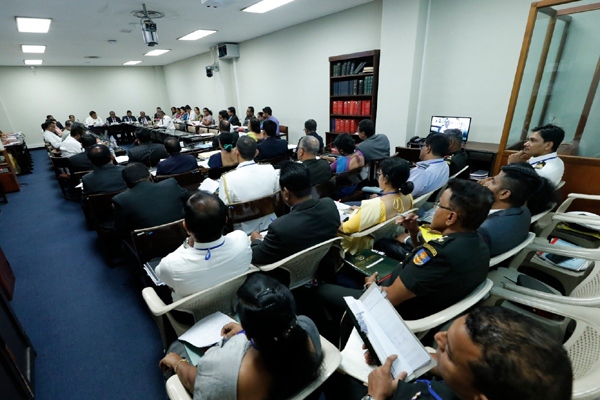
The Committee on Public Accounts met recently under the chairmanship of the State Minister Hon. Lasantha Alagiyawanna and the Auditor General's reports for the years 2020, 2021 and 2022 and the current performance of the Ministry of Defence were discussed.
Secretary to the Ministry of Defence, General (retired) Kamal Gunaratne and a group of officers participated in this meeting.
Although the committee had recommended to amend the Firearms (Amendment) Act No. 22 of 1996 and the Explosives (Amendment) Act since 2012, it was revealed that it has been delayed due to various reasons. Officials also said that so far about 37,000 firearms have been licensed in the country. The officials mentioned that the amendment of the Act is in the final stage and the draft bill will be completed soon. The committee emphasized the need to speed up the process as the license fees should be revised and the state revenue will be lost due to this delay. Accordingly, it was also advised to submit a report on the progress.
Although it was mentioned in the constitution that the revenues generated by the services provided to external parties by the armed forces should be credited to the consolidated fund, attention was also drawn to the fact that it was not implemented properly. Although it was previously informed to prepare a proper system related to it and report to the committee, the committee asked about the fact that it has not yet been prepared. Auditor General’s Department pointed out that since most of the income goes to the welfare associations, a proper system should be set up. Although the services are being successfully carried out, the committee also advised to prepare a clear system in this regard. He also instructed the ministry officials to review this process extensively.
Special attention was also paid to the procurement of food items for the three-armed forces. It was revealed at the committee that although earlier recommendations had been given to set up an information management system connecting all the institutions involved in the food items procurement process for the three-armed forces, it is being implemented only in the Navy and the Air Force. Accordingly, the officers were ordered to expedite the preparation of the system for the Army and to submit a report on this. Also, it was emphasized in the committee that parties including the soldiers should receive a meal commensurate with the money spent by the government.
There was also a discussion regarding hiring a housing complex with 24 house units on a lease agreement for 72 million rupees, in order to provide accommodation for the 31 officers participating in the course of the National Defence Academy. Instead of getting houses on such a rent, the Committee Chair advised to pay attention to the possibility of providing accommodation facilities by constructing a new building. The Defence Secretary pointed out that since the construction has been stopped due to the current economic situation, measures will be taken in the future.
Attention was also drawn to the misplacement of materials worth 12 million rupees in the consumer goods warehouse. The officials said that the all those persons related to this have been suspended and steps have been taken to collect the related money from the storekeeper. It was discussed why this incident was not revealed by the internal audit until it was uncovered by the audit of the Auditor General's Department.
Apart from this, attention was also paid to the strategic communication network project, procurement process, role of Disaster Management Centre (DMC) etc.
State Ministers Hon. Mohan Priyadarshana, Hon. Diana Gamage, Hon. Chamara Sampath Dasanayake, Hon. Dr. Suren Raghavan, Members of Parliament Hon. Tissa Attanayake, Hon. Hector Appuhami, Hon. J.C Alawathwala, Hon. Jayantha Katagoda, Hon. Major Pradeep Undugoda, Hon. Weerasumana Weerasinghe, Hon. Isuru Dodangoda and Hon. Sahan Pradeep Withana were also present at this committee meeting.

2026-03-06
The Third District Consultation aimed at strengthening inclusive service delivery for persons with disabilities was recently (Feb. 27) held in Batticaloa District. The event was organized by the Parliamentary Caucus for Persons with Disabilities of the Tenth Parliament and convened at the Batticaloa Municipal Council Hall . The consultation was held under the patronage of the Chair of the Caucus, Hon. Member of Parliament Sugath Wasantha de Silva and Batticaloa District Secretary J.S. Arulraj. The event was attended by the Deputy Co-Chairman, Hon. Member of Parliament (Dr.) Pathmanathan Sathyalingam, as well as Members of Parliament representing the Batticaloa District Shanakyan Rajaputhiran Rajamanickam, (Dr.) Ilayathambi Sirinath, Gnanamuthu Srinesan, and Kanthasamy Prabu. Senior government officials including Assistant District Secretary G. Praveen, District Social Service Officer Chandrakala Gnaneswaran, police officers, sectoral experts, and social development officers participated in the discussions. The representatives of the organizations of person with disabilities of Batticaloa districts were also participated in this event. The urgency of the consultation was underscored by the statistics indicating that more than 9,000 persons with disabilities reside in Batticaloa District, supported by 14 active associations. District Secretary J. S. Arulraj highlighted critical service gaps, including the immediate need for 21 trained teachers across 23 special education units currently serving 183 students. He also raised concerns regarding the issuance of formal identification cards for persons with disabilities, difficulties in obtaining driving licences, and widespread accessibility barriers in public buildings.In his address, Hon. Sugath Wasantha de Silva emphasized that the consultation represented a unified, non-partisan effort to foster a compassionate and inclusive society. He stated that services for persons with disabilities must be delivered on the basis of humanity and equality. He further announced that the Caucus plans to engage with the Ministry of Education in March to address systemic barriers in qualifying examinations for government employment. He called upon government officials and political leaders to collaborate with dedication to resolve longstanding challenges faced by persons with disabilities.Deputy Co-Chairman (Dr.) Pathmanathan Sathyalingam stressed the importance of identifying and supporting persons with disabilities in Batticaloa who have not yet received assistance. He highlighted the need for coordinated action through relevant institutions to ensure adequate facilities and services, particularly for individuals affected by conflict and other causes of disability.Members of Parliament representing the district drew attention to persistent shortcomings in service delivery and the practical challenges faced by persons with disabilities in their daily lives. The participants from disability community raised several concerns, including extending deadlines for educational allowances; adapting competitive examinations for visually impaired candidates through Braille-based alternatives; providing priority access in hospitals to reduce waiting times; ensuring that reserved seating on public transportation is respected; and improving accessibility at local government offices, where meetings are often held on upper floors without ramps or elevators.While some matters were addressed immediately through directives issued to relevant officials, others were referred to district authorities and the Parliamentary Caucus for longer-term policy reform, reflecting a commitment to sustainable and systemic change.The Chair of the Caucus reaffirmed that the Union remains committed to conducting district-level visits nationwide to listen directly to the concerns of persons with disabilities and to proposing practical, policy-driven solutions to ensure inclusive governance across Sri Lanka.The event was organized collaboratively by the International Foundation for Electoral Systems (IFES), with funding support from the Government of Australia, in partnership with the Batticaloa District Secretariat.
2026-02-24
The Committee on High Posts of Parliament has approved the nominations of two Heads of Mission and a Ministry Secretary.The approvals were granted when the Committee met in Parliament recently (Feb. 20) under the chairmanship of Prime Minister Dr. Harini Amarasuriya.Accordingly, the Committee approved the nomination of Mrs. Nirmala Indumathie Dias Paranavitana as Ambassador of Sri Lanka to the Federal Democratic Republic of Ethiopia and Permanent Representative of Sri Lanka to the African Union.The Committee also approved the nomination of Professor Mohamed Ibrahim Fazeeha Azmi as the new Ambassador of Sri Lanka to the Islamic Republic of Iran.In addition, approval was granted for the appointment of Mr. K.A. Vimalenthirarajah as the Secretary to the Ministry of Trade, Commerce, Food Security and Cooperative Development.
2026-02-24
Committee reviews progress of disaster relief provided to the public affected by Cyclone DitwahAttention drawn to disaster management insuranceReview of the current progress of the Public Debt Management Office (PDMO) programmesThe Committee on Public Finance instructed officials to establish a legal framework for the Rs. 200 daily attendance allowance granted by the Government to estate workers.Clarifying matters at length, the Chairman of the Committee emphasized that the Committee has no objection to increasing the wages of estate workers. However, he stated that the legal basis of the mechanism used to make this payment must be discussed. It was pointed out that the payment is currently being made under a Memorandum of Understanding (MoU) entered into with private plantation companies, without being gazetted, and that such an arrangement could be terminated at any time. Officials further noted that the Rs. 200 allowance does not qualify for contributions to the Employees’ Provident Fund (EPF).Officials informed the Committee that the MoU has been entered into with private plantation companies for a period of three years, and that once this period ends, a policy decision would be required if the Government intends to continue the payments.The Committee Chair pointed out that it is inappropriate to utilize public funds to pay salaries in private institutions without proper financial discipline. Officials stated that the payment is being made as it has been approved by Parliament under the 2026 Budget.According to the approved budget estimates, the allocation for this payment is categorized as a “development subsidy.” As development subsidies are generally intended to support increased production, the Deputy Secretary to the Treasury (DST) suggested that the payment would be more appropriately termed a “production incentive.” However, it was observed that neither the payments already made for January nor the relevant MoUs specify such a requirement in practice. The Committee also questioned whether excluding the Rs. 200 daily allowance from Employees’ Provident Fund (EPF) and Employees’ Trust Fund (ETF) calculations is in compliance with the relevant laws. When asked whether the Attorney General’s advice had been sought regarding the MoUs and related matters, officials stated that such advice had not been obtained.Accordingly, the Committee emphasized that these problematic areas must be rectified and that a proper legal basis should be established for the payment.These matters were discussed when the Committee on Public Finance met in Parliament on 17.02.2026 under the chairmanship of Hon. Member of Parliament Dr. Harsha de Silva, with the participation of Hon. Deputy Ministers Chathuranga Abeysinghe and Nishantha Jayaweera and Hon. Members of Parliament Ravi Karunanayake, Ajith Alahakoon, M.K.M. Aslam, Attorney-at-Law Chitral Fernando, Wijesiri Basnayake, Sunil Rajapaksha, Nimal Palihena, Thilina Samarakoon and Champika Hettiarachchi.The Committee also discussed the progress of disaster relief provided to the public affected by Cyclone Ditwah. Officials stated that approximately Rs. 24.4 billion has so far been released under various relief measures announced for those affected. While the majority of allowances for house cleaning, purchase of household items, and assistance for schoolchildren have already been distributed, officials explained that delays in housing reconstruction and rental assistance payments have occurred due to processes such as damage assessments and land identification. Officials further clarified the verification procedures and accountability mechanisms in place. Committee members highlighted the difficulties faced by those expecting relief payments and stressed that housing assistance in particular should be expedited.Officials of the National Insurance Trust Fund (NITF) also explained their financial position and the reinsurance claims the Fund is required to settle following claims submitted by general insurance companies after Cyclone Ditwah. The estimated reinsurance claims payable by NITF currently amount to approximately Rs. 11 billion. Although NITF has not reinsured its risk exposure with an international reinsurer since 2023, officials stated that it has the capacity to settle the existing claims.It was revealed that the Treasury maintains a significant cash buffer to meet the Government’s daily expenditure requirements, with approximately Rs. 750 billion available by the end of 2025. Due to payments made in December, the cash buffer had declined to this level, leading to increased issuance of Treasury bills from late December to mid-January, which in turn raised interest costs during that period. However, the situation has now stabilized. It was also noted that as the return earned from investing the cash buffer is approximately 2–3 percent lower than the Government’s annual interest cost, maintaining such reserves entails an opportunity cost.Attention was also drawn to the progress of the Public Debt Management Office (PDMO), which has been in operation for 14 months. It was observed that 90 percent of total staff recruitment has been completed. Officials have been provided with specialized local and international training to enhance professional capacity.Although the Central Bank’s auction system is currently used for public debt management activities, steps are being taken to establish an independent system within the PDMO to enable full operational autonomy in the future.The Committee observed that Sri Lanka’s total domestic debt stock amounts to Rs. 31 trillion, comprising Rs. 15.6 trillion in Treasury bills and Rs. 15.4 trillion in Treasury bonds. The average cost of this total debt is reported at 8.73 percent.It was further noted that Sri Lanka’s total external debt servicing requirement for 2026 is projected at USD 2,504 million. Expected foreign inflows for that year amount to USD 2,100 million, including USD 858 million in project loans, USD 150 million in World Bank budget support, USD 380 million from the Asian Development Bank (ADB), and USD 800 million from the International Monetary Fund (IMF).Accordingly, a resource management gap exceeding USD 400 million remains to be addressed for debt servicing in 2026.
2026-02-24
The Parliamentary Sub-Committee on Energy met in Parliament on 18.02.2026 under the Chairmanship of Hon. Member of Parliament Ajith P. Perera. During the meeting, several matters relating to the energy sector were discussed.Accordingly, attention was drawn to Demand Side Management (DSM) of electricity, the current progress of the Kerawalapitiya Power Plant, future sustainability plans of LTL Holdings (Pvt) Ltd and Lanka Electricity Company (Pvt) Ltd, the “Soorya Bala Sangramaya” programme, and the promotion of hydrogen as an energy source.This Sub-Committee convenes as a body appointed by the Sectoral Oversight Committee on Infrastructure and Strategic Development, chaired by Hon. Member of Parliament S. M. Marikkar.