2022-07-07
News Categories : Committee News
According to the data, petrol and diesel can be sold at a price of approximately Rs. 250 in Sri Lanka, said Mr. Janaka Ratnayake, Chairman of the Public Utilities Commission of Sri Lanka (PUCSL).
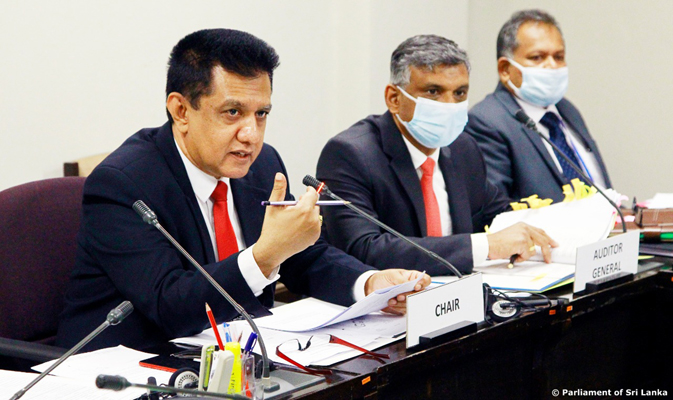
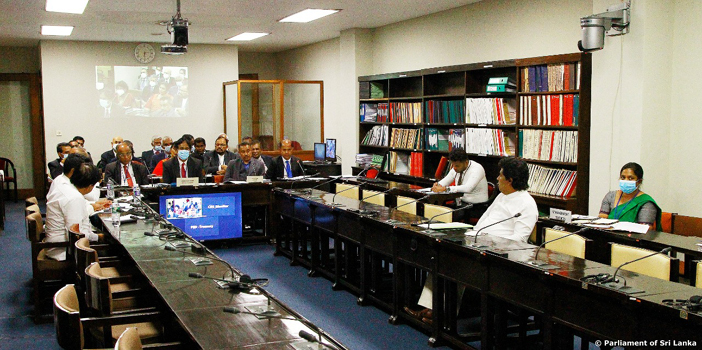
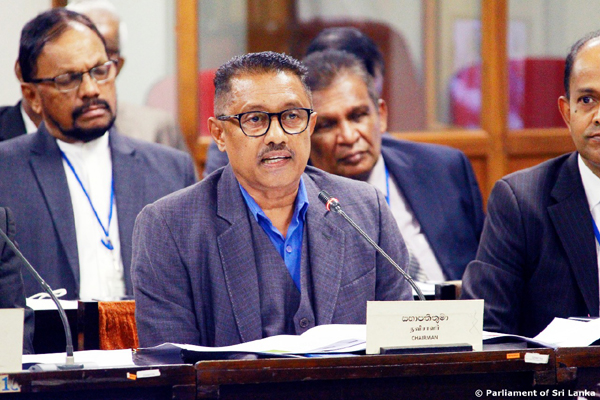
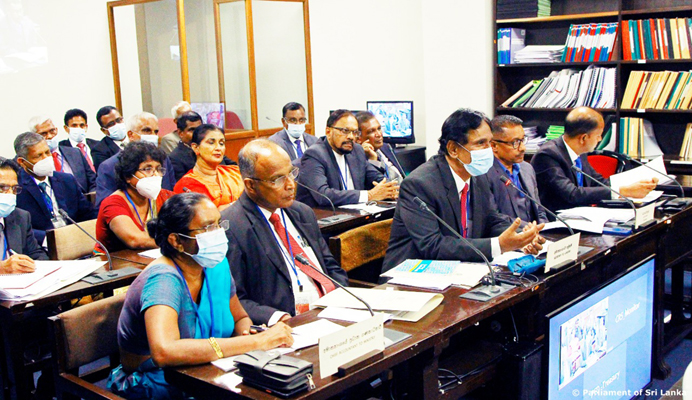
He stated this when the Committee on Public Enterprises (COPE) met in Parliament yesterday (06) under the chairmanship of the Member of Parliament (Prof.) Charita Herath to examine the Auditor General's report for the years 2018 and 2019 and current performance of the Public Utilities Commission of Sri Lanka.
Explaining this further, Mr. Rathnayake mentioned that this is revealed when checking the statistics on the import prices of petroleum and the taxes levied by the government. Accordingly, he pointed out that petrol and diesel can be provided in Sri Lanka at Rs. 200 less than the current price. According to this, petrol and diesel can be sold at a price of approximately Rs. 250 . He also said that the government has collected a tax of Rs. 280 for one liter of diesel imported on July 1st.
He said that this is his personal statement and he would make the statement after consulting the data. Accordingly, the members present asked about the awareness of the officials of the commission and the officials of the board of directors said that they are not aware of it. It was also mentioned here that the Ministry of Finance has not formally informed about this.
COPE members asked Mr. Ratnayake about his qualifications for becoming the chairman of this commission. He pointed out that he has obtained a Special Degree in Public Administration from the University of Sri Jayawardenepura and a Postgraduate degree in Business Administration (MBA) from the University of Colombo. He also said that he has also studied at Harvard University. As his political qualifications, he stated that since 2005, Rajapaksa has been greatly supported in forming governments.
COPE chairman mentioned that the statement made by PUCSL Chairman regarding the fuel price is more serious and the attention of the country is being drawn on this. Therefore, officials from the Ministry of Power and Energy and the PUCSL Chairman are expected to be summoned before the COPE to inspect the matter in the future, said Prof. Herath.
Also, it was discussed at length about the purchase by the commission of a “Benz” car manufactured in the year 2005 without fuel or driver from a company called General Business (Private) Ltd without entering into any agreement for a period of one year from December 07, 2021. Thus, the annual rent for this vehicle was Rs.4,500,000 and on 31 May 2022, Rs. 2,187,500 had been paid to the aforesaid company. However, the COPE questioned the fact that the files regarding the hiring of this vehicle were not submitted for audit, recommendations were given to hire a 15-year-old vehicle, as well as the irregularities in calling for bids for the hiring of this vehicle, and the issues of transparency in the payment of rent for this vehicle. In particular, the committee instructed the officer who signed the approval to provide money for this institution to act responsibly.
Accordingly, the COPE Chairman recommended that an investigation be conducted and a full report be submitted to the COPE.
Also, although it was informed that the Organization Structure and Salary Structure of the PUCSL should be developed under the recommendation of the National Salary and Cadre Commission and the approval of the Department of Management Services and that the Finance Minister should submit an amendment to the Cabinet and approve it, the committee discussed spending on certain functions without doing it by the end of 2021.
In particular, the COPE paid attention to the fact that Rs. 45,873,483 were paid to the staff of the institution under 11 types of allowances. Also, the committee paid more attention to the fact that Rs. 86,808,538 of the total operating cost, (49% of the total amount) had been spent on public awareness programs.
In particular, attention was paid to the approved electricity generation plan for the years 2018-2037. The officials present mentioned that data on another new generation plan was submitted in the year 2021 and was not approved as the appropriate requirements were not met. Here, the Committee mentioned that when the political authorities change, problems arise due to the change of these plans, so all parties should pay more attention to this.
Furthermore, under the Electricity (Distribution) Performance Standards Orders mentioned in a special gazette notice issued in 2016, the commission was assigned the responsibility of preparing and implementing the performance rules. Thus, the work that should be implemented within 36 months after the decree came into effect, although almost 4 years have passed, the committee drew attention to the fact that even the adaptation phase, which was planned to be completed in 2018, has not yet been completed. The officials who were present mentioned that this was planned to be done in 3 phases in 3 years and that it has not happened yet due to the need to change the system and the problems in the relationship between the parties involved.
The members of the committee Hon. Minister Mahinda Amaraweera, Hon. Mahindananda Aluthgamage, Hon. Indika Anuruddha, (Dr.) Hon. Harsha de Silva, (Dr.) Hon. Nalaka Godaheva, Hon. Jayantha Samaraweera, Hon. Premnath C. Dolawatta and Hon. Mr. Madura Withanage were present. Also, several MPs who are not members of the committee also participated with the permission of the chairman of the committee.

2026-07-31
Plans are underway to establish a new National Handicrafts Authority by 2027 through the integration of the Department of Textile Industries, the National Crafts Council, the National Design Centre, and Laksala, it was revealed at the Committee on Public Accounts (COPA).The proposed authority aims to transform Sri Lanka's traditional textile and handicrafts sector into a competitive industry by integrating it with modern fashion, design, and technology while targeting international markets.These matters were discussed at length when the Committee on Public Accounts met recently in Parliament under the chairmanship of Hon. Member of Parliament Kabir Hashim. The Committee reviewed the Auditor General's triennial reports relating to the Department of Textile Industries for the period 2021–2023, the Auditor General's report for 2024, and the Department's current performance, with particular attention to its progress, challenges, and the proposed restructuring programme. During the discussions, officials stated that the Government intends to develop the textile industry not only as an important component of Sri Lanka's cultural heritage but also as an economically viable sector aligned with modern design, technology, and evolving market demands.Officials further informed the Committee that efforts are being made to attract more young people to the sector by expanding higher education and technical training opportunities through the Sri Lanka Institute of Textile and Apparel (SLITA).The Committee also discussed the Department's human resource shortages, including vacancies for internal auditors and accountants, the suspension of the recruitment of textile instructors at the provincial level, and the resulting impact on training programmes.It was revealed that 720 students had enrolled in the Department's training courses between 2021 and 2025, of whom only 456 successfully completed their programmes. Accordingly, the dropout rate exceeds 40%. The Committee was also informed that, in certain instances, the Government had incurred expenditure ranging from Rs. 700,000 to Rs. 1.1 million per trainee.The Committee further inquired into several issues, including the underutilization of textile machinery purchased during the COVID-19 pandemic, the inadequate use of facilities at the Katubedda Training Centre, and the failure to make effective use of the Department's tourist bungalows as income-generating assets.The Committee emphasized that Sri Lanka's textile industry should evolve into a competitive sector that preserves the country's cultural heritage while embracing modern technology, innovative design, and international market opportunities. It further stressed the importance of implementing the proposed restructuring programme within the stipulated timeframe while ensuring the efficient utilisation of public resources.The meeting was attended by Hon. Committee Members, Hector Appuhamy, Ruwanthilaka Jayakody, Lal Premanath, Attorney-at-Law Thushari Jayasinghe, T.K. Jayasundara, Ajantha Gammaddhege, Chandana Sooriyaarachchi, and Sunil Rathnasiri, together with a number of senior public officials.
2026-07-31
A Parliamentary Roundtable Discussion under the theme "Financing the Care Economy: The Role of Parliament", organised by the Women Parliamentarians' Caucus with the technical support of the Westminster Foundation for Democracy (WFD), was held in Colombo recently under the patronage of Hon. Speaker Dr. Jagath Wickramaratne and Hon. Prime Minister Dr. Harini Amarasuriya.Delivering the welcome address, Chairperson of the Women Parliamentarians' Caucus and Hon. Minister of Women and Child Affairs, Mrs. Saroja Savithri Paulraj, highlighted the importance of strengthening Sri Lanka's care economy and noted that her Ministry is working closely with all relevant institutions to advance this initiative.Addressing the gathering as the Chief Guest, Hon. Speaker Dr. Jagath Wickramaratne emphasised that recognising and strengthening the care economy is essential to achieving sustainable national development. He further stated that Parliament has a responsibility to support, through the legislative and budgetary processes, policies that promote gender equality, social inclusion and equitable economic development.Delivering the keynote address, Hon. Prime Minister Dr. Harini Amarasuriya noted that investing in social care services, including childcare, elder care and support services for persons with disabilities, is not only a social responsibility but also a strategic investment that expands labour force participation, creates employment opportunities and strengthens the national economy.Discussions also focused on how gender-responsive budgeting could be utilised to address barriers to economic growth and ensure that investments in social care are reflected more effectively and strategically in future national budgets.The technical sessions were facilitated by Dr. Gayathri Lokuge, Senior Researcher at the Centre for Poverty Analysis (CEPA), who delivered a presentation on Sri Lanka's social care policies and gender-responsive budgeting.Former Director of the UK Women's National Commission and current Chair of the UK's Women's Budget Group, Janet Veitch OBE, delivered a presentation titled "Invest in Women, Grow the Economy", sharing international experiences on how investment in the care economy can increase women's economic participation, generate employment, promote economic growth and strengthen gender-responsive budgeting.Representatives of local policy research institutions also presented recommendations on future budget allocations to strengthen social care. These included proposals for a national time-use survey, new funding mechanisms for assistive technology for persons with disabilities, the expansion of elder care services, and after-school care programmes for children.Hon. Members of Parliament, policy experts and officials of the Ministry of Finance also engaged in extensive discussions on the policy priorities and resource requirements necessary to strengthen investments in the care economy through future national budgets.During the discussion, a representative of the International Labour Organization (ILO) stated that the Ten-Year Action Plan on the Care Economy, developed by the National Social Care Working Group co-chaired by the Ministry of Women and Child Affairs, the Ministry of Rural Development, Social Security and Community Empowerment, and the Ministry of Labour, based on the second strategic pillar on social care under the National Social Protection Strategy formulated in line with the National Social Protection Policy, is expected to be submitted to the Cabinet of Ministers shortly for approval. She further noted that the issues discussed at the roundtable are comprehensively addressed in the Action Plan and that it has been developed through an extensive stakeholder consultation process with the technical support of the ILO.The event was attended by Hon. Deputy Chairperson of Committees Hemali Weerasekara, Chair of the Committee on Public Finance, Hon. Member of Parliament Dr. Harsha de Silva, Country Director of the Westminster Foundation for Democracy (WFD), Mr. Sanje Wignaraja, Members of the Women Parliamentarians' Caucus, Hon. Members of Parliament, policymakers, public officials, researchers and development partners.
2026-07-30
The Sectoral Oversight Committee on Infrastructure and Strategic Development held extensive discussions on the Sri Lanka Ports Authority's (SLPA) current operational performance, the progress of its development projects, financial performance for 2026, the implementation of recommendations previously made by the Committee, and the Authority's 2024 Annual Report.The discussion took place when the Committee met in Parliament recently under the chairmanship of Hon. Member of parliament S. M. Marikkar.The Committee reviewed the financial progress and profitability recorded by the Sri Lanka Ports Authority during the past six months and discussed measures required to sustain this positive performance.Particular attention was paid to the growing regional and domestic competition faced by the Port of Colombo. The Committee sought clarifications from officials regarding the competitive pressures arising from the expansion of India's Vizhinjam Port, the investment made in that port by one of the world's leading shipping companies, Mediterranean Shipping Company (MSC), and plans to increase the capacity of the Port of Hambantota.The Committee also held detailed discussions on the progress of development projects aimed at expanding the capacity of the Port of Colombo, the reasons for delays in implementing these projects, issues encountered in procurement and tender procedures, and the financial impact of these delays on the Government.The Committee emphasized the need to conduct a proper audit into the causes of the delays in order to identify the parties responsible. It further stressed the importance of implementing more efficient procurement and project management mechanisms to prevent similar delays in the future.The development of regional ports, including Hambantota, Galle and Kankesanthurai, strengthening related infrastructure, and enhancing local capacity by increasing the participation of domestic construction companies, consultants and technical professionals in port development projects were also discussed.At the conclusion of the meeting, the Committee underscored the need to expedite measures to ensure that Sri Lanka Ports Authority projects are completed within the stipulated timeframes, strengthen institutional accountability and transparency, and further enhance the Authority's efficiency and profitability as a state-owned enterprise.The meeting was attended by Hon. Members of Parliament Ajith P. Perera, Manjula Suraweera Arachchi, Chathura Galappaththi, Ravindra Bandara, Dhanushka Ranganath, and Shantha Padma Kumara, as well as the Secretary to the Ministry of Ports and Civil Aviation, the Chairman and Managing Director of the Sri Lanka Ports Authority, and other relevant officials.
2026-07-30
The Hon. Minister of Housing, Construction and Water Supply Dr. Susil Ranasinghe stated that action will be taken, based on the recommendations of a committee appointed to examine housing projects that were commenced during previous administrations but left incomplete due to various reasons.The matter was discussed at the meeting of the Ministerial Consultative Committee on Housing, Construction and Water Supply, held in Parliament under the chairmanship of the Minister.The Minister said that consideration is being given to allocating funds through the 2027 Budget to implement a new programme to complete these housing projects.He noted that a number of housing projects initiated in previous years had been abandoned midway because the loans and grant funding allocated for them had not been fully disbursed. According to the Minister, there are nearly 5,000 such incomplete housing units.Accordingly, a five-member committee, co-chaired by two former Secretaries to the Ministry, has been appointed to identify housing units that are in a condition suitable for use and to make recommendations on the future course of action regarding those projects.The Minister stated that the committee has already commenced its work by gathering information on the relevant housing projects, identifying houses that are fit for occupation, and formulating recommendations on the measures to be taken.He further said that final decisions regarding the abandoned housing projects will be made based on the recommendations submitted by the committee.The Minister also announced that assistance will be provided next year to families requiring support to complete partially constructed houses. It is expected that approximately 2,000 families will benefit from this programme.Meanwhile, Members of Parliament who attended the Committee meeting raised issues relating to the housing and water supply sectors in their respective electorates.The Ministry also agreed to convene a special meeting, with the participation of all relevant stakeholders, to discuss housing-related issues, including housing projects for low-income families in the Colombo District.