04

සි   |     |  

2021-11-26

News Categories : Committee News 

An additional Rs. 31 million has been included in this year's budget to address the teacher-principal salary anomaly – Hon. Dinesh Gunawardena, Minister of Education

According to the report of the Cabinet Subcommittee on teacher and Principals 'Salary Anomalies, an additional Rs. 31 million has been included in this year's budget following the discussions with the Prime Minister, the Hon. Minister of Finance and the Teachers' Trade Unions, Hon. Dinesh Gunawardena, Minister of Education said.

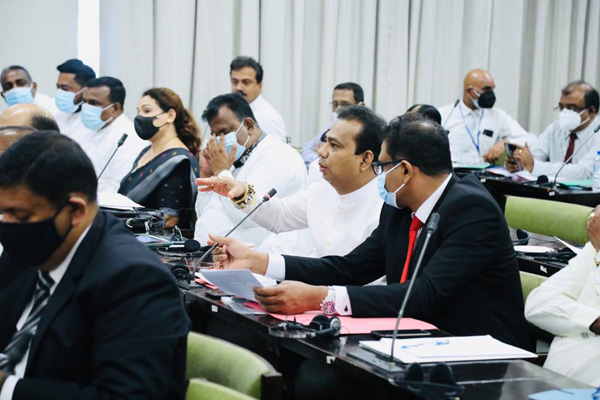
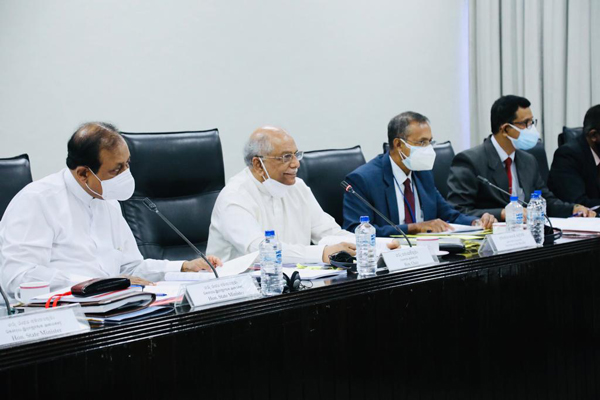
He stated the above addressing the Ministerial Consultative Committee on Education which met in Parliament recently (24).

Furthermore, the Minister stated that the z-score for the A / L results has been released and that the obstacles to the release of the G. C. E. OL results while the teacher-principal salary anomaly crisis persisted has been resolved.

Additionally, relevant dates to hold the GCE (Advanced Level) examination, Grade 5 Scholarship Examination and GCE (O / L) examination which was postponed due to COVID – 19 have already been decided, the Minister said. Accordingly, the Grade 5 scholarship examination will be held on January, 2022 and the GCE (Advanced Level) examination will be held in the first week of February. GCE (Ordinary Level) examination will be held on May 23rd.

The report of the technical Committee appointed by the Parliamentary Sub-Committee on the Inclusion of Law as a Subject in School Curriculum was submitted to the Consultative Committee by State Minister of State, (Dr.) Susil Premajayantha for approval.

Addressing the Committee, the state minister said that it is proposed to change the subject of Citizenship Education, which is currently a compulsory subject from Grade 6 to Grade 9 in the school curriculum, to Law and Citizenship Education after these reforms.

According to the report of the technical committee, the inclusion of law as a subject in the school curriculum will create awareness among children about the law, create awareness about the consequences of disobedience and punishment, provide an understanding of the rights protected by law, legislation and law enforcement mechanisms. It is expected to develop skills such as providing an understanding of the duties and responsibilities established by law in a civilized society.

The state minister further stated that the Final Report on the Policy Framework compiled into three sections on Educational Reforms in Vocational Education and Educational Reforms in Higher Education Educational Reforms from Early Childhood to Advanced Level in Relation to Expected New Education Reforms, has been released in August 2020.  He also stated that a digital platform for anyone to express their views on general education was launched on March 28th, 2021 under the patronage of the H.E. the President.

The Minister said that a report prepared after examining 2400 ideas and suggestions received for this purpose has been submitted to the National Education Commission.

Hon. State Ministry of Skills Development, Vocational Education, Research & Innovation (Dr.) Seetha Arambepola said that an urban university would be established in every district where there is no national university.

Initiated as stated in the Policy Statement of H. E. the President Gotabhaya Rajapaksa, the 1000 National Schools Program launched was also discussed at length.

Chairman of the Committee Hon. Dinesh Gunawardena, Minister of Education, Hon. Minister Mahinda Amaraweera, (Dr.) Susil Premajayantha, (Dr.) Seetha Arambepola, Piyal Nishantha, Vijitha Berugoda, Hon. Members of Parliament Rauff Hakeem, Thavaraja Kalai Arasan, Sudath Manjula, Shantha Bandara, Eran Wickramaratne, Premnath C. Dolawatte, Cader Mastan, (Dr.) Upul Galappaththi, Yadamini Gunawardena, Anupa Pasqual, Charles Nirmalanathan, Nimal Piyathissa, Chamara Sampath Dasanayake, (Dr.) V. Radhakrishnan, Udayakantha Goonetileke, Ajith Rajapaksa, Diana Gamage, Upul Mahendra Rajapaksha, Shantha Bandara, Geetha Kumarasinghe, Goonetilleke Rajapaksa, Prof. Charitha Herath, Madhura Withanage, Manjula Dissanayake, Rohana Dissanayake, Kokila Gunawardena and Prof. K. Kapila C.K. Perera Secretary of Ministry of Education and officials were present at this meeting.

 

1 2

3 4

5 6

7


Related News

2026-02-19

COPE Conducts Observation Visit to the ITI

The Committee on Public Enterprises (COPE), chaired by Hon. Member of Parliament (Dr.) Nishantha Samaraweera, conducted an observation visit to the Industrial Technology Institute (ITI) in Colombo 7 on 17.02.2026. During the visit, the Committee reviewed the current status of ITI, its facilities, and the challenges it faces.The Chairman stated during discussions with ITI officials that the purpose of the visit was to gain an understanding of the actual condition of the institution and its role in serving society, as well as to assess the contribution it could make to the Government’s development agenda. He emphasized that the visit was undertaken with developmental expectations.ITI is the only institution in Sri Lanka equipped with top-tier laboratory and testing facilities that support both research and testing functions. The Committee focused on matters including ITI’s accreditation and international recognition, its unique technical capabilities, specialized testing services and facilities, issues relating to coal testing, and the underutilization of pharmaceutical and lubricant testing laboratories.It was revealed that ITI operates six Research and Development (R&D) divisions and seven service divisions providing testing services. These include pharmaceutical, material, chemical, microbiological testing, calibration, electrotechnology, and residue analysis.The Institute also facilitates Environmental Protection Licenses and provides factory layout designs and machinery-related technical advice to industrialists.With regard to accreditation and international recognition, it was disclosed that accreditation is the key factor ensuring the credibility of the institution. ITI complies with the ISO 17025 (2017) international standard.Initially accredited by SWEDAC of Sweden, since 2013 ITI has been obtaining internationally recognized accreditation through the Sri Lanka Accreditation Board (SLAB). At present, the institution holds accreditation for more than 1,035 internationally recognized parameters. ITI conducts numerous nationally significant tests, including testing of food, water (for arsenic and other contaminants), pharmaceuticals, and cosmetics (such as mercury content).It was further revealed that a modern instrument valued at Rs. 143 million was recently added to test pesticide residues in tea, vegetables, and fruits exported overseas.ITI also conducts sound testing and acoustic design services required for highways and factories. Issues relating to coal testing of imported coal were also discussed.Currently, approximately Rs. 32 million is paid over a six-month period to foreign institutions to test coal imported into Sri Lanka. ITI officials pointed out that by investing approximately Rs. 350 million as initial capital (including 14 items of equipment), these testing facilities could be established within ITI itself with proper accreditation.It was revealed that reports issued by the Norochcholai laboratory are not internationally or legally accepted due to the absence of accreditation. It was also discussed that the laboratory does not function as an independent third-party testing facility.Due to the underutilization of pharmaceutical and lubricant testing laboratories, several audit queries have already been raised. It was further disclosed that certain facilities established using government funds remain underutilized, which is a serious concern, especially as these laboratories were set up in accordance with government recommendations.The pharmaceutical testing laboratory established in 2019 with Treasury provisions amounting to Rs. 99 million remains underutilized due to the lack of agreements with the National Medicines Regulatory Authority (NMRA). Additionally, although Rs. 117 million was spent between 2017–2020 to construct a petroleum and lubricant testing laboratory, it has not been effectively utilized due to the absence of a proper mechanism for obtaining oil samples.A major issue in pharmaceutical testing was identified as the failure to adhere to the WHO recommendation on the “separation of regulator and tester,” with regulatory bodies themselves conducting testing, thereby creating a conflict of interest.It was agreed during discussions that a legal mechanism should be developed to encourage the use of accredited and independent government institutions such as ITI for government testing activities. This would help ensure public confidence and compliance with international standards such as those of the WHO.The observation visit was attended by Hon. Members of Parliament M.K.M. Aslam, Attorney-at-Law Nilanthi Kottahachchi, Samanmali Gunasinghe, (Dr.) S. Sri Bawanandarajah, Ruwan Mapalagama, Asitha Niroshan Egodawithana, and Chandima Hettiarachchi.


2026-02-16

Committee on Public Finance approves the Microfinance and Credit Regulatory Authority Bill, Resolution under the Customs Ordinance and order under the Special Commodity Levy Act

The Microfinance and Credit Regulatory Authority Bill was considered and approved by the Committee on Public Finance.This took place at a meeting of the Committee held in Parliament on 10.02.2026 under the Chairmanship of Hon. Member of Parliament Dr. Harsha de Silva, with the participation of Hon. Deputy Ministers Chathuranga Abeysinghe, (Dr.) Kaushalya Ariyaratne, and Nishantha Jayaweera, as well as Hon. Members of Parliament Attorney-at-Law Rauff Hakeem and Nimal Palihena.The Bill has been drafted with the objectives of establishing the Sri Lanka Microfinance and Credit Regulatory Authority, regulating the money lending business and microfinance business, protecting customers engaged in such businesses, repealing the Microfinance Act, No. 6 of 2016 and providing for matters connected therewith or incidental thereto.The Chair of the Committee stated that the original draft of this Bill, which had been presented in 2024, was challenged before the Supreme Court, and that the constitutional inconsistencies identified by the Court appear to have been addressed in this new draft. The Committee expressed its appreciation for the Bill, which had been prepared after obtaining the views of all stakeholders.Officials stated that the Authority to be established under this Bill will issue licenses to and regulate persons engaged in money lending and microfinance businesses, and that the Authority will be governed by a Board of Directors. It was further noted that no person may conduct a money lending business without a license issued by the Authority.The Committee inquired whether online lending activities would also fall under the purview of the Authority. Officials clarified that online lending may also be carried out only by licensed entities. They further emphasized that customer protection is a primary objective of the Bill.Discussions were also held regarding whether the Bill adequately covers the social empowerment role of community-based financial institutions, including through the introduction of relaxed regulatory fees or simplified compliance requirements. Practical operational issues and consumer protection were also identified as areas requiring further attention.Officials noted that certain lenders, such as e-commerce operators, would not fall within the scope of this Act.Taking into account the prevailing public mistrust and uncertainty surrounding legislative reforms, the Committee recommended that the Ministry of Finance, Planning and Economic Development implement effective communication programs to raise awareness among the public and all stakeholders. As an initial step, the Committee suggested publishing a document containing Frequently Asked Questions (FAQs).As the Authority will be vested with statutory powers to determine maximum interest rates in both the lending and deposit sectors, the Committee advised officials to exercise such powers in a manner that preserves the nature of the various financial instruments used by microfinance institutions for savings and lending activities.The delegation of powers to Divisional Secretariat offices was also discussed at length. Officials stated that small-scale lenders would not be required to travel to Colombo to engage with the Authority, and that limited powers relating to connected functions (such as processing applications and other routine matters) would be delegated to the Divisional Secretariat level. The Committee emphasized the need for a robust information technology system to ensure the effective and efficient implementation of this process.Furthermore, at the same meeting, the Committee also considered and approved the Resolution published in Extraordinary Gazette No. 2464/15 under the Customs Ordinance (Chapter 235), as well as three Orders issued under the Special Commodity Levy Act.


2026-02-13

Parliamentary Select Committee to look into and Report to Parliament on the release of 323 Containers Meets for the Third Day

Select Committee of Parliament to look into and Report to Parliament on the release of 323 Containers from the Port of Colombo without undergoing mandatory physical inspection and submit its proposals and recommendations in that regard, met for the third consecutive day on 11.02.2026 in Parliament. The meeting was chaired by the Hon. Minister of Justice and National Integration, Attorney-at-Law Harshana Nanayakkara.A group of officials from Sri Lanka Customs, including Director General of Customs Mr. Seewali Arukgoda, were summoned before the Committee, and evidence relating to the incident was recorded.Prior to the commencement of evidence, the Chair informed the Committee that the Hon. Minister of Ports and Civil Aviation, Mr. Anura Karunatilaka, had tendered his resignation from the membership of the Committee, and that another member would be appointed in due course to fill the vacancy.The meeting was attended by Committee members: Hon. Deputy Minister of Industry and Entrepreneurship Development Chathuranga Abeysinghe, Hon. Deputy Minister of Public Security and Parliamentary Affairs, Attorney-at-Law Sunil Watagala, Hon. Deputy Minister of Energy Arkam Ilyas and Hon. Members of Parliament Attorney-at-Law Dayasiri Jayasekara, Ajith P. Perera, D. V. Chanaka, Mujibur Rahuman, Dr. Najith Indika and Attorney-at-Law Lakmali Hemachandra.


2026-02-13

Officials from the Digital Economy Ministry states that there are plans to provide every person in the country with High-Speed Broadband connectivity by the year 2029

Officials from the Ministry of Digital Economy stated that there are plans to provide every person in the country with High-Speed Broadband connectivity by the year 2029.These remarks were made during a meeting of the Sectoral Oversight Committee on Science, Technology and Digital Transformation, held in Parliament on 06.02.2026 under the chairmanship of Member of Parliament (Dr). Janaka Senarathne, to discuss the action plan related to the allocation of 2026 budget provisions for the Ministry of Digital Economy and the Ministry of Science and Technology.At this meeting, (Dr.) Hans Wijayasuriya, Senior Advisor to the President, made a detailed presentation before the Committee regarding the programme planned to provide High-Speed Broadband connectivity to every person in the country. He pointed out that steps are being taken this year to install 100 new telecommunication towers. He further stated that between 600 to 1000 telecommunication towers would be required to fully meet the national requirement, and that this would be carried out in stages.He also emphasized that although approximately 98% internet coverage currently exists in the country, it does not meet the requirements for High-Speed Broadband coverage. Therefore, he stated that the existing capacity must be increased by around 25% in order to provide High-Speed Broadband facilities to every child.Furthermore, he noted that a commercial model will be prepared in relation to telecommunication towers, and opportunities will be given to the private sector to submit bids for this purpose.The Committee also focused attention on the need to improve digital literacy in areas outside Colombo, and it was proposed that programmes be organized through District Secretariat offices for this purpose.In addition, discussions were held regarding the action plan for allocating 2026 budget provisions for the Ministry of Science and Technology, and several annual reports and performance reports of institutions were approved.The meeting was attended by Hon. Deputy Minister Chathuranga Abeysinghe, and Members of Parliament Chandima Hettiarachchi, Lasith Bhashana Gamage, Chathura Galappaththi, Aboobucker Athambawa and Ruwan Wijeweera.


Copyright © The Parliament of Sri Lanka.

All Rights Reserved.

Design & Developed by  TekGeeks