2026-07-08
News Categories : Committee News
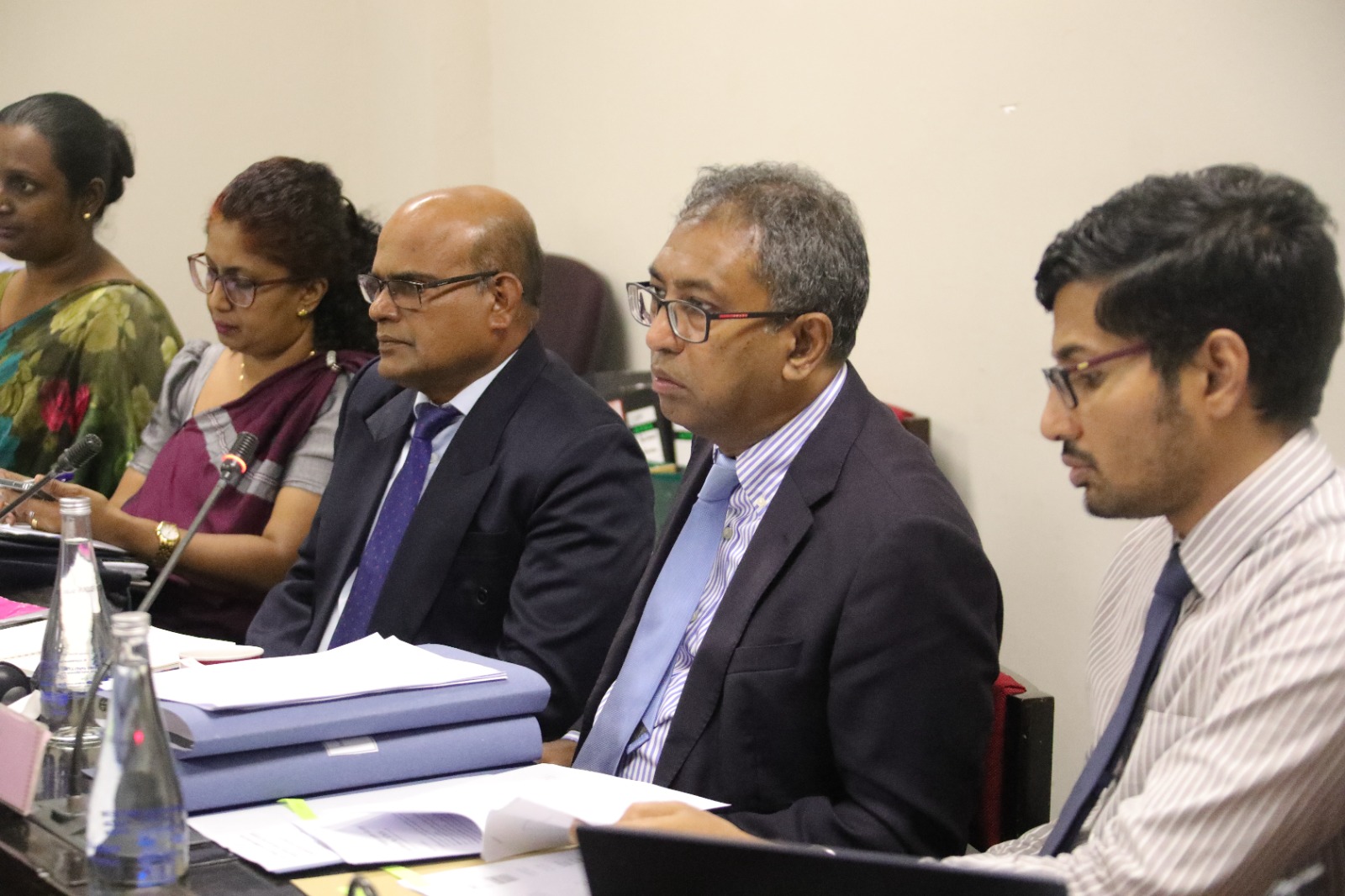
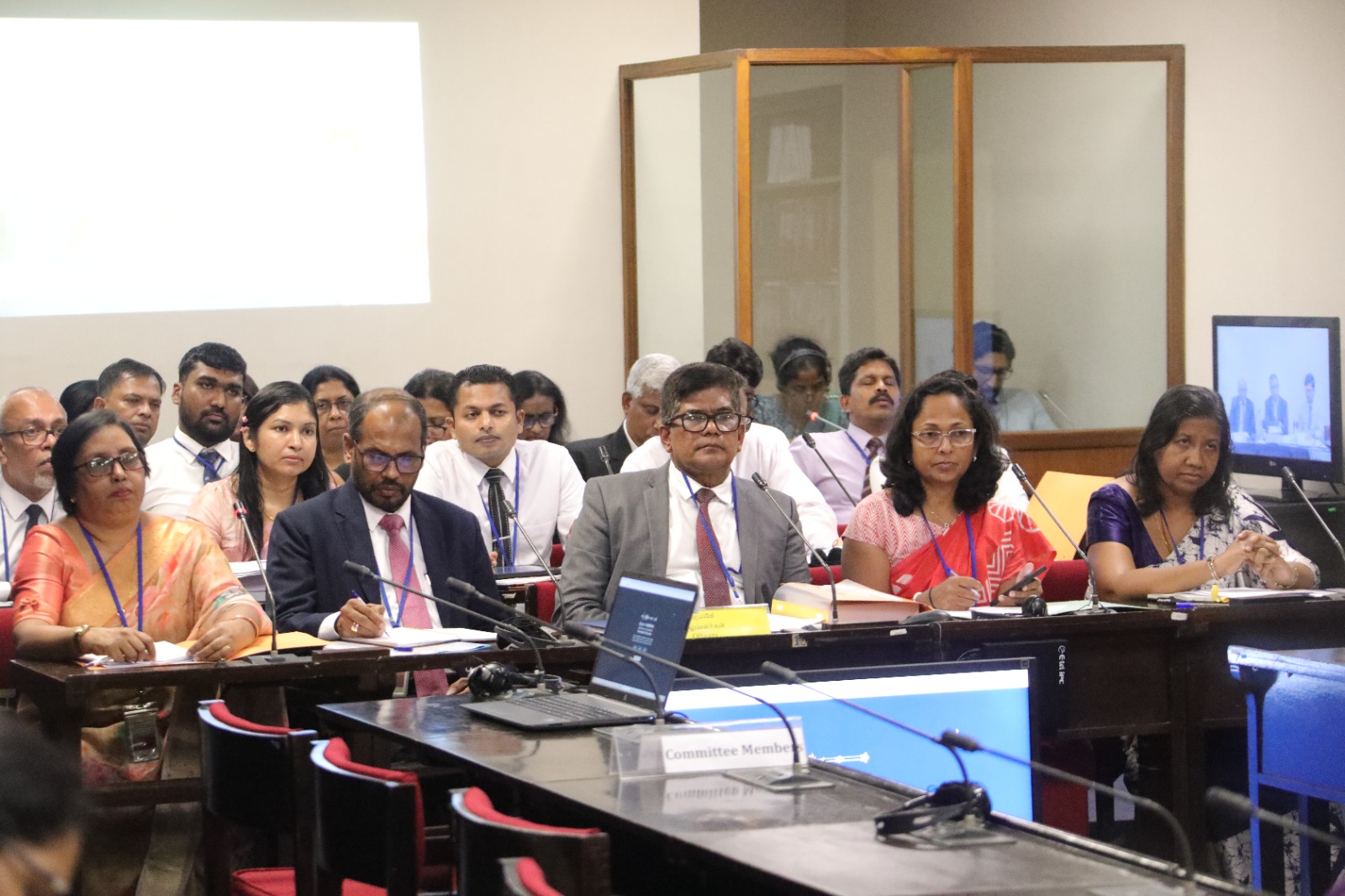
The Committee on Public Finance (CoPF) has approved the submission to Parliament of a Resolution under the Customs Ordinance and two Orders under the Sri Lanka Export Development Act, following its consideration.
The decision was taken at a meeting of the Committee held in Parliament on 6th July, chaired by Hon. Member of Parliament Dr. Harsha de Silva.
Accordingly, the Committee considered the Resolution published in Extraordinary Gazette No. 2478/03 under the Customs Ordinance (Chapter 235), as well as the Orders published in Extraordinary Gazette Nos. 2478/04 and 2479/38 under the Sri Lanka Export Development Act. Officials representing the Ministry of Finance, Sri Lanka Customs, and the Sri Lanka Export Development Board (EDB) attended the meeting.
In line with the 2026 Budget proposal to implement the National Tariff Policy, the existing customs import duty rates of 0%, 15% and 20% on imported goods have been restructured into a four-band system of 0%, 10%, 20% and 30%, effective 1 April 2026.
Committee discussions emphasized that these amendments are not merely changes to tax rates, but mark the beginning of implementing a National Tariff Policy that will shape Sri Lanka's trade and investment environment over the coming decade. Officials explained that the principal objective of the policy is to establish a scientific and predictable tariff structure that will enable Sri Lanka to integrate more effectively into global supply chains.
Under the policy, a new four-band tariff structure based on the United Nations Broad Economic Categories (BEC Revision 5) classification is proposed, requiring the reclassification of numerous HS tariff codes. The new tariff framework will classify imports under four principal categories—capital goods, intermediate goods, sensitive intermediate goods, and consumer goods—while also balancing the objectives of protecting domestic industries and maintaining stable government revenue.
It was also revealed that, to provide relief to the construction sector, the current effective import tax rate on ceramic tiles, which stands at approximately 85–90%, will be reduced in stages to 20% by 2029. This is expected to lower construction costs and encourage investment in housing and infrastructure.
The Government also proposes introducing new national tariff sub-categories for various sectors in response to requests from domestic industries.
Officials further noted that the Government aims to gradually phase out para-tariffs such as the CESS and the Ports and Airports Levy (PAL) by 2029, moving towards a simpler tariff regime. The Committee also advised officials to consider measures to mitigate any adverse impacts that may arise from tariff liberalization.
It was noted that these tax reforms are expected to support the Export Development Board's objective of doubling Sri Lanka's export earnings from US$18 billion to US$36 billion over the next five years. The policy is also expected to provide a strong foundation for integrating Sri Lanka into global supply chains, particularly in the electronics, rubber products, pharmaceuticals, and information technology sectors.
The Committee also expressed serious concern over delays in updating trade data. The Chair observed that the Department of Trade and Investment Policy's trade database had not been updated since 2021, and instructed the relevant officials to update all trade data and related information required for evidence-based policymaking within one week.
The Gazette notifications are scheduled to be debated in Parliament today (8 July), following which they are expected to be submitted for Parliamentary approval.
The meeting was attended by Hon. Deputy Minister Chathuranga Abeysinghe, Hon. Deputy Minister Dr. Kaushalya Ariyarathna, and Hon. Members of Parliament Ravi Karunanayake, Harshana Rajakaruna, and Attorney-at-Law Lakmali Hemachandra.
2026-08-25
The Committee on Public Accounts (COPA) paid special attention to the progress of investigations into financial fraud and disciplinary violations that have occurred within the Department of Posts from 2004 to 2025.This was discussed when COPA met at Parliament recently (Aug. 20), under the chairmanship of Hon. Member of Parliament Kabir Hashim, to review the progress made in implementing the recommendations issued by COPA on April 7, 2026, as well as the current performance of the Department of Posts.It was revealed that a new computerized software system has been introduced to streamline the investigation process. The system is being used to update information relating to investigation files and monitor their progress. The Committee stressed the need to expedite investigations by prioritizing significant financial fraud and serious disciplinary violations, rather than spending resources on prolonged investigations into minor incidents.The meeting also discussed the fact that some investigations have remained unresolved for many years, that some individuals facing allegations have disappeared or died, that legal action in certain cases has been delayed, and that the investigation division is experiencing a shortage of human resources.The Committee further emphasized the need to complete investigations and disciplinary proceedings against officers accused of financial fraud within specified timeframes. Instructions were also given to expedite the necessary measures to recover losses from the parties responsible once investigations have been completed.The Committee also focused on the need to further strengthen financial management and internal control mechanisms within the Department of Posts.Meanwhile, the management of overtime payments within the Department of Posts was also discussed. Officials stated that steps are being taken to introduce an Optimum Cadre - the optimal number of employees - based on a work study conducted by the Department of Management Services covering all nine provinces and the Central Mail Exchange. It was noted that fingerprint machines are now being used to accurately verify employee attendance when making overtime payments. Going forward, the Department plans to use this data to further streamline the payment of overtime allowances.The modernization and digitalization of postal services also received the Committee's attention. Discussions covered plans to further expand value-added services such as Speed Post, Cash on Delivery, and International Courier, digitalize postal banking services, and increase the Department of Posts' revenue through the use of new technologies.The Committee also stressed the importance of maintaining sub-post offices in difficult-to-reach areas where they provide essential services to the public, rather than closing them as part of the restructuring of the Department of Posts' network of sub-post offices.The meeting was attended by Committee member and Hon. Deputy Minister Nalin Hewage, as well as Committee members Hon. Members of parliament Chanaka Madugoda, Oshani Umanga, Attorney-at-Law Sagarika Athauda, Manjula Suraweera Arachchi, Chandana Sooriyaarachchi, Ajanta Gammaddege, Lal Premanath, Ruwanthilaka Jayakody and Sunil Ratnasiri.
2026-08-24
The Sectoral Oversight Committee on Governance, Justice and Civil Protection focused on obtaining the views and proposals of the Police Department on measures that could be taken to reduce overcrowding in prisons.At a recent meeting of the committee held at Parliament under the chairmanship of Hon. Member of Parliament Dr. Najith Indika, discussions focused particularly on the Police Department’s procedures from the arrest of suspects in connection with drug-related offences through to the filing of cases, as well as on removing existing legal obstacles affecting these processes.The committee also discussed delays in proceedings relating to drug-related cases, delays in obtaining reports from the Government Analyst, and the resulting increase in the number of suspects being held in remand custody.It was emphasized that, in combating drug-related offences, it is necessary not only to arrest individuals but also to use modern technology to identify and control drug-trafficking networks and the illegal financial transactions associated with them. The need to introduce appropriate regulatory mechanisms to prevent the misuse of digital money-transfer systems operated by telecommunications companies by drug traffickers for illegal financial transactions was also highlighted.The meeting also discussed the need to strengthen community-based rehabilitation programmes as an alternative to imprisoning persons addicted to drugs, increase public participation in crime prevention, and amend existing laws to bring them in line with current requirements.Views were also expressed on the need to establish a modern forensic laboratory within the Police Department in order to expedite criminal investigations. It was pointed out that speeding up the analysis of scientific evidence could accelerate court proceedings and thereby help reduce prison overcrowding.In addition, attention was given to improving the welfare of police officers, enhancing their professional training and investigative skills, and strengthening mechanisms for evaluating police performance.Members of the committee who attended the meeting included Hon. Members of Parliament Ajith P. Perera, G.G. Ponnambalam, Mujibur Rahman, M.K.M. Aslam, Dr. Sellathamby Thilakanathan, Dharmapriya Wijesinghe, Chandana Suriyaarachchi, and Major General (Retired) G.D. Sooriyabandara.Secretary to the Ministry of Public Security and Parliamentary Affairs D.W.R.B. Seneviratne, Inspector General of Police Attorney-at-Law Priyantha Weerasuriya, and a number of senior officers of the Police Department were also present at the meeting.
2026-08-24
Focus on financial administration, wastewater management, and research allowancesThe Committee on Public Enterprises (COPE) of the Parliament met recently (Aug. 19) at Parliament, chaired by Hon. Member of Parliament Dr. Nishantha Samaraweera, to examine the Auditor General’s reports relating to the University of Peradeniya for 2023 and 2024, as well as its current performance. The University of Peradeniya had also been summoned before the COPE on the 5th of this month for discussions on these matters, and the committee met again for a second day as a continuation of those discussions.During the meeting, extensive discussions were held on the University’s financial administration, wastewater management, payment of research allowances, institutional governance, and future development plans.Particular attention was given to the University’s wastewater system, including the environmental impact caused by the discharge of wastewater from several student hostels. It was also revealed that, due to delays in the project to connect the University’s wastewater system to the Kandy Municipal Wastewater Project, the original estimated cost had increased from Rs. 464 million to Rs. 1.4 billion. Officials informed the committee that Rs. 2 billion in funding had been obtained through JICA to proceed with the project.The committee also focused on the 68 bank accounts maintained by the University, as well as a large number of accounts associated with various funds. The committee questioned the continued maintenance of certain accounts even after the completion of the projects to which they related, as well as the absence of centralized monitoring of information concerning the funds.Special attention was also given to the payment of research allowances. It was revealed during the discussion that research allowances had been paid to 59 officers belonging to the non-academic and executive staff without approval from the Research Management Committee and without obtaining research reports. It was further stated that, as of 30 June 2023, 28 of those officers had still not submitted the relevant research reports. The committee emphasized that research allowances must be used exclusively for research activities and that research proposals, progress reports, and final reports must be obtained in accordance with the prescribed procedures. While research activities should be encouraged, the committee pointed out that the use of research allowances as an additional salary or remuneration could not be approved under any circumstances.The committee also questioned the existence of positions and the payment of allowances without the approval of the Department of Management Services (DMS). The committee instructed the University to take steps to legally regularize all positions and payments that do not comply with government financial regulations and existing laws and regulations.Meanwhile, COPE emphasized the need for the University’s future development plans to be prepared with clear Key Performance Indicators (KPIs). The committee also instructed that development programmes, including wastewater and solid-waste management and the construction of a new clinical block, be implemented expeditiously.The committee further stressed the need to provide specific and direct responses to audit queries, properly disclose financial information relating to all funds and accounts, and promptly implement the recommendations made by the Auditor General.The meeting was attended by Members of Parliament Attorney-at-Law Dayasiri Jayasekara, Attorney-at-Law Lakmali Hemachandra, Sunil Rajapaksha, Chandima Hettiarachchi, Dinesh Hemantha, Samanmali Gunasinghe, Attorney-at-Law Nilanthi Kottahachchi, Thilina Samarakoon, Sudath Balagalla, and retired Lieutenant Commander Prageeth Maduranga.
2026-08-21
The second programme in the “Voice to Policy” series of regional dialogue programmes, organized by the Parliamentary Caucus for the Open Parliament Initiative, is scheduled to be held for the youth of Batticaloa District on August 29 at the East Lagoon Hotel in Batticaloa.The organizational arrangements for the programme were discussed at a meeting held recently (Aug. 19) at Parliament under the leadership of the Co-Chairpersons of the Parliamentary Caucus for the Open Parliament Initiative, Hon. Minister Prof. Krishantha Abeyasena and Hon. Shanakiyan Rasamanickam.The workshop series is being organized with the aim of further promoting the concept of an Open Parliament through the participation of youth representatives. Members of the Parliamentary Caucus, as well as Members of Parliament representing the Batticaloa District, are expected to participate in the event.The workshops are intended particularly to raise awareness among young people about parliamentary affairs, the legislative process and the principles of an Open Parliament, while further strengthening the relationship between Parliament and citizens.Young people aged 18–35 from Batticaloa District who wish to participate in the workshop are required to complete the relevant registration form via https://forms.gle/aVp5UzhLbtPSmVap8 and register before August 24. The Caucus also informed participants that they should wear clothing without symbols promoting any political party or movement.Members of the Parliamentary Caucus and representatives of CII (Coalition for Inclusive Impact), the development partner providing sponsorship for the workshop series, also participated in the meeting.In addition, a virtual discussion was held during the meeting with representatives of the INTER Pares, focusing on the possibility of obtaining their support for the Caucus’s future activities. Mr. Sanjaya Vignaraja, Country Director of the Westminster Foundation for Democracy (WFD), who contributed to coordinating the discussion, also participated in the meeting.

Handbook of Parliament
The System of Elections in Sri Lanka
How Parliament Works
Business of Parliament
Copyright © The Parliament of Sri Lanka.
All Rights Reserved.
Design & Developed by TekGeeks