03

සි   |   த   |  

2023-07-10

News Categories : Committee News 

COPE disclose many administrative concerns and irregularities in the Coconut Development Authority, Coconut Cultivation Board and Coconut Research Institute

  • A strong displeasure that the online system introduced to stop the monopoly mafia in coconut auctions and to create transparency remaining inactive.
  • Instructions given to discuss with all the three institutions and prepare a common program for the control of diseases that can affect coconut cultivation.
  • The last application of fertilizer to the crops in the lands belonging to the Coconut Cultivation Board was in 2016, COPE reveals.
  • 78% of the coconut oil consumption in the country is met by imported oil is a concern.
  • An advance of rupees one million was paid to a private firm without a contract to construct a digital billboard.
  • A report called for on the arbitrary recruitment of 6 persons by the former chairman who did not properly appear for interviews


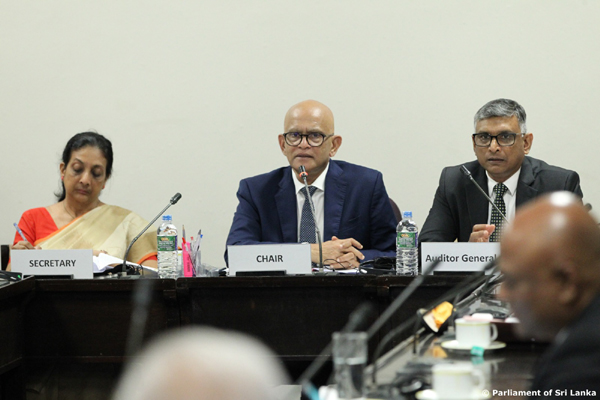
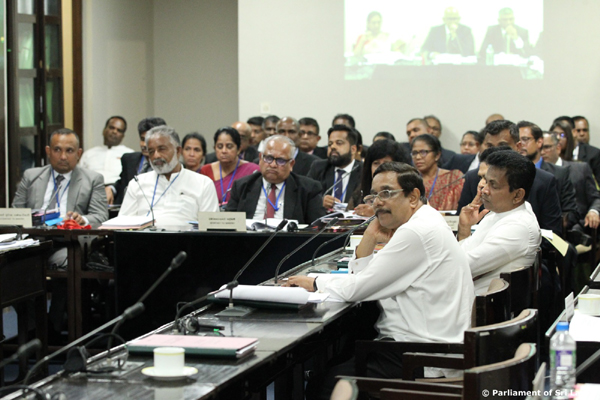
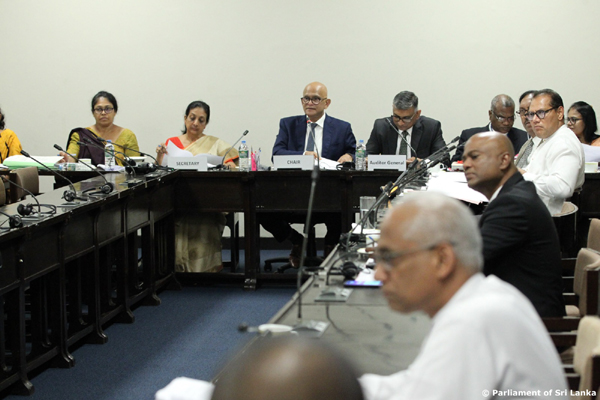
The three main institutions related to coconut cultivation and industry of the country which are the Coconut Development Authority, Coconut Cultivation Board and Coconut Research Institute were called before COPE held on 06.07.2023 chaired by Hon. (Prof.) Ranjith Bandara. The progress of the implementation of the recommendations given to the said institutions during the COPE meeting held on 21.01.2021 was reviewed.

Accordingly, attention was drawn to the following points.


Develop a common program in consultation with the three institutions to control diseases that may affect coconut cultivation.

Considering it as an emergency situation, a special committee was appointed to control the white fly disease affecting the coconut plantation and the need to prepare a common program was discussed with the three institutions to control the diseases that could affect the coconut plantation. As the Coconut Development Authority has not been involved in the 'National Disaster Management Operational Unit' which has been established so far, the need to involve the institution was also emphasized for this operation.
Officials stated that there is a risk of diseases like this due to the non-application of fertilizer at the right time to coconut cultivation. It was also revealed that the last application of fertilizer to the crops in the lands belonging to the Coconut Cultivation Board was in 2016. The displeasure of the Committee was expressed regarding the non-application of fertilizer to government-owned coconut plantations

The Secretary to the Ministry of Plantation Industries was recommended to inform within two weeks the action to be taken by involving all the three institutions. Accordingly, COPE Chair said that he will inform the Parliament, the Treasury and the President's Secretary about the provision of the necessary resources in this regard.


Instructions to re-implementation of online system to end the monopoly and create transparency in coconut auction

Although a computer software has been prepared for online bidding for the coconut auction, attention was been drawn to the fact that it is currently inactive. It was revealed that this system will enable the auction to be conducted in a more transparent manner and this system was introduced with the aim of preventing the monopoly of a few people in the coconut auction in Sri Lanka. It was also discussed that some officials of the authority expressed their reluctance to implement this online digital system with the cooperation of several brokers. Thus, instructions were given to restore this online system to conduct this auction with more transparency t within three months.


The need to increase domestic coconut oil production and curb substandard imported coconut oil

It was revealed that 187,623 metric tons of coconut oil and 225,510 metric tons of palm oil have been imported for consumption in the country during 2020-2022. Thus, it was discussed that 22% of the coconut oil consumption in the country is met from domestic production and 78% from imported oil, which is a big problem. Furthermore, there was a long discussion about the quality of the imported coconut oil. Accordingly, it was decided to call the relevant institutions including Coconut Development Authority, Consumer Authority, Ministry of Health and carry out a comprehensive investigation.


Payment of an advance of rupees one million to a private firm without a contract to construct a digital billboard.

A contract of nearly Rs.5 million was awarded to a private firm in 2021 without a contract to construct a digital outdoor billboard in front of the Narahenpita head office of the Coconut Development Authority. The Director Finance stated that an amount of rupees one million has been given as an advance and the payment was made under certain influence. Accordingly, the Secretary to the Ministry was instructed to conduct a comprehensive investigation in this matter within two weeks and reveal those responsible. Apart from this, it was also decided to conduct a separate investigation carried out by the Auditor General.


Recruitment of 6 persons by the ex-chairman who did not appear properly appear for interviews

It was also revealed that 6 people who did not properly appear for interviews of the Coconut Cultivation Board were recruited by the former chairman at will. Expressing strong displeasure over this, the Committee informed to give a formal report within two weeks. It was also decided to inform the President's Secretary to take further action in this regard.


Urgent action needed to supply coir for Saudi Arabia's 50 million tree planting project

Since there is a project of planting 50 million trees in Saudi Arabia, there are discussions for the process of procuring the required coir, so the need to get it Sri Lanka was discussed. The need to be more active in this regard was emphasized during the Committee as it is a project that can generate millions of dollars of income for the country.


Attention directed to many other administrative problems and irregularities

The Committee questioned the fact that the activities of Dunkannawa Coir Development and Training Centre which was started in 2006 by the Coconut Development Authority, had been stopped since 2020. As there is a risk of destruction of machinery worth millions of rupees, the Chairman of the authority was ordered to submit a report on this within a month.


In addition, a formal report pertaining to the issues including a loss of Rs.21 million was incurred by adding a portion to the main building of the Coconut Cultivation Board without prior approval, payment of nearly 2 million for the construction of a building for the Coconut Seed Production Unit.

Also, the Committee emphasized the need to increase the legal bond with the institution before the commencement of the research and to recover the loss due to the departure of the research officers of the Coconut Research Board after spending millions of rupees after starting the research.

Members of Parliament Hon. Jagath Pushpakumara, Hon. Shantha Bandara, Hon. Anura Priyadarshan Yapa, Hon. Mahindananda Aluthgamage, Hon. Dayasiri Jayasekara, Hon. Eran Wickramaratne, Hon. Nimal Lanza, Hon. SMM Muszhaaraff, Hon. Sanjeeva Edirimanna, Hon. Upul Mahendra Rajapaksha, Hon. (Mrs.) Rajika Wickramasinghe, Hon. Madhura Withanage, Hon. (Prof.) Charitha Herath were present at the Committee meeting held.

 

1 2

3 4


Related News

2026-11-16

Sectoral Oversight Committee Focuses on Exploring Innovative Technological and Practical Solutions to Mitigate Human-Elephant Conflict and Enhance Elephant Conservation

The Sectoral Oversight Committee on Environment, Agriculture and Resource Sustainability met recently (Nov. 13) at Parliament, under the chairmanship of Hon. Hector Appuhamy, Member of Parliament.During the meeting, extensive discussions were held on managing human-elephant conflict, identifying the migratory patterns of wild elephants, and utilizing new technologies for elephant conservation. The death of the elephant Kawanthissa was also discussed.The loss of elephant habitats, obstruction of traditional elephant corridors, and the movement of elephants into human settlements and agricultural lands in search of food were identified as some of the key factors contributing to the escalation of human-elephant conflict. The importance of using GPS and satellite collar technology to identify and monitor elephant migration patterns was also emphasized.Several proposals were discussed to mitigate human-elephant conflict, including establishing joint committees at the local level involving wildlife officers, Grama Niladharis and community members, strengthening community participation, and implementing early warning communication networks.The challenges faced by wildlife veterinary surgeons in treating sick and injured elephants were also discussed. Attention was drawn to the services provided by veterinary officers of the Department of Wildlife Conservation, the risks involved in anaesthetizing elephants, and the need for essential technical equipment and facilities, such as mobile veterinary units and portable X-ray machines, to provide treatment in the field.Hon. Members of Parliament Kings Nelson, Upul Kithsiri, Attorney-at-Law M. A. C. S. Chathuri Gangani, Sudath Balagalla, Kitnan Selvaraj and Attorney-at-Law Bhagya Sri Herath were also present at the meeting.


2026-11-14

Five-Year Plan to Make SriLankan Airlines Financially Sustainable – Focus on Fleet Expansion and Debt Management

The financial crisis faced by SriLankan Airlines, frequent flight delays, debt burden and delays in procurement processes for acquiring new aircraft were discussed extensively at the Sectoral Oversight Committee on Infrastructure and Strategic Development.These matters were discussed when the Committee met recently in Parliament under the chairmanship of Hon. S. M. Marikkar, Member of Parliament.During the meeting, concerns were raised over the inadequacy of the airline’s existing fleet of 23 aircraft, which are approximately 12 years old. Technical issues and operational delays arising from the ageing fleet were also discussed. It was pointed out that a technical fault or any other disruption involving a single aircraft could affect the entire flight network due to the limited availability of alternative aircraft.The Committee also focused on the failure of conventional procurement processes previously undertaken to acquire aircraft and the lengthy delays associated with them. It was stated that a special set of procurement guidelines had been prepared for the purchase of aircraft and related equipment, and arrangements were being made to gazette these guidelines. It was further revealed that a dedicated procurement unit had been established at the Ministry level to directly oversee the procurement process.Under the new procurement guidelines, plans are underway to expand the airline’s fleet. It is expected that one new narrow-body aircraft and two wide-body aircraft will be added to the fleet by next June. Officials also stated that increasing the fleet to at least 29 aircraft by 2029 is one of the key targets of the five-year plan.It was explained that several measures had been taken through the General Treasury to improve the financial position of SriLankan Airlines, including the takeover of outstanding bank loans and bond-related debt. Attention was also drawn to reducing aircraft leasing costs, managing fuel expenditure and implementing commercial strategies to increase the airline’s revenue.The impact of the prevailing crisis in the Middle East, rising fuel prices and competition from international airlines on SriLankan Airlines’ operations and revenue was also discussed.Furthermore, it was stated that the committee appointed by the Government to restructure SriLankan Airlines was considering several options, including attracting new investors, establishing a public-private partnership, or retaining the airline under State ownership while bringing its operations to a level where it could cover its costs.Accordingly, the Committee instructed the relevant authorities to submit a comprehensive report to Parliament and the Ministry before November 30, outlining the measures required to bring SriLankan Airlines to a cost-recovery level within the next two to three years.Hon. Members of Parliament Ajith P. Perera, Nalin Bandara Jayamaha, Ravindra Bandara, Manjula Suweera Arachchi, Chathura Galappaththi, Dhanushka Ranganath, Jagath Vithana, Shantha Padma Kumara Subasinghe and Attorney-at-Law Geetha Herath also attended the Committee meeting.


2026-11-14

Committee on Ways and Means Holds Extensive Discussion on Sri Lanka’s Tariff Policies and Trade Agreements

The Committee on Ways and Means held an extensive discussion on Sri Lanka’s tariff policies and the current status of trade agreements. The meeting was held under the Chairmanship of Hon. Vijesiri Basnayake, Member of Parliament at Parliament recently.Mr. Somasena Mahadiulwewa, Director General (Acting) of the Department of Commerce of Sri Lanka, provided a detailed explanation to the Committee on these matters. The discussion focused on the current status of Sri Lanka’s bilateral and multilateral trade agreements and measures to move them forward.The Committee stressed the importance of conducting feasibility studies on trade agreements that are currently under negotiation and taking the necessary steps to ensure that these discussions continue.Hon. Deputy Ministers Chathuranga Abeysinghe and Eranga Weeraratne, and Hon. Members of Parliament Ashoka Sapumal Ranwala, Thilina Samarakoon, Champika Hettiarachchi and Chathura Galappaththi, among others, also participated in the Committee meeting.


2026-11-13

Sectoral Oversight Committee Approves Prevention of Foreign Terrorist Fighters Bill

The Prevention of Foreign Terrorist Fighters Bill received the approval of the Sectoral Oversight Committee on Economic Development and International Relations.The Bill was considered and approved when the Sectoral Oversight Committee met recently in Parliament under the chairmanship of Hon. Member of Parliament (Attorney-at-Law) Lakmali Hemachandra. The Bill has been presented to give effect to United Nations Security Council Resolution 2178, adopted on 24 September 2014, which addresses the prevention and suppression of the threat posed by foreign terrorist fighters, and to provide for matters connected therewith or incidental thereto.The Bill was presented to Parliament for its First Reading on 20 October by the Minister of Foreign Affairs, Foreign Employment and Tourism.Officials explained to the Committee that legal action could be instituted in Sri Lanka under this Act in cases where an offence has been committed within or outside Sri Lanka by a Sri Lankan citizen or a citizen of another country, provided that the act in question also constitutes an offence under the law of the relevant country.Officials further informed the Committee that engaging in terrorist activities, planning or preparing such activities, participating in them, as well as providing or receiving terrorist training, have been defined as offences under the proposed Act.The officials also emphasized that these legal provisions had not been introduced on an ethnic basis or with the intention of targeting Sri Lankans residing overseas.Following an extensive discussion, the Committee approved the Bill. However, Hon. Member of Parliament Sivagnanam Shritharan, a member of the Committee, expressed his opposition to the Bill.Hon. Members of Parliament Suranga Rathnayake, Thilina Samarakoon, Wijesiri Basnayake and Sivagnanam Shritharan, among others, attended the Committee meeting. Government officials representing the Ministry of Foreign Affairs, Foreign Employment and Tourism, the Ministry of Defence, the Attorney General’s Department and the Legal Draftsman’s Department were also present.


Copyright © The Parliament of Sri Lanka.

All Rights Reserved.

Design & Developed by  TekGeeks