2021-11-25
“Gender based violence (GBV) has almost become a clichéd term in gender terminology. We have spoken about it over and over again, it has really lost its essence. But, it is not merely a term. It is an utterly bitter reality in the world and in Sri Lanka” said Hon. State Minister of COVID19 control, Primary Healthcare and Epidemics Dr. Sudarshini Fernandopulle.
Statistics can only tell a half truth, but it is worth looking at a few statistics. The Women and Wellbeing Survey 2019 which is the first dedicated national survey on Violence against Women (VAW) in Sri Lanka reports that one in four Sri Lankan women has experienced some kind of physical or sexual violence. Close to 40 per cent of women have undergone physical, sexual, emotional and/or economic violence and/or controlling behaviors by a partner. The survey underscores that the conditions of violence against women in the estate sector are really grim. The report also confirms that physical and sexual violence was mostly overlapping and repeated more than one time. 65 percent of the women who were forced to have sexual intercourse, for instance, reported that they went through this violence two to three times and 32 percent reported that they were forced to have sex over five times. Intimate partners were reported to be inducing physical violence than non-partners.
Long-term physical and mental health impacts were prominently reported in the women who suffered VAW. Close to 30 percent of the victims reported to have suffered from persistent injury due to sexual and physical violence and close to 20 percent reported that the injuries required medical care. Close to half of the victims who suffered sexual violence by a partner rated the impact of the violence they face was “a lot” while another 30 percent rated it to be “a little.”
COVID 19 only aggravated the levels of sexual and physical violence against women in Sri Lankan and across the world, as was repeatedly reported in news.
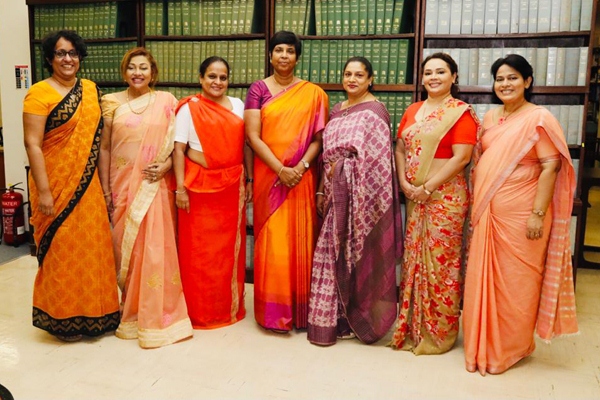
A special Select Committee on Gender Equity and Equality is set up by the Parliament of Sri Lanka specifically to look into GBV too and make recommendations to Parliament to ensure gender equity and equality with special emphasis on looking into gender based discriminations and violations of women’s rights in Sri Lanka. The committee headed by Hon. Fernandopulle works hand in hand with the legislature and the executive to alleviate gender inequities and inequalities using their representative and oversight mandates.
As the world marks the 16 Days of Activism against Gender-based Violence from 25th November, the International Day for the Elimination of Violence against Women, to 10th December, the Human Rights Day this year too, the UN Secretary-General’s UNiTE campaign has declared the global theme of this year as “Orange the World: End Violence against Women Now!”
Parliament of Sri Lanka stands in solidarity with the global movement and unites with the global theme as the Parliamentarians wear Orange today (25th November) to Orange the Parliament as an initiative by the Select Committee.
Emphasizing the forms of violence women have to face in the informal sector, Hon. Diana Gamage, a member of the Select Committee stated in the Parliament on 11 November 2021 “due to the discrimination that women have to undergo, they tend to end up in insecure jobs. They have to face a lot of harassment due to discrimination. It could be sexual harassment, mental harassment and in some cases, physical harassment. So, that needs to be changed.”
Hon. Eran Wickramaratne who is a member of the Select Committee and a Gender and Inclusion Champion remarked “it is high time that we as a society treat women and all human beings with respect! GBV is all over the world. But it should not be normalized as an unavoidable phenomenon. We need attitudinal change in people. Women are not there to be at the receiving end of the wrath and frustration of the powerful! Women are not victims! Today most women contribute to the family finances. Even if not, women have been playing a crucial role in families and societies. We as a country, a nation should be ashamed of the facts and figures reported. We must do our best to prevent GBV in all forms.”
Further, Hon. Rohini Kumari Kaviratne, who is a strong voice in the Parliament of Sri Lanka against gender inequalities and is the Vice Chairperson of the Women Parliamentarians’ Caucus stated "women, whether its a Parliamentarian or a housewife, must be respected by everyone in society! That is what we strive for as the Women Parliamentarians' Caucus and the Select Committee. I urge the support of my fellow Parliamentarians and the whole of the society to stand against shameless acts and speeches of people who violate the rights of women, especially in different forms of violence against women."
“What we do as the parliament of Sri Lanka today is not just a tokenistic measure. Rather, it is to awaken the society that every individual has a responsibility to stand against GBV and VAW” remarked Hon. Fernandopulle emphasizing the need to eliminate GBV in this small island nation and beyond.

2026-11-18
Plans are underway to provide integrated treatment services for non-communicable diseases (NCDs), combining Indigenous and Western medical systems, through wellness centres, while a pilot project to implement this integrated healthcare approach has already commenced at the Mapalagama Wellness Centre in the Galle District, Minister of Health and Mass Media Dr. Nalinda Jayatissa said. The Minister further stated that an integrated treatment programme for Musculoskeletal Pain Management, combining Indigenous and Western medical practices, has been in operation at the centre for nearly eight months.The Minister made these remarks in response to questions raised by Member of Parliament Shanakkian Rajaputhiran Rasamanickam, seeking oral answers in Parliament.The Minister noted that the Indigenous medical sector has been explicitly recognised as part of the integrated approach to NCD service delivery under the National Policy and Strategic Framework for the Prevention and Control of Non-Communicable Diseases (2023–2033). He emphasised that patient care services are provided through Provincial Departments of Ayurveda and relevant provincial authorities.The Minister outlined the key services available through these institutions as follows: General consultations and Indigenous medical treatments for non-communicable diseases are provided through the institutional network of the relevant departments. Preventive healthcare and health promotion activities are also carried out through community medical services. Treatment is available for diabetes, hypertension, obesity and other lifestyle-related diseases.General consultations and supportive Siddha medical services are also available for patients with Parkinsonism. Meanwhile, supportive rehabilitation programmes for individuals with cerebral palsy and Down syndrome are provided through all institutions operating under the Provincial Departments of Ayurveda.For cancer patients, nutritional counselling, supportive care and rehabilitation services are provided in coordination with specialist oncologists.The Minister further explained that a range of community-based healthcare programmes has been introduced to improve access to medical services for elderly patients and reduce the need for them to travel long distances to obtain treatment.These services are delivered through all healthcare institutions operating under the Provincial Departments of Ayurveda and, in certain provinces, at residential care home level. Community-based medical services are also provided through Community Medical Officers (CMOs) at rural level, alongside community healthcare services at provincial level.Elderly care services are also delivered through Ayurveda, Siddha and Unani medical systems at provincial level. In addition, traditional practitioners registered with the relevant Medical Council provide services through Divisional Secretariat offices and Provincial Councils. Furthermore, the National Institute of Indigenous Medicine conducts training programmes on elderly care services in six provinces at provincial level, the Minister added.
2026-11-16
A parliamentary delegation from the National Assembly of the Republic of Korea, representing the Korean Parliamentary League on Children, Population and Environment (CPE), met with the Hon. Deputy Speaker of Parliament, Dr. Rizvie Salih recently to discuss avenues for strengthening bilateral cooperation in environmental resilience, demographic policies, education and economic exchange. The Secretary General of Parliament, Ms. Kushani Rohanadeera, was also present at the meeting.The Korean delegation was led by Hon. Lee Yang-soo, Chairperson of the National Assembly Intelligence Committee and Vice President of the Korean Parliamentary League on CPE. It also comprised Hon. Kwak Sang-eon, Member of the Korean Parliamentary League on CPE; Hon. Kim So-hee, Vice President of the Korea-Sri Lanka Parliamentary Friendship Association; and H.E. Youn-Jung Kim, Ambassador of the Republic of Korea to Sri Lanka.Established in 1989, the CPE seeks to promote international Parliamentary cooperation in addressing global challenges relating to climate change, population and child welfare. In view of the 50th anniversary of diplomatic relations between Sri Lanka and the Republic of Korea in 2027, both sides expressed their commitment to further strengthening the longstanding friendship and cooperation between the two countries.During the discussions, the Deputy Speaker highlighted the impact of recent extreme weather conditions in Sri Lanka, particularly severe floods and landslides that have caused considerable damage to infrastructure and agricultural lands. He also drew attention to the country's demographic challenges, including declining fertility rates and a rapidly ageing population, which could have significant implications for future dependency ratios and workforce availability. The discussions also covered Sri Lanka's free education system and the challenges associated with maintaining and strengthening it.Sharing South Korea's experiences in addressing declining birth rates, the Korean delegates outlined several policy interventions, including affordable rental housing schemes for newly married couples, low-interest loans and housing incentives. The delegation also discussed proposals to extend the retirement age from 60 to 65 to address gaps in pension coverage, while emphasizing the importance of ensuring adequate employment opportunities for younger generations alongside such policy measures.Both delegations underscored the importance of prioritizing environmental protection alongside economic development, noting that natural disasters can undermine years of economic progress. The discussions also touched upon the growing popularity of Korean culture, particularly K-pop, in Sri Lanka, as well as the potential to further expand bilateral tourism.Furthermore, both sides highlighted the benefits of technical and vocational training opportunities available to Sri Lankan youth employed in South Korea, noting that such opportunities contribute to enhancing professional skills while generating economic benefits for Sri Lanka.The Korean delegation extended an invitation to the Parliament of Sri Lanka to participate in the Asia-Pacific Parliamentarians' Conference on Environment and Development (APPCED), scheduled to be held in South Korea next year, where Korea will act as the chair nation for several countries.The delegation also expressed its commitment to encouraging greater participation by Korean enterprises in Sri Lanka's forthcoming international Expo, scheduled for January next year.
2026-11-16
A total of 12,196 persons who were arrested or surrendered during and after the conflict in the Northern and Eastern Provinces have been rehabilitated and reintegrated into society, Minister of Public Security and Parliamentary Affairs Ananda Wijepala said.This was revealed in the Minister’s response to questions raised by Hon. (Dr.) Pathmanathan Sathiyalingam, Member of Parliament, seeking oral answers in Parliament.The Minister stated that several programmes had been implemented for those who underwent rehabilitation. These included counselling, yoga, spiritual and educational programmes, including basic education and language training. They were also encouraged to sit for the General Certificate of Education (G.C.E.) Ordinary Level and Advanced Level examinations. In addition, aesthetic programmes covering art, music, drama and performing arts, as well as driving training and sports activities, had been conducted for their benefit, the Minister added.He further stated that vocational training had been provided to rehabilitated individuals to improve their livelihoods, together with the necessary equipment and other forms of assistance relevant to their respective training programmes.According to a report tabled by the Minister in Parliament, government institutions and non-governmental organisations had also provided various forms of assistance to strengthen their livelihoods. These included financial loans, houses, sewing machines, fishing nets, bicycles, water pumps, carpentry tools, processing equipment, agricultural equipment, livestock and three-wheelers.
2026-11-16
The Hon. Deputy Minister of Education and Higher Education, Dr. Madhura Senevirathna, stated that no further volunteer teachers could be recruited into the Teaching Service following the recruitment of 4,700 volunteer teachers as Teacher Assistants.Deputy Minister further stated that Cabinet approval had been granted to recruit 4,700 teachers currently serving as volunteer teachers in schools across various provinces of the island and appoint them as Teacher Assistants. This recruitment was approved in accordance with Cabinet Memorandum No. 06/2282/229/085-II dated 04 January 2007.The Deputy Minister made these remarks while responding to questions raised by Hon. Member of Parliament M.S. Uthumalebbe, who sought oral answers in Parliament.He further stated that, of the 4,700 volunteer teachers approved for appointment as Teacher Assistants in the Western, Central, Southern, Northern and Eastern, North Western, North Central, Uva and Sabaragamuwa Provinces, 462 had been approved for appointment to the Northern and Eastern Provinces.