logo

Watch

සි   |     |  

2021-03-10

News Categories : Committee News 

Rs. 10,000 million to empower 200,000 Samurdhi beneficiary families - State Minister Shehan Semasinghe

An amount of Rs. 10,000 million has been allotted to empower 200,000 Samurdhi beneficiary families under the program to convert Samurdhi beneficiaries into becoming income generators, the State Minister of Samurdhi, Household Economy, Micro Finance, Self-Employment and Business Development Shehan Semasinghe said yesterday (09).

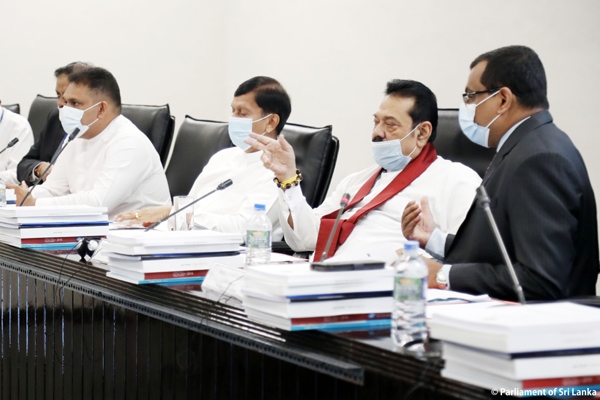
While addressing the Ministerial Consultative Committee on Finance, the State Minister said that the amount has been allocated under the instructions of the Hon. Prime Minister Mahinda Rajapaksa.

State Minister Shehan Semasinghe also stated that steps will be taken to grant the rights of the public servants including the pensions of Samurdhi officers in accordance with the Vistas of Prosperity and Splendor Government policy.

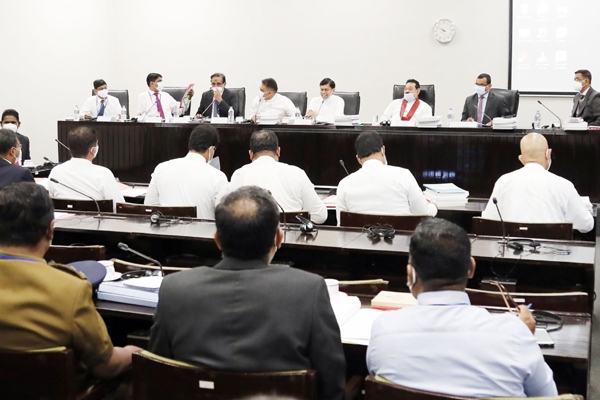
The State Minister stated the above at the Ministerial Consultative Committee on Finance chaired by the Hon. Prime Minister Mahinda Rajapaksa, in response to a query made by him regarding the progress made in resolving the aforesaid issues.

Secretary to the Treasury, Ministry of Finance Mr. S.R. Attygalle disclosed that since the officials have requested for the Employees Provident Fund in part or full, given the conversion of the Sri Lanka Samurdhi Authority into a Department, the matter of concern is to be presented before the Cabinet for a further decision.

Member of Parliament Jagath Kumara pointed out that despite the assurances the swages of new employees would not be curtailed when the Samurdhi Authority was transformed into a Samurdhi Department at the time, the previous Government had taken steps to curtail the wages.

The need to address the issue pertaining to promotions of employees when becoming a department was also taken into discussion. Accordingly, State Minister Shehan Semasinghe stated that measures will be taken to resolve the matter expeditiously with the intervention of the Ministry of Public Administration and Management and the Management Services Department.

Discussions were also held regarding the candidature of Samurdhi officials to contest in elections. The Hon. Prime Minister pointed out that this should only be done only in formal manner.

The need to empower Samurdhi beneficiaries without further increasing the number of such beneficiaries was also taken into discussion. State Minister Shehan Semasinghe stated that the number of Samurdhi beneficiaries will not be increased at all and those steps will be taken to provide Samurdhi assistance in a transparent manner without any political interference.

Hon. State Minister of Money & Capital Market and State Enterprise Reforms Ajith Nivard Cabraal, Hon. Deputy Chairperson of Committees Angajan Ramanathan and Hon. Members of Parliament Harsha de Silva, (Prof.) Ranjith Bandara, Sudath Manjula, Sahan Pradeep were present at this committee meeting held.

In addition to the Secretary to the Treasury, Ministry of Finance Mr. S.R. Attygalle, other senior officials of the Ministry of Finance were also present.

 

1 2


Related News

2026-08-18

Gampaha District Youth Present Policy Proposals Directly to Members of Parliament at “Voice to Policy” Dialogue

The “Voice to Policy” dialogue programme organized for youth in the Gampaha District by the Parliamentary Caucus for Open Parliament Initiative was held recently (Aug. 16) at Jetwing Blue Hotel in Negombo. The programme provided an opportunity for young people from the Gampaha District to present their policy proposals directly to Members of Parliament. The programme was conducted as the first in a series of workshops organized by the Parliamentary Caucus for Open Parliament Initiative, covering all districts of the country with the aim of further promoting the concept of an Open Parliament. The main objective of the programme was to provide young people with an opportunity to directly present their views, concerns and policy proposals to Members of Parliament. Young men and women representing the Gampaha District participated in the workshop. The event was attended by the Co-Chairs of the Parliamentary Caucus for Open Parliament Initiative, Hon. Minister Prof. Krishantha Abeysena and Hon. Member of Parliament Shanakiyan Rasamanickam, as well as Members of Parliament Chamindranee Kiriella, Attorney at Law, S. M. Marikkar, Retired Lieutenant Commander N. R. Prageeth Maduranga, Retired Major General G. D. Suriyabandara and Champika Hettiarachchi.During the programme, young participants presented their views and proposals on a wide range of issues, including education and higher education, political participation, vocational training, employment opportunities, technology, entrepreneurship, and access to opportunities and information available to young people.Particular attention was given to reducing the time required to complete higher education courses and degree programmes, creating greater opportunities for young people who wish to enter politics, and expanding youth entrepreneurship.A key feature of the programme was that the young participants themselves identified their priority concerns, discussed them, grouped them into common areas, and selected fields requiring policy attention before engaging in direct dialogue with Members of Parliament on those issues.The Parliamentary Caucus indicated that it would give consideration to forwarding the proposals presented by the youth during the programme for further consideration by Parliament. Discussions were also held on providing youth representatives with opportunities to engage in the future with the relevant Sectoral Oversight Committees of Parliament on these matters.In addition, Youth Rapporteurs were appointed to document the recommendations and proposals raised during the programme and submit them to the Parliamentary Caucus for Open Parliament Initiative.The workshop was sponsored by CII (Coalition for Inclusive Impact).


2026-08-14

Need for Anticipatory Governance Mechanisms to Address Climate Change, Including El Niño, Emphasized at Caucus on Climate Parliament of Sri Lanka

The Caucus on Climate Parliament of Sri Lanka emphasized the need to move beyond reactive crisis management and establish Anticipatory Crisis Governance mechanisms to strengthen Sri Lanka’s climate resilience in the face of climate change, including El Niño conditions.At the meeting, held recently in Parliament under the joint chairmanship of Hon. Leader of the Opposition Sajith Premadasa and Hon. Member of Parliament Prof. L.M. Abeywickrema, discussions covered a wide range of issues, including climate change, El Niño conditions, agriculture, water management, wildlife conservation, human-elephant conflict, disaster management and environmental management.Delivering the main expert presentation at the meeting, Prof. Charitha Pattiarachchi, Winthrop Professor of coastal oceanography at the University of Western Australia, highlighted the need for early preparedness in the face of climate risks, science-based policymaking and stronger disaster management mechanisms. The disaster management model of the Indian state of Odisha was also discussed. It was noted that, during a cyclone in 2019, the state was able to evacuate approximately one million people to safe locations within 24 hours.The interim report presented by Dr. Sumith Pilapitiya, Chairman of the Subcommittee on Human-Elephant Conflict, pointed out that climate conditions could intensify human-elephant conflict and highlighted the need for short- and long-term measures, including community-based electric fences, seasonal paddy-field fencing, wildlife habitat management and water management.The interim report presented by Prof. Sampath Seneviratne, Chairman of the Independent Expert Advisory Group on El Niño Resilience, analyzed the impacts of climate change on agriculture, biodiversity, water security and the rural economy. The report also proposed a Strategic Climate Resilience Framework based on scientific evidence.With regard to wildlife conservation, attention was drawn to addressing the shortage of veterinary officers, strengthening wildlife management, and reducing environmental damage caused by human activities, plastics and waste in and around national parks. Proposals were also put forward to minimize environmental impacts in sensitive sacred areas, introduce a differential pricing system for the tourism sector, and develop infrastructure in national parks.The meeting also emphasized the need to strengthen science-based policies, institutional coordination and early-preparedness mechanisms in order to enhance Sri Lanka’s resilience to climate change.Members of Parliament, government officials, representatives of international organizations and development partners, researchers, youth representatives and representatives of civil society organizations participated in the meeting.


2026-08-13

Committee on Public Finance Focuses on Security Sticker System Used on Liquor Bottles

The Committee on Public Finance stressed the need to make the security sticker system used on liquor bottles more efficient and cost-effective.The Committee on Public Finance, Chaired by Hon. Member of Parliament (Dr.) Harsha de Silva, met recently in Parliament. The Committee discussed the security sticker system used on liquor bottles, the Regulations issued under the Imports and Exports (Control) Act, No. 1 of 1969, and matters relating to the dissolution of the Shrama Vasana Fund under the Finance Act, No. 38 of 1971. Hon. Deputy Ministers Chathuranga Abeysinghe and Nishantha Jayaweera, Dr. Kaushalya Ariyarathne and Hon. Members of Parliament Ravi Karunanayake, Harshana Rajakaruna and Attorney at Law Lakmali Hemachandra, participated in the meeting. Hon. Wijesiri Basnayake and Hon. Attorney at Law Chithral Fernando, participated online. The Committee paid extensive attention to the cost of the security sticker system, its technical standards and the economic benefits to the Government. It was revealed that the system was introduced in accordance with the 2016 Budget proposals to reduce the use of untaxed liquor, safeguard excise revenue and prevent the circulation of counterfeit liquor. The contract for the system was awarded in 2017 to the Indian company Madras Security Printers (MSP).The Committee also discussed the practical difficulties of using physical stickers in high-speed liquor production processes. Accordingly, permission was granted in 2021 to use digital (inkjet) code printing. The Committee noted that the same fee of US$ 5.99 charged for 1,000 printed paper stickers is also being charged for digital code printing.While the initial infrastructure costs for sticker printing machines at bottling plants need to be considered, a digital sticker would generally cost less than a paper sticker. Therefore, the Committee stressed the need to review the existing cost structure and the benefits received by the Government.The Committee also discussed the need to adequately adopt international ISO standards for the security sticker system, introduce a Track and Trace system to monitor the movement of liquor products from production to the consumer, and provide a facility for consumers to verify the authenticity of products through a mobile application.The Committee further stressed that the new tender process should consider not only the price but also quality, data security and technical standards. It was also emphasized that officers with the necessary technical expertise should be involved in the tender evaluation process to prevent counterfeit stickers and imitation.The Excise Department was instructed to study global best practices followed by other countries and prepare a report for submission to the Committee.Meanwhile, the Committee also considered the new Regulations issued under the Imports and Exports (Control) Act, No. 1 of 1969. The Regulations, published in Extraordinary Gazette Notification No. 2496/38 dated 10 July 2026, prohibit the importation into Sri Lanka of goods manufactured wholly or partly using forced labour. The objective is to strengthen the legal framework for responsible trade and compliance with international labour standards.The relevant Gazette Notification has been submitted to Parliament for approval in terms of Section 20 of the Act. It was also noted that the Gazette Notification prohibiting the importation of goods manufactured using forced labour enabled Sri Lanka to be included in the lowest and more favourable 10% category, instead of the initially applicable 12.5% category, under the United States’ forced-labour-related tariff measures implemented under Section 301, which were concluded on 23 July 2026.The Committee also considered matters relating to the dissolution of the Shrama Vasana Fund established under the Finance Act, No. 38 of 1971. It was stated that the Fund, established under the Act of 1998 and amended by the Act of 2019, had been identified for dissolution due to its lack of relevance to the present context, poor performance and underutilisation of its assets.Officials explained to the Committee that following the closure of the Fund, its essential services would continue to be provided through the Ministry of Labour. This is expected to reduce the cost of maintaining a separate institutional structure and enable public resources to be utilized more effectively.


2026-08-13

Employment of Women, Young Persons and Children (Amendment) Bill Considered by the Sectoral Oversight Committee on Education, Manpower and Human Capital

The Employment of Women, Young Persons and Children (Amendment) Bill, which is scheduled to be debated in Parliament on the 20th (Second Reading), was recently considered by the Sectoral Oversight Committee on Education, Manpower and Human Capital.The matter was discussed when the Committee met recently under the chairmanship of Hon. Member of Parliament Sunil Rajapaksa. The meeting was chaired by Hon. MP Sunil Rajapaksa as the Chairman of the Sectoral Oversight Committee on Education, Manpower and Human Capital, Hon. Attorney-at-Law Hesha Withanage, was absent on that occasion.Officials of the Ministry of Labour stated that the Employment of Women, Young Persons and Children (Amendment) Bill has been introduced to increase the fines imposed for offences under the Women, Young Persons and Children (Employment) Act No. 47 of 1956, from Rs. 10,000 to Rs. 100,000.The Employment of Women, Young Persons and Children Act No. 47 of 1956 completely prohibits the employment of children below the age of 16. The Act also sets out regulations that employers must follow when employing young persons above the age of 16 but below 18. Under the Act and the regulations issued under it, employing children and young persons within these age groups in hazardous occupations that could adversely affect their health, safety or morals constitutes a punishable offence.An amendment made to the Act in 2003 introduced provisions allowing a person convicted of an offence under the Act to be punished by a fine not exceeding Rs. 10,000, imprisonment for a period not exceeding 12 months, or either of these penalties, as well as both the fine and imprisonment. The court may also, at its discretion, order compensation to be paid to the affected child. However, it has been observed that the existing fines are no longer adequate.Accordingly, it is proposed to update and amend the minimum fines specified in Sections 7(3), 13(2) and 20(a)(3) of the Employment of Women, Young Persons and Children Act No. 47 of 1956, while also bringing the legislation into conformity with the conventions of the International Labour Organization (ILO) ratified by Sri Lanka.In view of the above, the Committee Chairman stated that the proposed amendment is a timely necessity, and the Committee subsequently approved the Bill.The Committee also considered the annual performance reports of the Ministry of Labour for 2024 and 2025; the annual performance report of the Department of Labour for 2024; the annual performance report of the Department of Manpower and Employment for 2024; the annual report of the National Institute of Occupational Safety and Health for 2023; and the annual reports of the National Institute of Labour Studies for 2023 and 2024.A number of Committee members, as well as officials from the Ministry of Labour and several institutions under its purview, participated in the Committee meeting.


Copyright © The Parliament of Sri Lanka.

All Rights Reserved.

Design & Developed by  TekGeeks