Handbook of Parliament
The System of Elections in Sri Lanka
How Parliament Works
Business of Parliament
Engage with your Parliament by logging in
2017-10-03
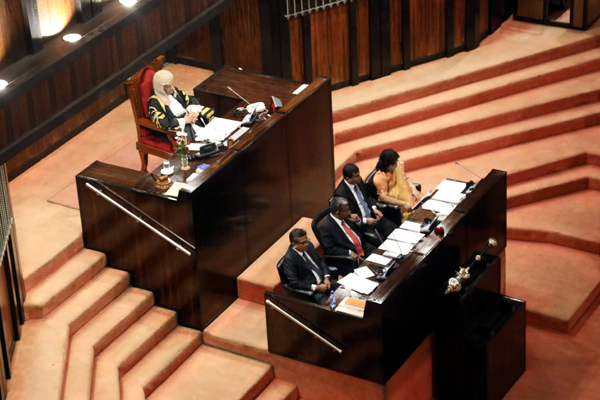
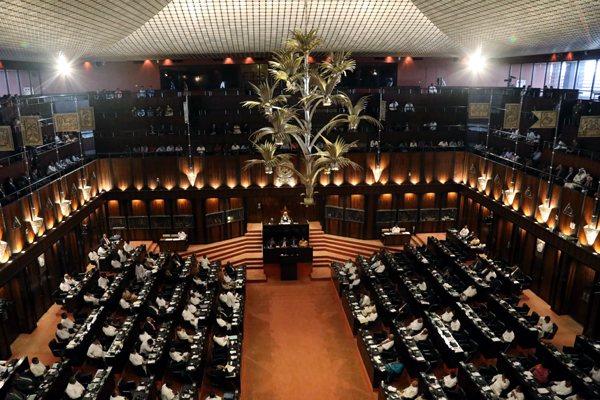
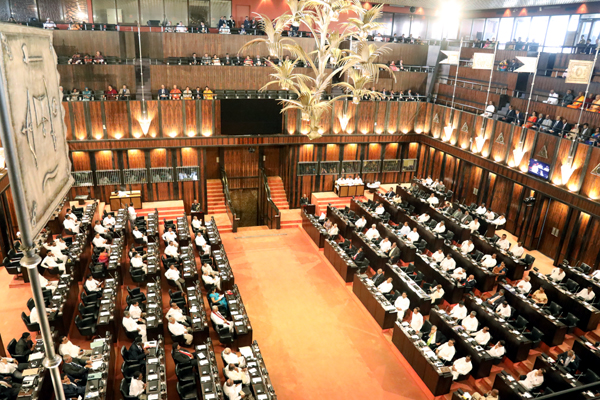
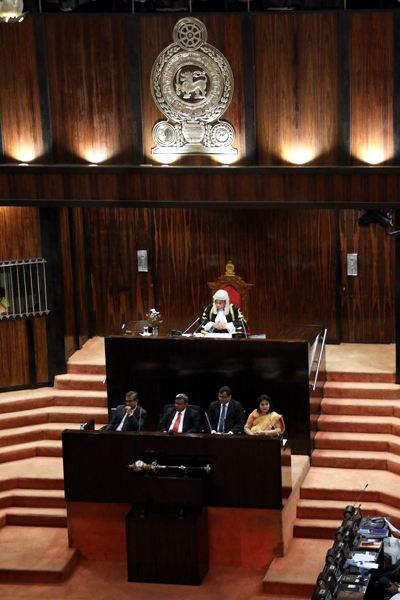
A special Sitting of Parliament was held today (Oct 03rd) at 2.30 p.m. to commemorate the 70th Anniversary of Parliamentary Democracy in Sri Lanka. At the commencement of Public Business, the Hon. Prime Minister and the Hon. Leader of the opposition in Parliament moved a Vote as follows;
“That this Parliament at its meeting today commemorates with pride the 70th anniversary of its first meeting as an independent Parliament and notes that Parliament of Sri Lanka is the oldest Parliament elected by universal adult franchise in the Asia region with an unbroken record of democratic governance and wishes for itself and the people of Sri Lanka a prosperity, development and further strengthening of democratic traditions, principles and rule of law.”
The speeches began with His Excellency the President and was followed with speeches by the Hon. Prime Minister, Hon. Leader of the Opposition, Hon. Leader of the House, Hon. Chief Government Whip, Hon. Chief Opposition Whip, and the Hon. Leaders of the recognized political parties in Parliament. The Hon. Speaker delivered the Vote of Thanks.
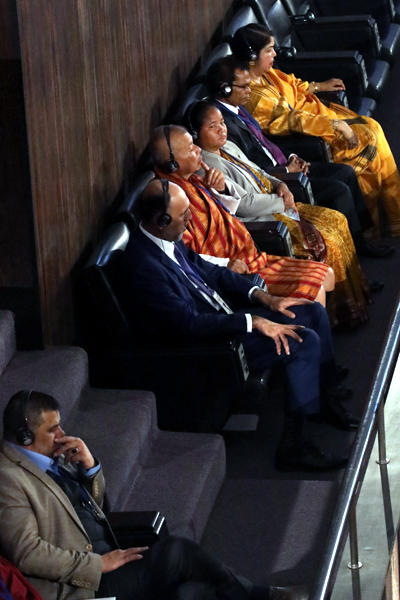
Hon. Speakers of the Parliaments of the SAARC countries who are in Sri Lanka to participate in the 8th conference of the Association of SAARC Speakers and Parliamentarians were present at the Speaker’s Gallery to witness the occasion.
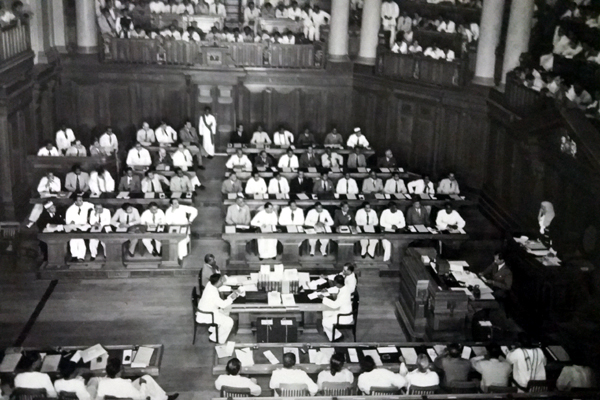
The first Parliament in Sri Lanka, known as “House of Representatives”, met for the first time on the 14th of October 1947 at the State Council building (Old Parliament Building) in Colombo. It consisted of 101 Members, of which 95 were elected by universal suffrage and 6 were nominated by the Governor-General.
The general election was held for a period of 19 days from 23rd of August to the 20th of September 1947. The United National Party won 42 seats, thereby obtaining a majority and selecting Rt. Hon. D. S. Senanayake as the country’s first ever Prime Minister. The other political parties that won seats at the general election were, Lanka Sama Samaja Party, Bolshevik Leninist Party, Communist Party, Labour Party, All Ceylon Tamil Congress and the Ceylon Indian Congress. Twenty Independent candidates were elected as well. The Hon. Sir Francis Molamure, first Member for Balangoda, was elected as Speaker. Mr R. St. L. P. Deraniyagala, C.B.E was the Clerk to the House of Representatives.
The First Parliament of Sri Lanka (then Ceylon) was bicameral consisting of two chambers known as the Senate and the House of Representatives. It was established as per the proposals put forward by the Soulbury Commission and by way of a Ceylon (Constitution) Order in Council. This replaced the State Council of Ceylon which was established in 1931. The Senate was abolished in 1971 and the House of Representatives was replaced with the unicameral National State Assembly in 1972 when the first republican constitution was enacted. With the promulgation of the second republican constitution on 7th of September 1978, the First Parliament of the Democratic Socialist Republic of Sri Lanka superseded the Second National State Assembly.
The current Parliament is the 8th Parliament of the Democratic Socialist Republic of Sri Lanka, and the 17th overall. Since 1947, 14 MPs have held the office of Prime Minister, while 18 have been elected as Speaker of Parliament. There have been seven Secretaries-General of Parliament (previously known as Clerk to the House) to date.
First Sitting on October 14th 1947
2026-10-02
Parliament is scheduled to meet from October 6 to 9.The Parliamentary business for the relevant parliamentary week was decided at a meeting of the Committee on Parliamentary Business held recently under the chairmanship of the Hon. Speaker, Dr. Jagath Wickramaratne.Accordingly, on Tuesday, October 6, from 9.30 a.m. to 10.00 a.m., time has been allocated for the Parliamentary business as per Standing Order 22(1) to (6) of the Parliament. From 10.00 a.m. to 11.00 a.m., time has been allocated for Questions for Oral Answers, while from 11.00 a.m. to 11.30 a.m., time has been allocated for Questions under Standing Order 27(2).Thereafter, from 11.30 a.m. to 5.00 p.m., Parliament is scheduled to debate two regulations published in Extraordinary Gazettes No. 2493/36 and No. 2493/37 under the Foreign Exchange Act, an Order published in Extraordinary Gazette No. 2493/38 under the Foreign Exchange Act, and a resolution under the Public Debt Management Act.From 5.00 p.m. to 5.30 p.m., a Motion at the Adjournment Time to be moved by the Government will be taken up for debate.On Wednesday, October 7, from 9.30 a.m. to 10.00 a.m., time has been allocated for the Parliamentary business as per Standing Order 22(1) to (6) of the Parliament. From 10.00 a.m. to 10.30 a.m., time has been allocated for Questions to be asked from the Prime Minister, while from 10.30 a.m. to 11.00 a.m., time has been allocated for Questions for Oral Answers. Thereafter, from 11.00 a.m. to 11.30 a.m., time has been allocated for Questions under Standing Order 27(2) of Parliament.Subsequently, from 11.30 a.m. to 5.30 p.m., an Adjournment Motion to be moved by the Opposition will be taken up for debate.On Thursday, October 8, from 9.30 a.m. to 10.00 a.m., time has been allocated for the Parliamentary business as per Standing Order 22(1) to (6) of the Parliament. From 10.00 a.m. to 11.00 a.m., time has been allocated for Questions for Oral Answers, while from 11.00 a.m. to 11.30 a.m., time has been allocated for Questions under Standing Order 27(2).Thereafter, from 11.30 a.m. to 5.00 p.m., the Second Reading debate on the Anti-Corruption (Amendment) Bill is scheduled to be held.From 5.00 p.m. to 5.30 p.m., time has been allocated for Questions at the Adjournment Time.On Friday, October 9, from 9.30 a.m. to 10.00 a.m., time has been allocated for the Parliamentary business as per Standing Order 22(1) to (6) of the Parliament. From 10.00 a.m. to 11.00 a.m., time has been allocated for Questions for Oral Answers, while from 11.00 a.m. to 11.30 a.m., time has been allocated for Questions under Standing Order 27(2).From 11.30 a.m. to 5.00 p.m., the following Private Members’ Motions are scheduled to be taken up for debate:Name of the Member of ParliamentTitle of the Private Member MotionHon. Dr. Harsha de SilvaProtection of the Diyagama ForestHon. Chithral Fernando, Attorney at LawFormulation of a programme to increase train services on the Puttalam Railway LineHon. Amirthanathan AdaikkalanathanAppointment of a Presidential Commission of Inquiry to seek the truth about the ethnic violence that occurred during the 'Black July' of 1983, to assess the damages and to make recommendations to prevent the recurrence of such ethnic violenceHon. Lasith Bhashana GamageFormulation of a systematic methodology for the planting, scientific management, and maintenance of trees within road reservesHon. Hesha Withanage Ankumbura Arachchi, Attorney at LawConverting ;all Colleges of Education in Sri Lanka into University FacultiesHon. Chaminda WijesiriFormulating a programme to exercise justice to the individuals who have become the victims of microfinance loansHon. Ravi KarunanayakeMaking Sports Bodies in Sri Lanka free from politicizationThereafter, from 5.00 p.m. to 5.30 p.m., a Motion at the Adjournment Time to be moved by the Opposition will be taken up for debate.
2026-09-30
First Reading of the Budget - October 7 Budget Speech - November 12 The Committee on Parliamentary Business has decided that the Second Reading of the Appropriation Bill for the year 2027 (Budget Speech/presentation of Budget proposals) will take place on November 12, 2026, followed by the Second Reading debate from November 13 to December 14.The decision was approved at a meeting of the Committee on Parliamentary Business held recently (Sep. 25) under the chairmanship of Hon. Speaker Dr. Jagath Wickramaratne.Accordingly, the Appropriation Bill is scheduled to be presented to Parliament for its First Reading on October 7.It was further decided that the Second Reading of the Appropriation Bill (Budget Speech) will be delivered by the Hon. President, in his capacity as the Minister in charge of Finance, on Thursday, November 12, 2026. Thereafter, the Second Reading debate will be held for seven days, from November 13 to November 20. Accordingly, the vote on the Second Reading will be held at 6.00 p.m. on November 20.Thereafter, the Committee Stage debate will be held for 19 days, from November 21 to December 14, with the vote on the Third Reading of the Budget scheduled for 6.00 p.m. on December 14.During this period, the Budget debate will be held every day, including Saturdays, except on public holidays and Sundays. Parliament is scheduled to meet at 9.30 a.m. on each of these days.From 9.30 a.m. to 10.00 a.m. each day, time will be allocated for the Parliamentary business specified under Standing Order 22(1) to (6). Thereafter, five Questions for Oral Answers will be taken up from 10.00 a.m. to 10.30 a.m., followed by one question under Standing Order 27(2) from 10.30 a.m. to 11.00 a.m.Accordingly, the debate is scheduled to be held from 11.00 a.m. to 6.00 p.m. On all days except the two days on which votes are scheduled to be taken, Motions at the Adjournment Time will be taken up for debate from 6.00 p.m. to 6.30 p.m., based on a 50:50 time allocation between the Government and the Opposition, the Secretary General further stated.It was also approved that during the Second Reading debate, 60% of the debate time will be allocated to the Government and 40% to the Opposition, while during the Committee Stage debate, 40% will be allocated to the Government and 60% to the Opposition.Furthermore, if a division is called for on a Expenditure Head relating to a Ministry, the relevant vote will be held at 6.00 p.m. at the conclusion of the proceedings on the respective day.
2026-09-25
Speaker also Endorses the Judicature (Amendment) BillHon. Speaker Dr. Jagath Wickramaratne today (Sep. 25) endorsed the certificate on the Twenty Second Amendment to the Constitution Bill.The Second Reading debate on the Twenty Second Amendment to the Constitution Bill was held in Parliament yesterday (24) and today, following which the Bill was passed with a special majority in Parliament.The Bill provides for increasing the retirement age of Supreme Court Judges from 65 to 67 years, and the retirement age of Court of Appeal Judges from 63 to 65 years.It also proposes to amend Article 137 of the Constitution to increase the number of judges of the Court of Appeal from 19 to 24. Accordingly, the establishment and operation of regional Courts of Appeal is expected to facilitate the expeditious disposal of pending cases and reduce the need for parties to cases to travel to Colombo.Accordingly, the Constitutional Amendment Bill will come into force as the Twenty-Second Amendment to the Constitution.Meanwhile, Hon. Speaker Dr. Jagath Wickramaratne also endorsed his certificate today on the Judicature (Amendment) Bill.The Second Reading debate on the Bill was held in Parliament yesterday (24) and today, following which the Bill was passed by a majority of votes in Parliament today.The amendment increases the retirement age of High Court Judges from 61 to 63 years, and the retirement age of District Judges and Magistrates from 60 to 62 years.Furthermore, by amending Section 4 of the Judicature (Amendment) Bill, the Bill provides for increasing the maximum number of High Court Judges from 110 to 120, enabling the establishment of additional Provincial High Courts and Provincial Civil Appellate High Courts.Accordingly, the Judicature (Amendment) Bill will come into force as the Judicature (Amendment) Act, No. 23 of 2026.
2026-09-25
Judicature (Amendment) Bill also Passed with a MajorityThe Twenty Second Amendment to the Constitution Bill was passed with a special majority in Parliament today (Sep. 25).The division on the Second Reading of the Bill commenced at 7.13 p.m., with 158 votes in favour and 63 votes against. Accordingly, the Twenty-Second Amendment to the Constitution Bill was passed by a special majority in Parliament.Thereafter, the amendments introduced to Clause 2 at the Committee Stage were also passed by a special majority in Parliament, receiving 158 votes in favour and 63 votes against.At the Third Reading of the Bill, 158 votes were cast in favour and 63 votes against. Accordingly, the Third Reading of the Bill was passed with a special majority in Parliament.Meanwhile, the Judicature (Amendment) Bill was also passed with a majority in Parliament today.The division on the Second Reading of the Bill commenced at 7.53 p.m., with 158 votes in favour and 63 votes against.At the division on the Third Reading of the Bill, 158 votes were cast in favour and 62 votes against. Accordingly, the Judicature (Amendment) Bill was passed at the Third Reading in Parliament without amendments, by a majority of 95 votes.The Twenty-Second Amendment to the Constitution Bill and the Judicature (Amendment) Bill were presented to Parliament for First Readings by the Minister of Justice and National Integration on 18 August 2026.The Second Reading debates on both Bills were held in Parliament yesterday (24) and today (25).
Handbook of Parliament
The System of Elections in Sri Lanka
How Parliament Works
Business of Parliament
Copyright © The Parliament of Sri Lanka.
All Rights Reserved.
Design & Developed by TekGeeks
Watch the day’s proceedings