Handbook of Parliament
The System of Elections in Sri Lanka
How Parliament Works
Business of Parliament
Engage with your Parliament by logging in
2026-10-19
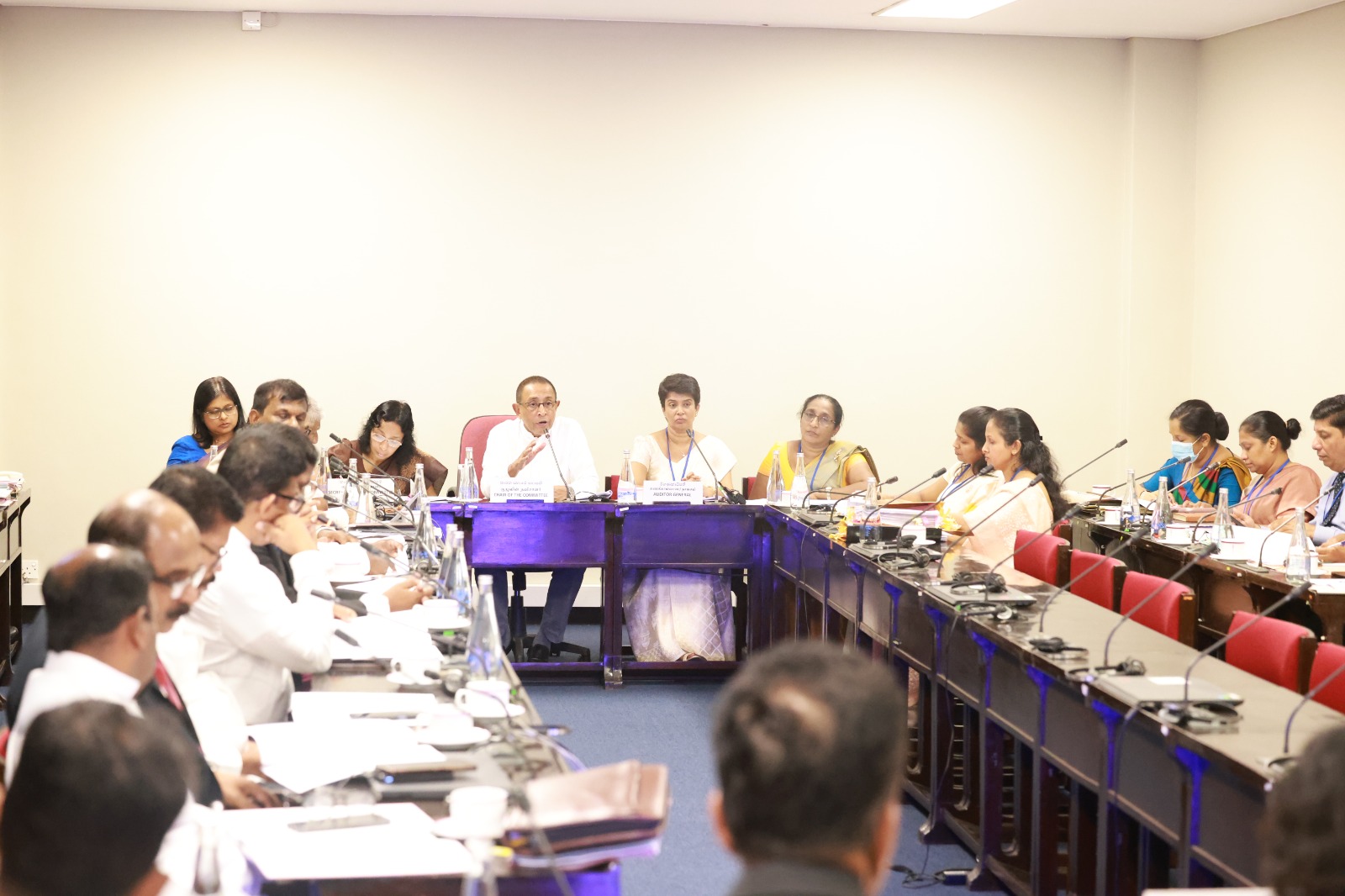
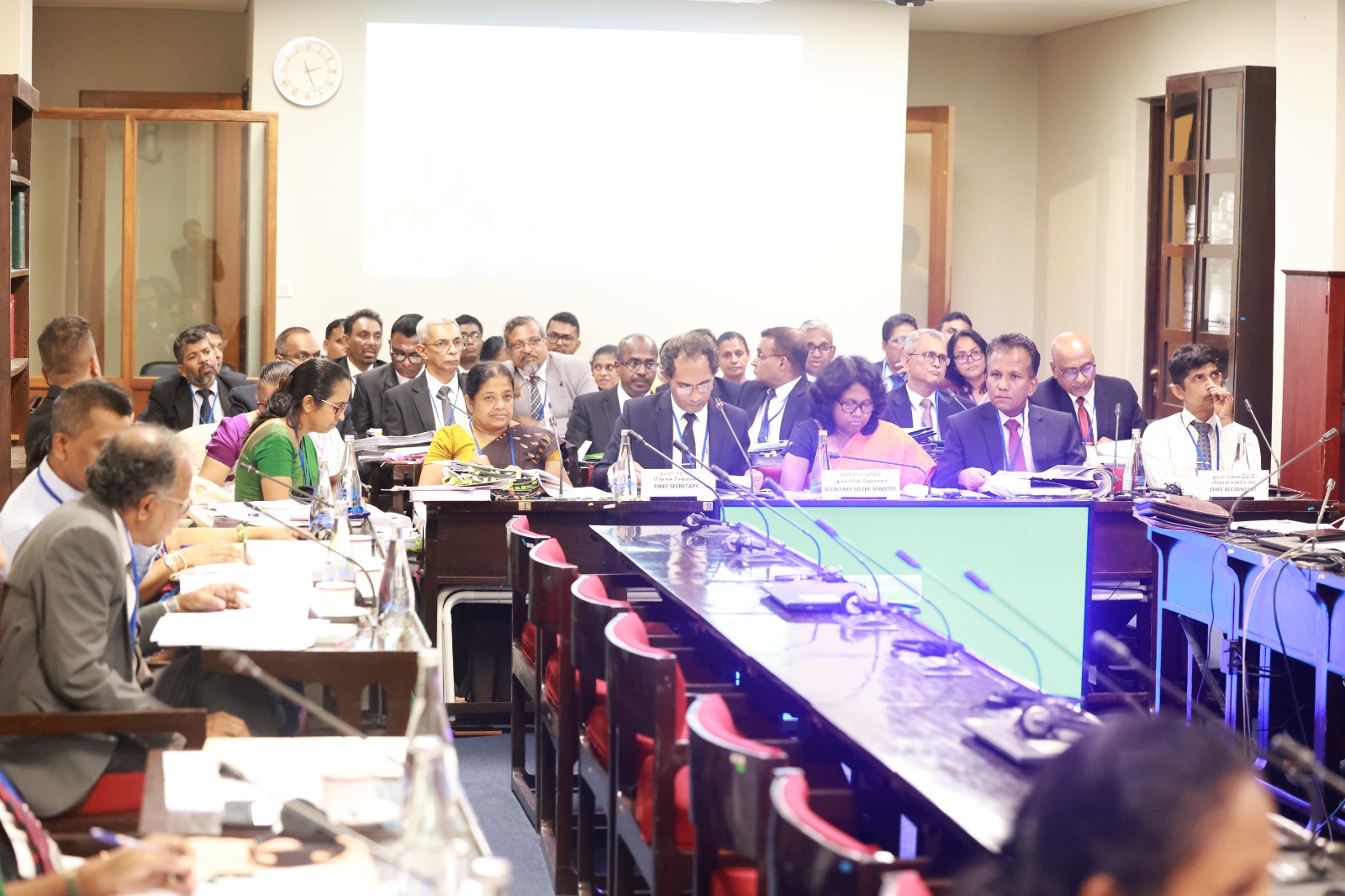
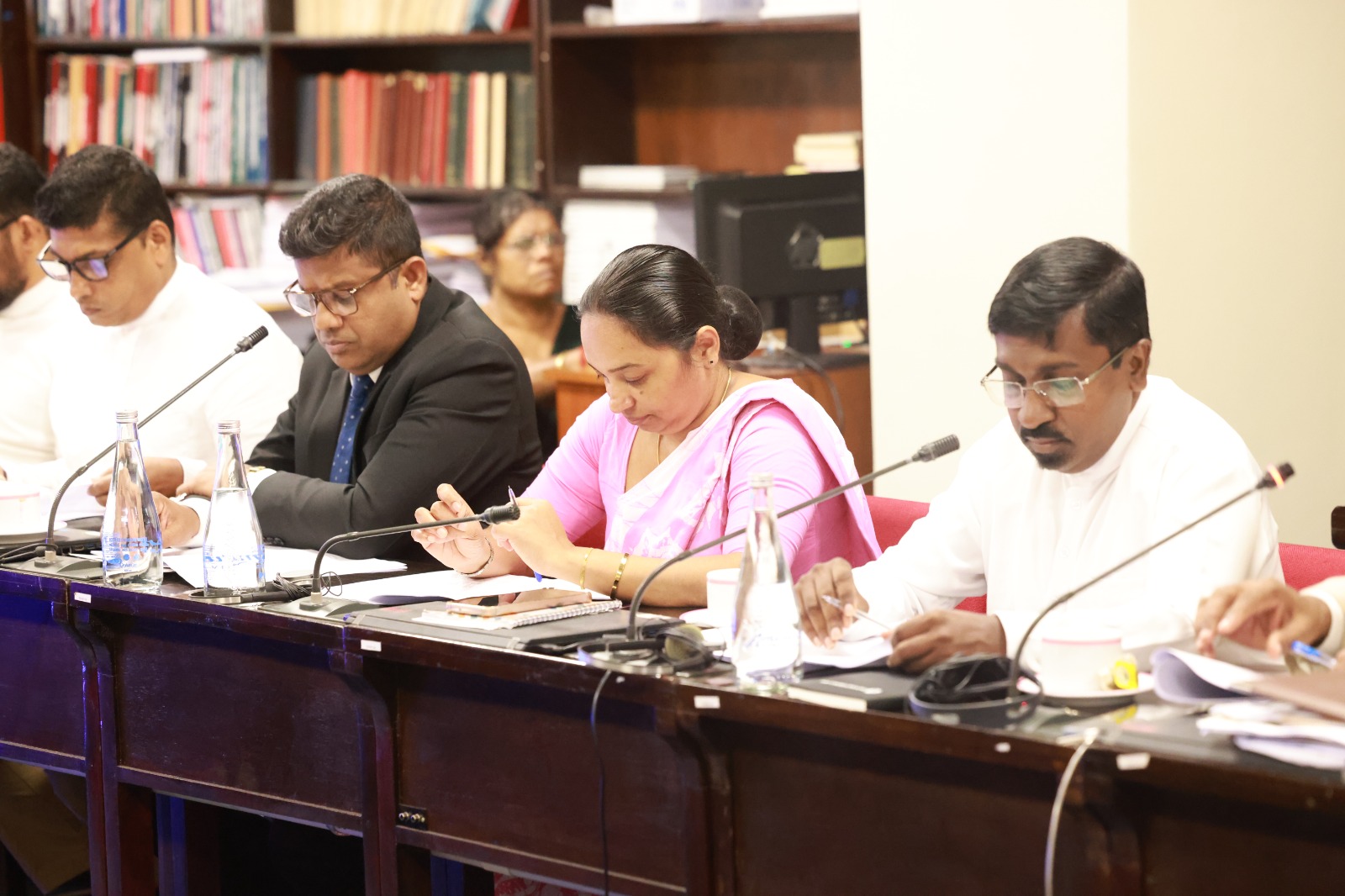
The Committee on Public Accounts (COPA) focused on the payment of allowances to officials of public institutions, the failure to properly implement circulars, irregularities in procurement procedures, and financial losses incurred in the auctioning of machinery during its review of the Auditor General’s reports and the current performance of the Southern Provincial Council.
These matters received extensive attention when the Committee met at Parliament recently, under the chairmanship of Hon. Member of Parliament Kabir Hashim, to follow up on the recommendations made at the COPA meeting held on March 24, 2023, and to discuss the Auditor General’s Triennial Report for 2021–2023, the Auditor General’s Reports for 2024 and 2025, and the Council’s current performance.
Special attention was drawn to alleged irregularities in the auctioning of an asphalt production machine belonging to the Southern Provincial Road Development Authority in 2021. Officials explained that the machine had been transferred to the Authority in 2013 but had been taken out of service after 2018 due to the absence of large-scale road carpeting projects. The maintenance and security costs incurred in keeping the machine idle were also cited as a reason for its auction.
However, the Committee discussed the financial loss allegedly caused by the failure to properly assess and include 21,782 litres of residual bitumen and the remaining diesel stock in the auction value when the machine was sold. It was revealed that legal action had been initiated to recover the relevant amount from the buyer and that complaints had also been lodged with the police.
Although preliminary investigations and formal disciplinary inquiries had been conducted and disciplinary action taken against two officials, the loss had not yet been recovered from the officers concerned. Officials informed the Committee that, taking into account the explanations submitted by the relevant officers, a new comprehensive investigation committee had been appointed to conduct further inquiries into the incident and identify those truly responsible.
In addition, the Committee focused on issues that had arisen in procurement procedures carried out under the Southern Provincial Council. Discussions covered the awarding of several contracts to a single supplier for the supply of plants, the failure to complete the required supplies despite the payment of advance funds, and measures taken to acquire a parcel of land to recover outstanding amounts.
The Committee also discussed the purchase of 86 scanners at a cost of approximately Rs. 27 million without a proper needs assessment or feasibility study, and the fact that the majority of these scanners were not used for their intended purposes. Attention was further drawn to the suspension of digitization activities midway through implementation due to problems encountered with the relevant software project.
Furthermore, inquiries were made into whether the applicable circulars and financial regulations had been properly followed when providing fuel and housing allowances to officials of public institutions.
Emphasizing the importance of ensuring transparency and accountability in the use of public funds and property, the Committee highlighted the need to conduct formal investigations into the issues identified, establish the parties responsible, and take the appropriate legal and disciplinary action.
The meeting was attended by Hon. State Ministers Nalin Hewage, Retired Major General Aruna Jayasekara and Aravinda Senarath, along with Hon. Members of Parliament Attorney-at-Law Sagarika Athauda, T. K. Jayasundara, Lal Premanath, Susantha Kumara Navaratne, Ruwanthilaka Jayakody, Manjula Suraweera Arachchi, Ajantha Gammaddege and Sunil Rathnasiri.

2026-11-06
The Parliamentary Caucus for Youth discussed how to strengthen engagement between young people and Parliament and advance future initiatives aimed at increasing youth participation.The Caucus met recently at Parliament under the chairmanship of, Hon. Deputy Minister Eranga Gunasekara, where members exchanged views on the matter.Discussions also focused on several proposals, including a proposal on youth entrepreneurship and industrial development prepared by Hon. Member of Parliament Oshani Umanga; a proposal on empowering youth within local government authorities, prepared by Hon. Member of Parliament, Attorney-at-Law Hiruni Wijesinghe; and a proposal on a policy framework for youth in the plantation and cultivation sectors, prepared by Hon. Member of Parliament Ambika Samivel.Furthermore, extensive discussions were held on proposals prepared by the Caucus's Deputy Co-Chairs, Hon. Members of Parliament Lasith Bashana Gamage, Thanura Dissanayake and Attorney-at-Law Bhagya Sri Herath, concerning an external youth engagement programme and a series of pilot workshops.It was also decided to further study these proposals, which could be implemented for the benefit of young people, and finalize them following further consideration.Several members of the Caucus and other invitees were present at the meeting.
2026-11-05
The Trusts (Amendment) Bill, which is scheduled to be taken up for its Second Reading in Parliament today (Nov. 05), has received the approval of the Sectoral Oversight Committee on Governance, Justice and Civil Protection.The Bill was discussed and approved when the Sectoral Oversight Committee on Governance, Justice and Civil Protection met yesterday (04) under the chairmanship of its Chair, Hon. Member of Parliament Dr. Najith Indika.The Bill, which seeks to amend the Trusts Ordinance (Chapter 87), was presented to Parliament for its First Reading on 21 October 2026 by the Hon. Minister of Justice and National Integration, Attorney-at-Law Harshana Nanayakkara.Officials from the Legal Draftsman’s Department and the Ministry of Justice briefed the Committee on the amendments proposed under the Bill.Hon. Members of Parliament Ajith P. Perera, President’s Counsel Faizer Mustapha, Major General (Retired) G. D. Sooriyabandara and Dharmapriya Wijesinghe, among others, attended the Committee meeting.
2026-11-04
A special national programme was successfully conducted islandwide on the 2nd of November, under the leadership of the Women Parliamentarians’ Caucus and the Ministry of Health, with the aim of promoting early detection of breast cancer, one of the most commonly reported cancers among women in Sri Lanka, and raising public awareness about the disease. Awareness and screening programmes were organized at several Medical Officer of Health (MOH) offices across the districts represented by women Members of Parliament. The programmes were attended by women Members of Parliament, including Hon. Minister Saroja Savithri Paulraj, Chairperson of the Women Parliamentarians’ Caucus.In Sri Lanka, approximately 17 women are diagnosed with breast cancer every day, with around 6,000 new cases reported annually. Furthermore, more than 1,000 deaths occur each year due to the disease, equivalent to approximately three lives lost every day.Breast cancer can be completely cured if detected at an early stage. However, delays in seeking medical treatment due to fear, embarrassment or a lack of awareness have been identified as major challenges.All women should become familiar with the normal appearance and feel of their breasts and carry out regular breast self-examinations. If any unusual changes are detected, it is important to seek medical advice without delay.Early detection increases the chances of successful treatment. The government healthcare system provides free screening and other essential healthcare services.In addition, all women are encouraged to attend the Well Woman Clinic and undergo the recommended Pap test at the ages of 35 and 45. This screening helps detect precancerous changes at an early stage, thereby supporting the prevention of cervical cancer.
2026-11-03
A special meeting of the Ministerial Consultative Committee on Education, Higher Education and Vocational Education was held recently at the Parliament Complex, chaired by the Hon. Prime Minister and Minister of Education, Higher Education and Vocational Education, Dr. Harini Amarasuriya, to brief Members of Parliament on the revised National Curriculum Framework and the new education reform process.The meeting was attended by Ministers, Deputy Ministers, Members of Parliament, officials including the Secretary to the Ministry of Education, as well as a number of experts in the education sector, including representatives of the National Institute of Education (NIE).Secretary to the Ministry of Education, Higher Education and Vocational Education, Mr. Nalaka Kaluwewa, stated that, in accordance with a Cabinet decision, a National Committee comprising subject experts had been appointed by April 2026 to oversee the education reforms. He further explained that five main subcommittees established under this committee would provide the necessary guidance and direction for the process.He also stated that, in accordance with the Cabinet decision, the new reforms are scheduled to be introduced for Grade 1 in 2026, and for Grades 6 and 2 in 2027. Preparations are currently underway, including teacher training programmes, the development of modules and printing of teacher guides, as well as plans to upgrade digital infrastructure in schools.During the meeting, Director General of the National Institute of Education, Professor O.G. Dayaratne, together with officials from the education sector, delivered a comprehensive presentation on the foundation of the new education reforms, the National Curriculum Framework, assessment methodologies and the proposed implementation plan.He explained that the process had commenced in 2019 and that the National Institute of Education had prepared the National Curriculum Framework in accordance with the new policy approved by the National Education Commission in 2023. He emphasized that the framework was the result of a collective effort involving several institutions. The Director General further stated that the country was introducing education reforms modelled on systems implemented in some of the world's most advanced countries.The Director General of the National Institute of Education emphasized that the fundamental objective of general education should not be limited to producing future workers to meet the demands of the labour market. Rather, it should focus on nurturing holistic and well-rounded citizens enriched with ethics, virtues and values, while developing a future generation capable of building the nation.A shift from the existing content-based education system to an outcome-based and student-centred approach is proposed under the reforms. He further explained that a new assessment framework had been developed to reduce the pressure of rote learning and examination-oriented education. Under this framework, students' progress will be evaluated through a credit-based modular system and continuous assessments conducted throughout the year.Flexible vocational pathways have also been developed to provide students with an understanding of different vocational fields from Grade 6 onwards. These pathways will enable students in Grades 12 and 13 to obtain vocational qualifications up to NVQ Level 4 or pursue higher education.A website named "RIES" has been launched to raise public awareness of the education reforms among the general public, teachers and parents. In addition, an island-wide awareness programme is being implemented in several phases.Addressing the meeting, the Hon. Prime Minister emphasized that the fundamental objective of education should not merely be to prepare children to become future members of the workforce, but also to nurture them into well-rounded individuals and responsible citizens who will contribute to nation-building.She also pointed out that decisions regarding challenges arising during the implementation of the reforms should not be based solely on personal perceptions or opinions. Instead, such decisions should be guided by scientific research and evidence.Members of Parliament who participated in the discussion raised questions and shared their views and proposals regarding the education reforms.It was further emphasized that the support and cooperation of all stakeholders, without any divisions or differences, were essential to the successful implementation of this important national undertaking.The meeting was also attended by Hon. Deputy Minister of Education and Higher Education Dr. Madhura Senevirathna, Hon. Deputy Minister of Vocational Education Nalin Hewage, Secretary General of Parliament Mrs. Kushani Rohanadeera, Director of Legislative Services Mr. Jayalath Perera, and several other officials.
Handbook of Parliament
The System of Elections in Sri Lanka
How Parliament Works
Business of Parliament
Copyright © The Parliament of Sri Lanka.
All Rights Reserved.
Design & Developed by TekGeeks