Related News
2026-10-16
Prime Minister Instructs Officials to Expedite Solutions to Issues in the Education Sector
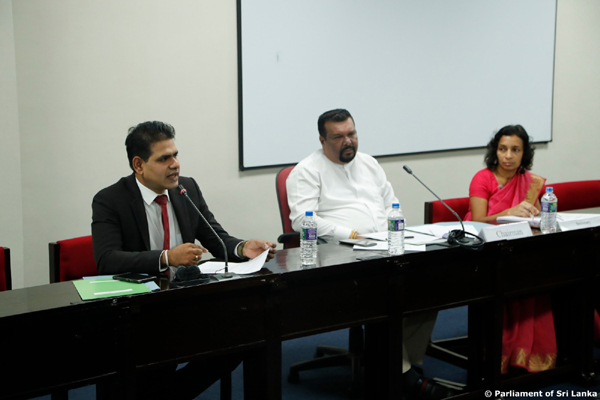
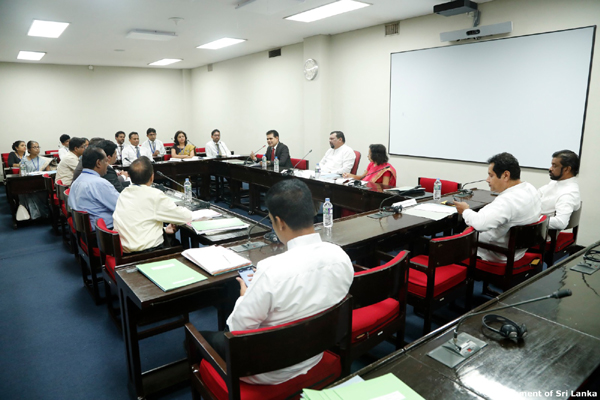
Prime Minister and Minister of Education, Higher Education and Vocational Education, Dr. Harini Amarasuriya, recently instructed officials to expedite solutions to a range of issues in the education sector.She issued these instructions while inquiring into issues brought to the attention of the Committee by Members of Parliament at a recent meeting of the Ministerial Consultative Committee on Education, Higher Education and Vocational Education, held in Parliament under her chairmanship.It was revealed at the meeting that 334 schools had been identified as having difficulty accessing the internet through conventional telecommunications networks. A private company has been entrusted with providing Wi-Fi facilities to these schools. Officials also stated that a project proposal was being considered to provide internet access to 10 remote schools where connectivity through conventional means is impossible due to geographical challenges. The service would be provided by a newly established Sri Lankan company specializing in satellite internet services.The Prime Minister also instructed officials to monitor progress at district and divisional levels to ensure that funds allocated for drinking water and sanitation facilities in schools are fully utilized before the end of the financial year, rather than being returned unspent.Progress on the project to develop 169 selected primary schools was reviewed, and provincial authorities were instructed to expedite the preparation of engineering estimates that had been delayed.The Prime Minister instructed that primary sections should be limited to one smart classroom per grade, rather than converting every classroom into a smart classroom, as young children need to learn through direct interaction with their environment. She further stressed that newly designed primary schools must include recreation and reading rooms where children can spend time freely and enjoy a sense of mental well-being.It was also instructed that the admission of children under probationary care to schools should be carried out based on court orders. Common guidelines and circulars should be implemented to enable these children to gain admission to urban and national schools without unnecessary obstacles.It was revealed that some annual teacher transfers had to be revised or suspended because principals had not released teachers due to the absence of replacements. Officials were instructed to take prompt action, in coordination with the relevant divisions, to recruit the required number of teachers.The meeting also discussed formalizing the monitoring of duties performed by sports coaches assigned to schools, establishing their working hours, and developing a transfer policy applicable at both provincial and national levels.Serious shortcomings in toilet facilities and accessibility at schools attended by children with special needs received particular attention. Officials were instructed to conduct a national audit of the requirements of these schools and allocate special funding to expedite the construction of buildings and sanitation facilities that children can use conveniently.The need to formulate a national policy to regulate preschool education, formalize the teacher training framework, and prevent unauthorized external institutions from issuing certificates that do not meet the required standards was also discussed.Meanwhile, the progress of the Subcommittee on Higher Education was presented to the Committee by its Chairperson, Deputy Minister Dr. Madhura Seneviratne. The progress of the Subcommittee on Physical Resource Shortages in Schools was presented by its Chairperson, Member of Parliament Samanmali Gunasinghe.Deputy Minister Nalin Hewage, several Members of Parliament, and officials representing the Ministry of Education, Higher Education and Vocational Education also attended the meeting.
2026-10-15
Ministerial Consultative Committee on Plantation and Community Infrastructure Affairs Meets
The Ministerial Consultative Committee on Plantation and Community Infrastructure Affairs met recently under the chairmanship of its Chairman, Hon. Minister of Plantation and Community Infrastructure Affairs Samantha Vidyarathna.During the meeting, Members of Parliament brought various issues affecting the plantation sector to the attention of the Minister. A range of matters were discussed, including the utilization of unused portions of plantation lands, land-related issues faced by plantation communities, and the provision of housing facilities for these communities.Hon. Deputy Minister of Plantation and Community Infrastructure Sundaralingam Pradeep and several other Members of Parliament attended the committee meeting.
2026-10-15
Investment Progress, Business and Condominium Projects in Colombo Port City Discussed at Committee on Public Finance
The Committee on Public Finance discussed approvals granted to businesses designated as Businesses of Strategic Importance (BSIs) in Colombo Port City, future investment plans, and the current status of condominium projects.The Committee, which met in Parliament recently (the 8th) under the chairmanship of Hon. Dr. Harsha de Silva, focused on the investment promotion activities of the Colombo Port City Economic Commission, the regulation of foreign investments, and related legal and administrative matters.The meeting was attended by Deputy Ministers Hon. Chathuranga Abeysinghe and Hon. Nishantha Jayawera, as well as Members of Parliament Hon. Ravi Karunanayake, Harshana Rajakaruna, Shanakiyan Rajaputhiran Rasamanickam, Ajith Agalakada, M.K.M. Aslam, Nimal Palihena, Wijesiri Basnayake, Thilina Samarakoon, and Champika Hettiarachchi.During the meeting, members discussed updates on businesses recently gazetted as Businesses of Strategic Importance (BSIs), future investment plans, the current status of condominium projects in Port City, and the marketing and sale of these properties.Officials of the Commission stated that nine land plots, valued at a total of US$1.12 billion, had been leased to promote investment in the area adjoining Colombo’s main commercial district. They also noted that planning activities were under way to lease a further six land plots valued at US$1 billion.Furthermore, officials stated that the Commission was preparing to bring four government-owned land plots to the market, representing approximately one-seventh of the total land allocation. They further clarified that, to date, only land plots belonging to CHEC Port City Colombo (Pvt) Ltd had been leased.The officials explained that the land was leased for a period of 99 years, with an average value of US$3,000 per square meter. They also noted that the Commission had received Rs. 398 million to date, equivalent to 1% of the total lease payments.The Committee also examined the regulatory mechanisms in place to identify the beneficial owners of companies investing in Port City, ensure transparency in foreign investments, and prevent money laundering and the financing of terrorism.The issuance of visa recommendations for foreign workers and the monitoring of their activities were also discussed. Taking into consideration information that approximately 14,300 visas had been issued to foreign nationals on the recommendation of the Commission, the Committee considered the practical feasibility of monitoring their activities.The importance of strengthening the relevant regulatory measures to prevent illegal activities within Port City and safeguard Sri Lanka’s international reputation was also emphasized.The Committee raised questions regarding the protection of pre-sale deposits paid by investors intending to purchase units in condominium and residential development projects. Particular attention was given to the escrow account mechanism, which is intended to ensure that funds received from foreign investors are used exclusively for the relevant projects and that these funds remain secure.The Committee also discussed the actual volume of foreign investment received by Port City, the current operational status of approved businesses, and whether the anticipated employment opportunities had been created by these businesses.
2026-10-14
Expert Committee Report on Public Views and Proposals for the Review of Election Laws Submitted to Parliamentary Select Committee
The expert committee report on public views and proposals relating to the review of election laws was recently submitted to the “Select Committee of Parliament to review the laws dealing with Elections (excluding laws dealing with Provincial Council Elections) and report to Parliament and submit its proposals and recommendations in that regard”. The report was handed over to the Chairman of the Select Committee, Hon. Minister of Public Administration, Provincial Councils and Local Government, Prof. A.H.M.H. Abeyrathna, by the expert committee appointed by the Select Committee to review the views and proposals submitted by the public.The expert committee was appointed to conduct an in-depth review of 31 proposals submitted by members of the public, various institutions and organizations on electoral reforms, together with reports of previous parliamentary select committees appointed to examine election-related matters, and to submit a comprehensive report on its findings.The members of the expert committee are Mr. Ashoka Peiris, Chairman of the Salaries and Pensions Commission; Mr. Saman Sri Rathnayake, Chairman of the Delimitation Commission; Prof. Chaminda Abeysinghe, Dean of the Faculty of Social Sciences at the University of Kelaniya; Dr. K. Thavalingam, Member of the Delimitation Commission; and Ms. P.S.M. Charles, former Governor of the Northern Province.Commenting on the matter, the Chairman of the Select Committee, Hon. Minister Prof. A.H.M.H. Abeyrathna, stated that separate reports had been prepared and submitted to the committee on the various issues and themes raised by the institutions and organizations that had presented proposals.He further stated that several registered political parties had also submitted their views and proposals. The Parliamentary Select Committee expects to review all submissions made by the public, various institutions and organizations, as well as political parties, and present an interim report to Parliament within two months.The Chairman added that, even after the interim report is submitted, citizens and members of the public will be given a further opportunity to submit amendments and new proposals.Meanwhile, the committee decided to extend by a further two weeks the deadline granted to registered political parties to submit their views and proposals on the review of election-related laws, excluding legislation governing Provincial Council elections.The committee also emphasized that members of the expert committee appointed to review public submissions would be permitted to submit proposals in their personal capacities, should they wish to do so.Following the meeting, a media briefing was held under the leadership of the Chairman and committee members to inform the public of the decisions taken by the Select Committee.Those who attended the committee meeting included committee members Hon. Minister Dr. Upali Pannilage; Hon. Deputy Ministers Attorney-at-Law Sunil Watagala and Muneer Mulaffer; and Hon. Members of Parliament Ravi Karunanayake, Harshana Rajakaruna, J.C. Alawathuwala, Kathiravelu Shanmugam Kugathasan, Ruwanthilaka Jayakody, Chandima Hettiarachchi and Attorney-at-Law Thushari Jayasinghe, among others.